
When does home insurance cover a roof leak?
Homeowners insurance may respond when a covered event damages the roof and allows water into the home, subject to the actual policy, exclusions, limits, deductible, and claim facts. Depending on the policy, examples can include certain wind, hail, falling-tree, fire, snow, ice, or other covered-peril damage. The fact that a roof leaks does not by itself identify the cause or establish coverage.
The roof’s condition can matter alongside the event. A claim can also involve different treatment for damaged shingles, an opening caused by a sudden event, interior water damage, personal property, temporary measures, and a permanent roof repair or replacement. Review the policy rather than assuming all parts of one loss receive the same answer.
The insurer may need photographs, weather information, repair history, and an inspection before deciding how the policy applies. Reporting a loss promptly preserves the opportunity for that review; it does not promise a particular payment or repair outcome.
Roof leaks that may be covered vs. roof leaks that may not be covered
This graphic is an educational illustration, not a policy determination. A leak connected to sudden covered damage may be evaluated differently from a leak associated with age, wear, deterioration, deferred maintenance, gradual leakage, or construction and installation problems. Actual coverage depends on the policy’s language and the circumstances of the loss.
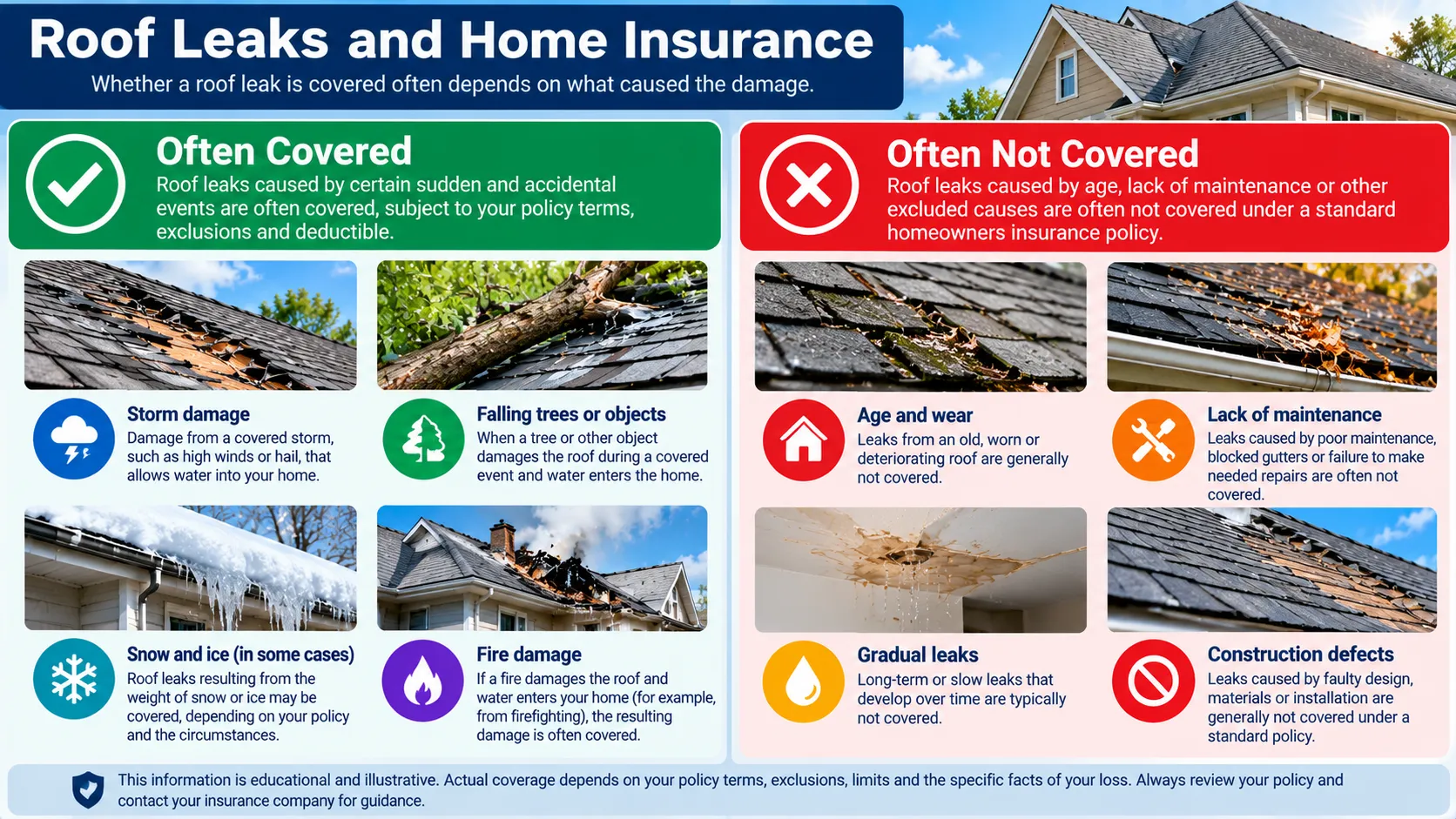
An insurer may evaluate both the apparent event and the roof’s existing condition. A simplified “often covered” or “often not covered” label should not replace the declarations page, exclusions, deductible, or a claim review.
Common causes of roof leaks
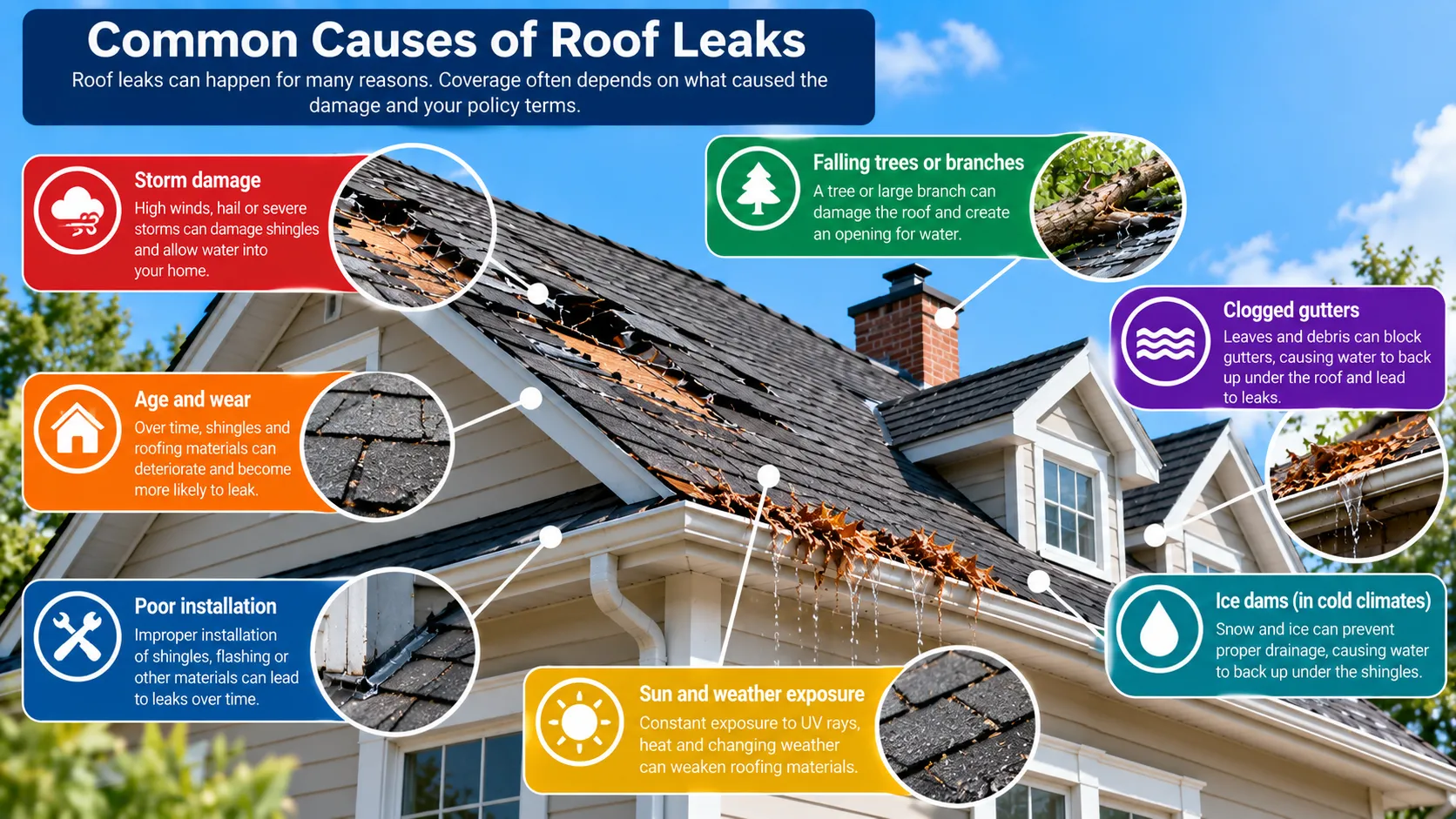
Wind and storm damage
Strong wind or another storm can damage shingles, flashing, or other roofing components and permit water entry. Whether that damage is covered depends on the policy, covered cause of loss, exclusions, deductible, roof condition, and local circumstances. “Storm damage” is not one blanket coverage category.
Hail
Hail can damage roofing materials, but the existence of hail does not automatically establish the extent of insured damage or require replacement. Policy wording, inspection findings, severity, roof condition, settlement provisions, and the applicable deductible can affect the result.
Falling trees or branches
A falling tree or branch can damage a roof and create an opening for water. The policy and circumstances determine whether the event and resulting damage are covered. Preserve safe photographs and relevant information without trying to assign fault or move hazardous debris yourself.
Snow and ice
Snow or ice can contribute to roof damage or water intrusion in colder climates. An ice dam or snow-related leak should be reviewed under the actual policy and facts; not every such loss is handled the same way.
Age, wear, and maintenance
Homeowners insurance generally is designed for covered losses, not routine maintenance or ordinary deterioration. Roof age can affect underwriting, insurability, or how an insurer evaluates wear versus sudden damage, but there is no universal roof-age cutoff that removes all coverage. Missing shingles, damaged flashing, clogged drainage, and known leaks should be addressed promptly and safely.
Installation and long-term exposure
Faulty installation or construction can create leaks and may be treated differently from damage caused by a covered peril. Sun and weather exposure can also cause gradual deterioration. Those conditions do not automatically decide every claim, but they are different from a sudden insured event.
Does homeowners insurance cover water damage from a roof leak?
Resulting interior water damage may require a separate coverage analysis from the roof itself. Ceilings, walls, insulation, flooring, and personal belongings can be affected, but coverage for those items does not automatically mean the insurer will pay to replace an old, deteriorated, or poorly maintained roof.
The cause of the roof opening, timing, policy terms, exclusions, deductible, and scope of damage can all matter. For the related moisture question, our home-insurance mold guide explains why the source of moisture and the underlying water loss are important.
Does home insurance cover wind or hail damage to a roof?
Wind and hail may be covered perils under many homeowners policies, but not every policy provides identical protection. In some areas, wind or hurricane coverage may be excluded, offered separately, or subject to a special deductible. The NAIC notes that policies can use separate deductibles for hurricane, named-storm, windstorm, wind, or hail damage.
Report a potential loss promptly, document visible damage safely, and ask which policy provisions and deductible the insurer is applying. Do not assume a wind or hail event automatically entitles a homeowner to a full roof replacement.
Does homeowners insurance cover an old roof?
An older roof is not automatically excluded simply because of its age. However, age can affect underwriting, eligibility, roof valuation, settlement treatment, or the evidence of wear and deterioration. Some policies may use replacement-cost treatment in certain situations and actual-cash-value treatment in others; depreciation and policy provisions can affect payment.
There is no universal 10-, 15-, or 20-year rule. Compare the policy, declarations page, roof endorsements, and insurer communications for the terms that apply to the home.
Will insurance pay for a full roof replacement?
A covered roof claim does not automatically mean the entire roof will be replaced. The outcome can depend on the extent of covered damage, repairability, settlement provisions, deductible, roof condition, and applicable state requirements. Avoid relying on generalized “matching” claims or a contractor’s coverage interpretation; those questions can be policy- and state-specific.
The NAIC’s consumer guidance distinguishes actual cash value from replacement cost, but neither term alone promises a particular repair scope. Ask the insurer to explain the estimate and policy provision it used.
What about missing or damaged shingles?
Why shingles are missing or damaged matters. Sudden wind or another covered event can be evaluated differently from deterioration, improper installation, aging, or a maintenance problem. A few missing shingles do not by themselves establish that a full roof replacement is owed.
What should you do after discovering a roof leak?
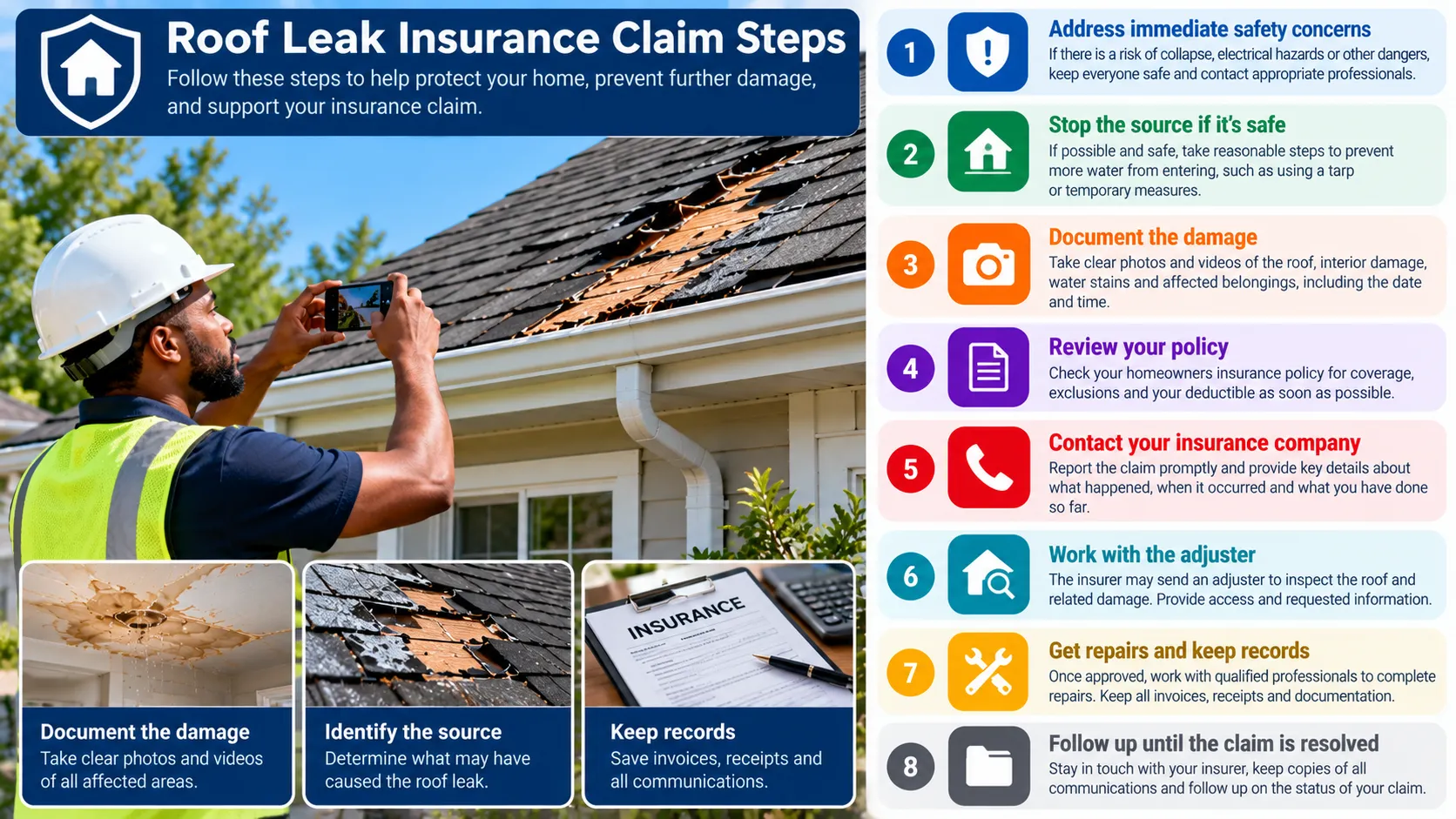
Prioritize safety. Do not climb onto a wet, icy, damaged, or unstable roof. Keep people and belongings away from dangerous areas, and use qualified professionals or emergency services for electrical hazards, structural instability, active severe weather, or other serious risks.
- Take reasonable emergency steps to stop or limit further damage when safe.
- Document the roof and interior damage from a safe location.
- Note when the leak was discovered and relevant weather or event information.
- Contact the insurer promptly and review the policy and deductible.
- Keep receipts, estimates, invoices, and copies of communications.
- Cooperate with inspection or adjuster requests.
Emergency mitigation is different from permanent repairs. Do not wait for claim approval before taking reasonable, urgent action needed to protect people or prevent further damage, but follow policy and insurer instructions where practical. Save receipts; emergency work is not a guarantee of reimbursement, and extensive permanent repairs may need to wait until inspection.
How to file a roof-leak insurance claim
Document visible damage safely, including interior water damage and affected belongings. Record when the damage occurred or was discovered, retain relevant weather or event information, and contact the insurer. Review the deductible and relevant policy provisions, keep temporary-repair records, estimates, invoices, and receipts, and maintain copies of every communication.
Do not exaggerate, stage, alter, or discard relevant damage before a reasonable opportunity for inspection unless safety requires removal. A claim record should explain what was observed, not try to predetermine coverage.
What will an insurance adjuster look at?
An inspection may consider the apparent cause, extent of damage, roof condition, evidence of sudden damage or prior leakage, resulting interior damage, documentation, and the policy provisions that apply. Adjusters and insurers do not necessarily use one identical checklist, and an inspection is not a reason to make unsafe repairs or manipulate evidence.
Can a roof-leak insurance claim be denied?
A claim may be denied or limited when, for example, the cause is excluded, the damage reflects wear or deterioration, long-term leakage or maintenance is involved, the policy was not in force, damage does not exceed the deductible, or the claimed damage is not attributable to a covered event. These are not automatic outcomes; the insurer’s written explanation, policy, and applicable state insurance-department resources are useful places to start if a decision is unclear.
Does home insurance cover mold caused by a roof leak?
Mold coverage can depend on the cause of moisture, whether the underlying water loss is covered, policy exclusions, mold limitations, and endorsements. A roof leak or mold finding alone does not answer the coverage question. The related mold guide provides a focused explanation of those policy-specific factors.
How can homeowners reduce the risk of roof leaks?
Visually inspect roof condition from safe locations, address known leaks and damaged shingles promptly, maintain flashing, keep gutters and downspouts functional where applicable, trim hazardous branches where appropriate, and arrange professional inspections when needed. Attic and roof ventilation can also deserve professional review. Maintenance can reduce risk, but it does not guarantee coverage or prevent every leak.
Questions to ask your insurer about roof coverage
- What causes of roof damage does my policy cover?
- Are wind and hail handled differently, and does a special deductible apply?
- How is an older roof valued after a covered loss?
- Does the policy use actual cash value or replacement cost for the roof?
- How is resulting interior water damage handled?
- What temporary repairs should I make, and what records should I keep?
- Are there roof-specific exclusions or endorsements?
- How should I report additional damage discovered during repairs?
Frequently asked questions
Does homeowners insurance cover a leaking roof?
It may when a covered event caused the roof damage, but a leak caused by aging, wear, deterioration, maintenance, or another excluded condition can be treated differently.
Does home insurance cover roof leaks caused by rain?
Rain entering after covered roof damage may be evaluated differently from rain entering through a deteriorated or poorly maintained roof. The source and policy terms matter.
Does homeowners insurance cover wind damage to a roof?
Wind may be covered, subject to policy terms, exclusions, roof condition, and any applicable wind or storm deductible. It is not a universal promise of payment.
Does home insurance cover hail damage to a roof?
Hail can damage a roof, but coverage and repair scope depend on the policy, inspection, deductible, roof condition, and claim facts.
Does homeowners insurance cover an old roof?
Age alone does not create one universal answer. It can affect insurability, valuation, and whether damage appears to be wear or a covered event.
Will homeowners insurance pay for a full roof replacement?
Not automatically. The covered damage, policy terms, deductible, roof condition, repairability, and applicable requirements can affect the outcome.
Does home insurance cover missing shingles?
It depends on why they are missing. Sudden covered damage can be treated differently from aging, poor installation, or maintenance problems.
Does homeowners insurance cover ceiling damage from a roof leak?
It may be evaluated separately from the roof itself. The cause of the leak and the policy terms determine whether resulting interior damage is covered.
Does home insurance cover mold from a leaking roof?
Mold treatment can depend on the source of moisture, the underlying coverage decision, exclusions, limits, and endorsements.
The bottom line
The key question is not simply whether the roof leaked, but what caused the damage. A leak following a covered sudden event can be treated differently from one caused by aging, wear, deterioration, poor maintenance, or another excluded condition. Resulting interior water damage can also differ from coverage for repairing or replacing the roof. Review the actual policy and contact the insurer about the specific loss.