
What is home insurance?
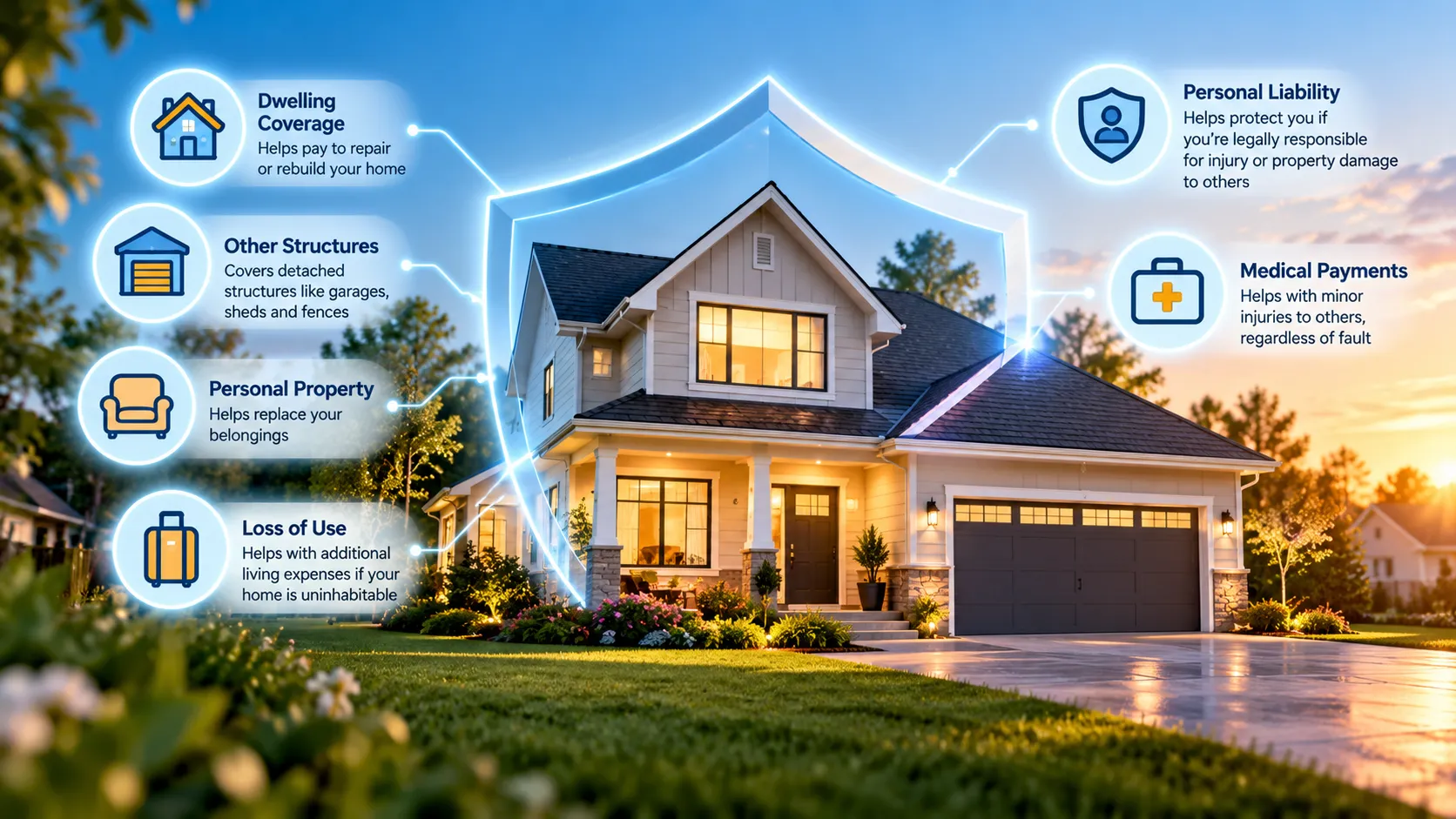
Homeowners insurance is generally a package of property and liability coverages for an owner-occupied home. It is not one protection against everything that might happen to a house. Instead, it groups separate coverages for the home, certain other structures, belongings, qualifying additional living costs, and covered responsibility to other people.
The policy tells you what property is insured, which causes of loss it covers, the limits that apply, and the exclusions or conditions that can narrow coverage. State rules and insurer policy forms can differ, so a homeowners policy should be read as a contract, not as a universal checklist of every household risk.
What does homeowners insurance cover?
Most homeowners policies organize protection into several familiar components. The headings below are useful for understanding a declarations page, but the scope of each component comes from the actual policy.
Dwelling coverage
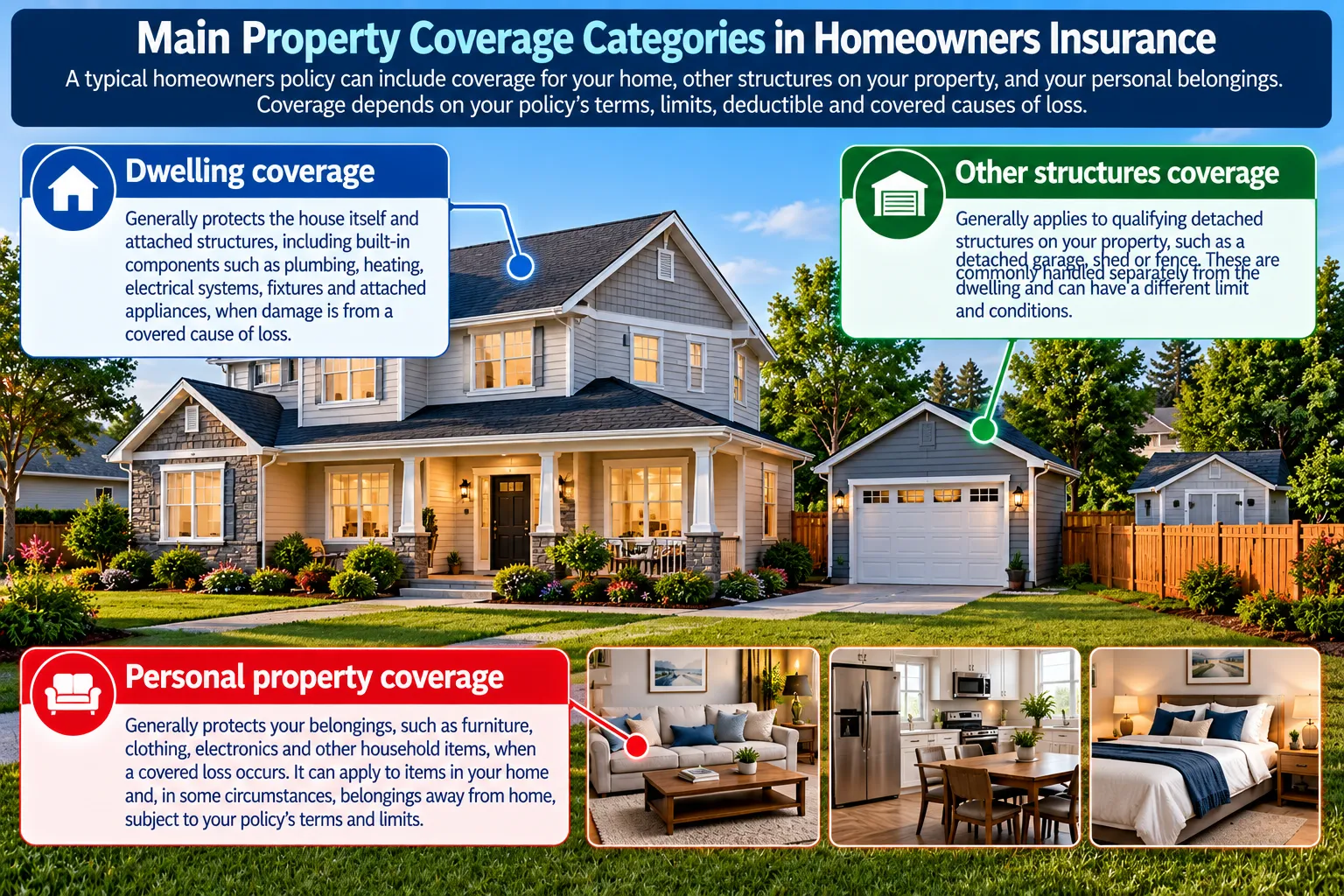
Dwelling coverage generally protects the house itself and attached structures when damage results from a covered cause of loss. It may include built-in components such as plumbing, heating, electrical systems, fixtures, and attached appliances. A damaged roof or an attached garage, for example, may be considered part of the dwelling depending on the policy and facts.
This does not mean every kind of physical damage to the house is covered. The cause of loss, policy form, exclusions, deductible, and any special conditions all matter. A dwelling limit also is not automatically the same as the home’s market value or sale price.
Other structures coverage
Other structures coverage generally applies to qualifying detached structures on the property, such as a detached garage, shed, or fence. These structures are commonly handled separately from the dwelling, and the policy can set a distinct limit and conditions.
Review the declarations page before assuming a structure is included. Whether a structure is detached, used for a particular purpose, rented to others, or affected by an exclusion can matter. Coverage may also be limited by the property type or the cause of damage.
The line between the dwelling and other structures is a classification question, not just a description of where something stands. Check how the policy identifies attached and detached property, including any structures connected by a fence, utility line, breezeway, or similar feature. When planning a project or changing how a structure is used, ask the insurer how the change affects the existing coverage.
Personal property coverage
Personal property coverage generally protects belongings such as furniture, clothing, and electronics when a covered loss occurs. It can apply to items in the home and, in some circumstances, belongings away from home, but policy wording and limits control the result.
Certain categories of valuable property can have special limits. Jewelry, art, collectibles, some electronics, or business property may need closer review. An endorsement or scheduled coverage may be available for particular items, but it is not automatically part of every policy.
The type of valuation matters as well. Some personal-property coverage pays actual cash value, which generally reflects depreciation, while other coverage may provide replacement-cost treatment under stated conditions. The declarations page, policy form, and any endorsement are more useful than an assumption based on the type of item.
Loss of use and additional living expenses
If a covered loss makes the home uninhabitable, loss-of-use coverage may help with qualifying additional living expenses. Depending on the policy and situation, that can include temporary housing, additional meal costs, or certain additional transportation and storage costs.
The key word is additional. This coverage is not a promise to pay every normal household expense while a family is displaced. Policy limits, time limits, reasonable-cost standards, and documentation requirements can apply. Ask the insurer how it evaluates an expense before assuming it qualifies.
Personal liability coverage
Personal liability coverage generally responds when an insured is legally responsible for covered bodily injury or property damage to others. It is different from property coverage for the insured home. An injury to a visitor or damage to someone else’s property could raise a liability question, but the policy terms, facts, exclusions, and applicable law determine whether coverage applies.
Liability coverage does not make every dispute or lawsuit covered. The insurer evaluates a claim under the contract, including the alleged event and any exclusions or conditions.
Medical payments to others
Medical payments to others is separate from personal liability coverage. It may help with qualifying medical expenses for another person injured in circumstances the policy covers, often without resolving every legal-responsibility question first. Limits and conditions apply.
It is not unlimited medical coverage, and it does not substitute for the homeowner’s own health insurance. Check the policy for who is eligible, what expenses count, and the amount available.
What kinds of damage can homeowners insurance cover?
Policies describe covered causes of loss as perils. In plain language, a peril is the event that causes damage. Depending on the policy form, examples of commonly insured causes of loss may include fire, lightning, wind or hail where covered, theft, vandalism, and other events defined in the policy.
Some coverage is written on a named-perils basis, meaning the policy lists the causes of loss it covers. A broader or open-perils approach generally begins more broadly and lists exclusions instead. Neither label means every policy covers the same events or every loss from an event. The coverage section, definitions, and exclusions need to be read together.
The same event can also affect more than one coverage category. A covered fire, for example, might involve the dwelling, belongings, detached structures, and qualifying additional living expenses. That does not combine all limits into one unlimited amount: each section can have its own limit, deductible treatment, conditions, and valuation rules. A claim representative or insurer can explain how a particular policy applies after a loss.
What doesn’t home insurance usually cover?
Exclusions and limitations are as important as the named coverages. A standard homeowners policy generally should not be assumed to cover the following risks without checking the contract.
Flood
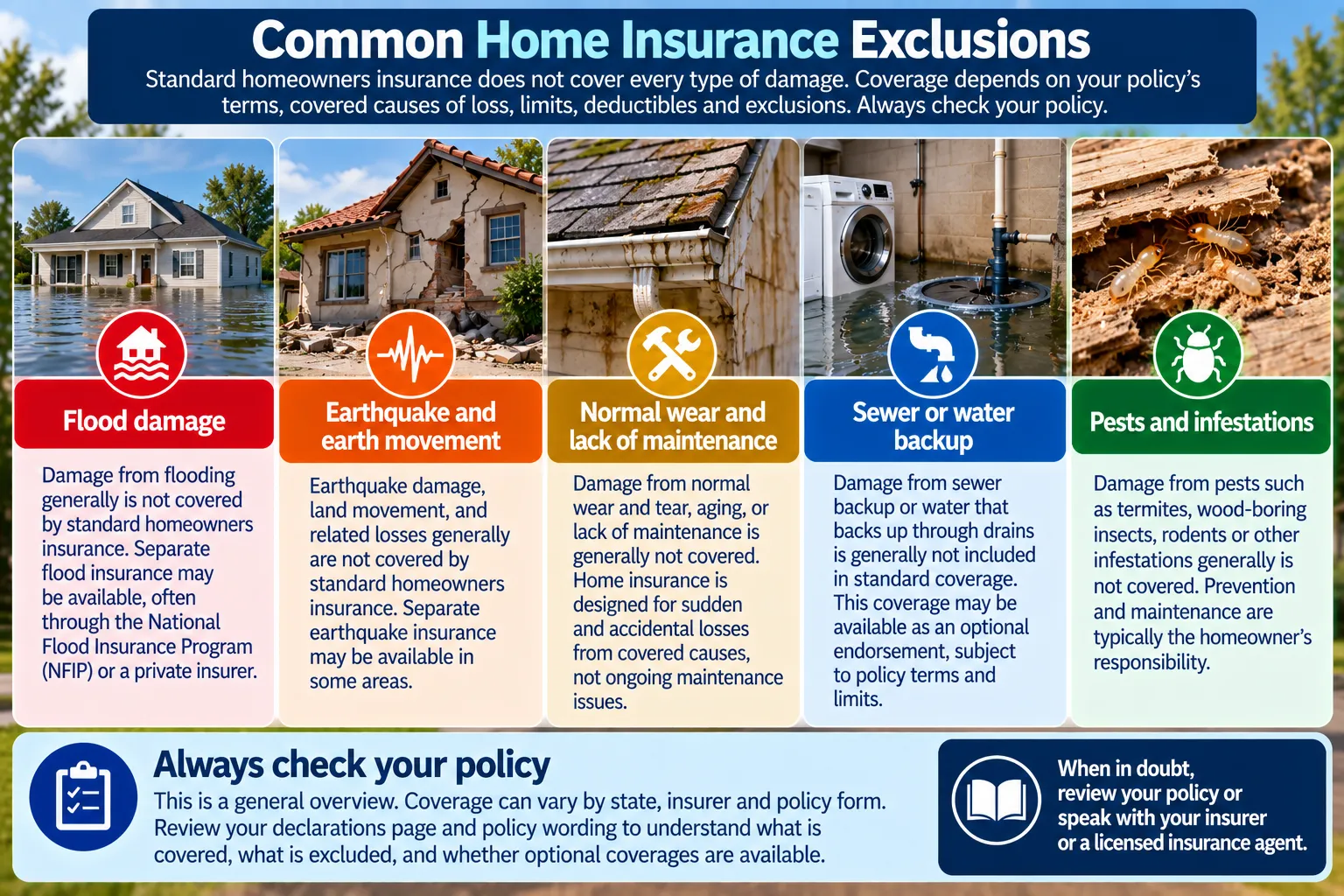
Standard homeowners coverage generally should not be assumed to cover flooding. Separate flood insurance may be needed, and flood coverage should be reviewed separately from water damage caused by another event.
Earthquake and earth movement
Standard policies generally exclude or limit earthquake-related loss. Separate coverage or endorsements may be available, depending on the insurer and location.
Maintenance and wear
Insurance is not generally intended to function as a home-maintenance contract. Deterioration, ordinary wear, and a problem that develops gradually can be handled differently from sudden accidental damage.
Sewer or water backup
Coverage can differ and may require additional protection. Do not assume that any water-related loss is treated the same way.
Pests and infestations
Losses connected with maintenance, deterioration, or infestation can be excluded or limited depending on the policy terms and circumstances. The fact that property was damaged does not by itself establish coverage.
Does home insurance cover mold?
Mold coverage depends heavily on its cause and the policy. Mold associated with a sudden covered water loss may be treated differently from mold caused by long-term moisture, wear, or neglected maintenance. For the policy questions to check, see our guide to mold coverage under home insurance.
How do homeowners insurance limits work?
Each coverage component can have its own limit. The dwelling, other structures, personal property, loss of use, liability, and medical-payments sections may each show a separate amount on the declarations page. Some limits may be related to the dwelling limit, while others are selected separately; no single percentage structure applies to every policy.
Sublimits can also apply to particular property categories or types of loss. A total personal-property amount may therefore not be the full answer for a valuable item. Review the declarations page, endorsements, and policy wording together, and ask about any amount you do not understand.
What is a homeowners insurance deductible?
A deductible generally represents the portion of a covered property loss the policyholder must bear before applicable insurance payment. Deductible structures can vary. A policy may use a dollar deductible, a percentage-based deductible, or different deductibles for certain types of events.
Catastrophe-related deductibles can operate differently depending on the policy and location. Do not select or compare a deductible by looking only at premium; first understand how it would apply to a covered loss.
Replacement cost vs. actual cash value
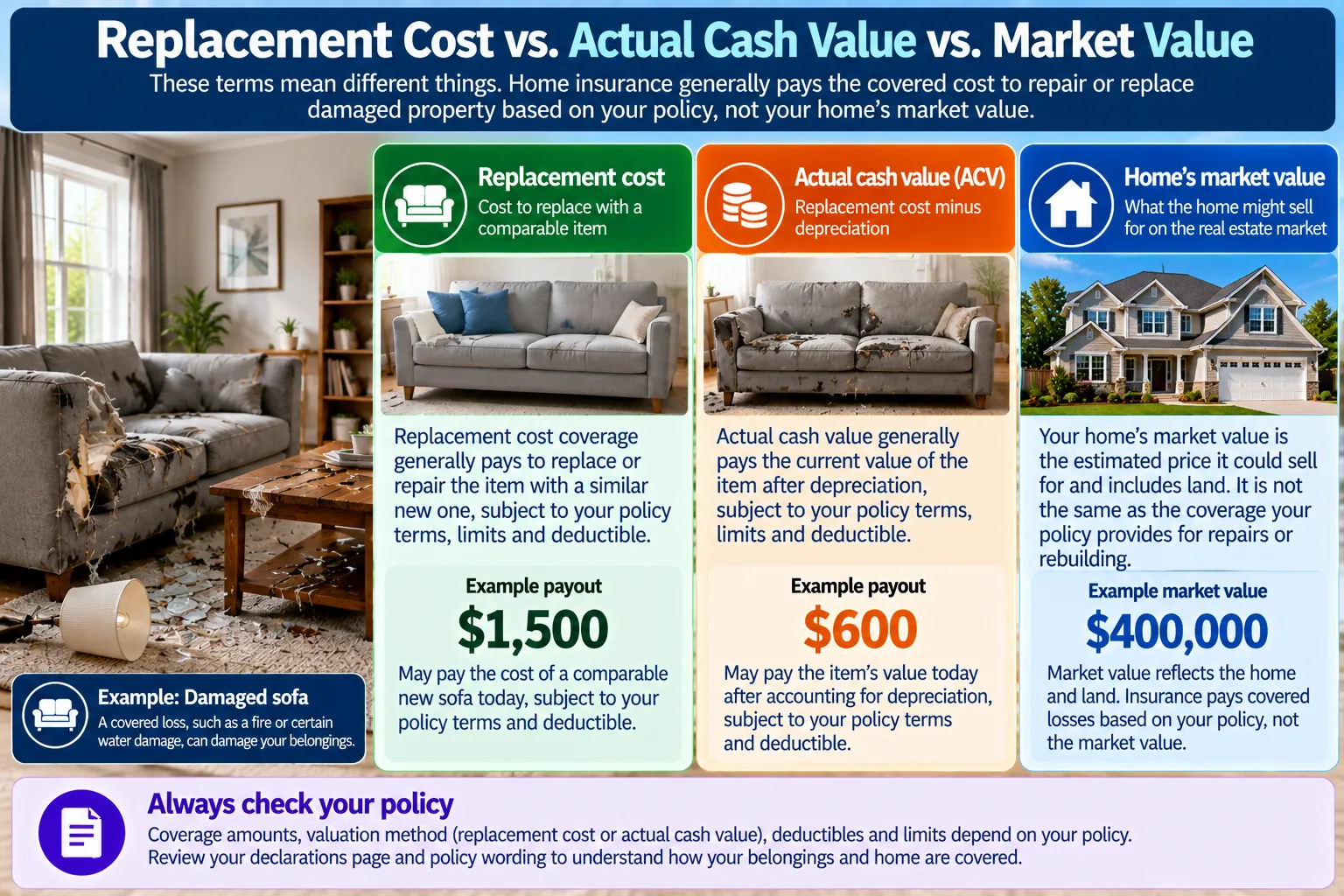
Replacement cost generally refers to the cost to repair or replace covered property with comparable materials or items, subject to policy terms. Actual cash value generally accounts for depreciation. The difference can affect how a covered property claim is valued.
Neither phrase should be confused with a home’s market value. The amount a buyer might pay for a home reflects factors such as land, location, and demand, while reconstruction cost concerns repairing or rebuilding covered property under the policy’s terms.
Does homeowners insurance cover everything you own?
Not necessarily. Personal property coverage may have special limits for categories such as jewelry, art, collectibles, certain electronics, or business property. The item, its use, the cause of loss, where it was kept, and the policy form can all be relevant.
An endorsement or scheduled coverage may be available for specific items. A current home inventory, receipts, photographs, and appraisals where appropriate can make it easier to identify what you own and ask informed questions about the limits that apply.
How to check what your home insurance actually covers
Use this practical review process before relying on a policy or quote:
- Read the declarations page.
- Identify each coverage limit.
- Check the deductibles.
- Review the covered causes of loss.
- Review exclusions.
- Check personal-property sublimits.
- Review endorsements.
- Check loss-of-use limits.
- Review liability coverage.
- Ask the insurer or a licensed professional about unclear policy terms.
The declarations page is a summary, not the entire agreement. Keep the full policy and endorsements with it, and recheck them when the home, belongings, occupancy, or policy renewal changes.
For a more useful conversation with an insurer or agent, write down the unanswered question and the relevant policy section before calling. Ask whether an answer is based on the declarations page, the base policy, or an endorsement. That simple record can help you compare a renewal with a new quote and spot changes in limits, deductibles, or exclusions.
Home insurance coverage checklist
- Confirm the home address, named insureds, and effective dates.
- List the dwelling, other-structures, personal-property, and loss-of-use limits.
- Check how property is valued and which deductibles apply.
- Identify exclusions for flood, earthquake, water backup, maintenance-related loss, and any other concerns relevant to the home.
- Review special limits for valuables and business-related property.
- Save an inventory and supporting records somewhere accessible after a loss.
- Ask about endorsements or terms you do not understand.
For broader educational context, visit MyCoverScope’s Home Insurance hub and United States hub.
The bottom line
Homeowners insurance typically combines protection for the dwelling, other structures, belongings, qualifying temporary additional living expenses, and liability. But the actual contract determines what is covered: limits, deductibles, covered causes of loss, exclusions, and endorsements all matter. Review those documents carefully rather than assuming a standard policy protects against every kind of damage.