

How much does renters insurance cost?
There is no single renters insurance price that applies to every renter. The premium reflects the property, the renter’s chosen coverage, local conditions, available policy forms and the insurer’s rating approach. Even two people in the same city can receive different prices when their limits, deductible, prior claims information or optional coverage differ.
For historical national context, NAIC-derived data reported by the Insurance Information Institute puts the average renters insurance premium at $171 per year for 2022. Dividing that historical figure by 12 is about $14.25 per month. It is not a 2026 quote, a promise of what a policy costs now, or a substitute for comparing an individual policy’s coverage and price. Individual premiums can differ substantially.
The declarations page identifies the premium for the policy term, along with the selected coverages, limits, deductible and listed discounts. Reading those items together is more useful than treating one historical average as a current market price.
The policy term also matters when comparing prices. A premium quoted for one term, payment schedule or effective date may not be directly comparable with another unless the underlying coverage and time period match. Ask whether fees, installment charges, policy changes during the term or an introductory discount are reflected in the quoted total. Those questions do not predict a rate; they help make sure two numbers describe the same thing.
Why renters insurance prices vary
Insurance pricing considers the potential cost of covered losses and the coverage a customer selects. Insurers do not necessarily use the same information in the same way, and permitted rating practices can vary by state. The factors below are common questions to examine when comparing otherwise similar policies.

Where you live
Location can affect pricing because insurers evaluate risk differently across areas. Local claim experience, property-crime exposure, severe-weather exposure, fire protection and the state insurance environment may be relevant. That does not mean every insurer uses a ZIP code, crime data or any other local measure identically. Ask what information was used for a particular quote if it is unclear.
How much personal-property coverage you choose
More insured belongings generally mean more potential exposure for the insurer, so the personal-property limit can affect the premium. A room-by-room inventory gives a better starting point than choosing a number based on an advertisement. Include the things that would actually need replacing after a covered loss, then compare that inventory with the policy limit and any special limits.
Your liability limit
Renters policies commonly include personal liability coverage for certain accidental injury or property-damage claims. Choosing a higher limit can affect a premium. The right amount depends on a renter’s circumstances, policy terms and other protection available, so this is a comparison point rather than a universal recommendation.
Your deductible
A deductible is the amount the policyholder is responsible for paying toward a covered property loss before applicable insurance benefits are paid, subject to the policy terms. A higher deductible can sometimes reduce the premium, but it also increases the amount the renter may need to pay after a covered claim. The relationship is not identical across insurers or all forms of coverage.
Replacement cost vs actual cash value
Actual cash value generally accounts for depreciation when covered property is settled. Replacement-cost coverage generally reimburses based on the cost to replace covered property with comparable new property, subject to the policy’s terms and claim procedures. Replacement-cost coverage can cost more than actual-cash-value coverage, but not every renters policy offers both choices in the same way.
Extra coverage and endorsements
An endorsement adds or changes coverage, and may increase the premium. Depending on the insurer and state, options can include higher limits for jewelry, scheduled valuables, electronics, identity-related coverage or water-backup protection. The basic policy may also have special limits for valuable property. Confirm both the availability and the terms of an endorsement instead of assuming it is included.
Claims and risk history
Insurers may consider permitted underwriting or rating factors, including claims history, when offering or renewing a policy. The NAIC notes that insurers commonly review claims history, but a prior claim does not automatically produce one defined increase. State rules, the circumstances of a claim and each insurer’s process can affect the outcome.
Insurance company
Insurers use different rating models, underwriting rules and discount programs. Similar-looking coverage can therefore carry different prices. Comparison-shopping can be useful, provided each quote is based on equivalent limits, deductible, valuation method and endorsements.
Does your apartment affect renters insurance cost?
The rental address and building can be relevant to a quote. Location, the type of residence, building characteristics and protective features may all be considered where relevant and permitted. Smoke alarms, fire protection, secure entry or other safety features may matter to some insurers, but they are not universal pricing inputs or guaranteed discounts.
Give accurate information about the address and residence type. If a quote asks about protective devices or building features, verify them with the landlord or property manager rather than guessing. An insurer can explain which details affect a particular offer.
Does your credit affect renters insurance cost?
Some insurers in some states may use a credit-based insurance score where permitted. Other jurisdictions restrict or prohibit that use, so credit is not a universal renters insurance factor. The NAIC advises consumers to check their credit reports for errors and to ask an insurer or agent how a score is used where it is allowed.
This is separate from a lender’s credit decision. If credit information is part of an insurance rating process, the applicable state rules and the insurer’s notice practices govern how it is handled.
Does your deductible change the cost?
The deductible creates a tradeoff between the premium and the amount retained by the policyholder after a covered loss. A higher deductible may lead to a lower premium and more out-of-pocket responsibility after a claim. A lower deductible may lead to a higher premium and less deductible exposure.
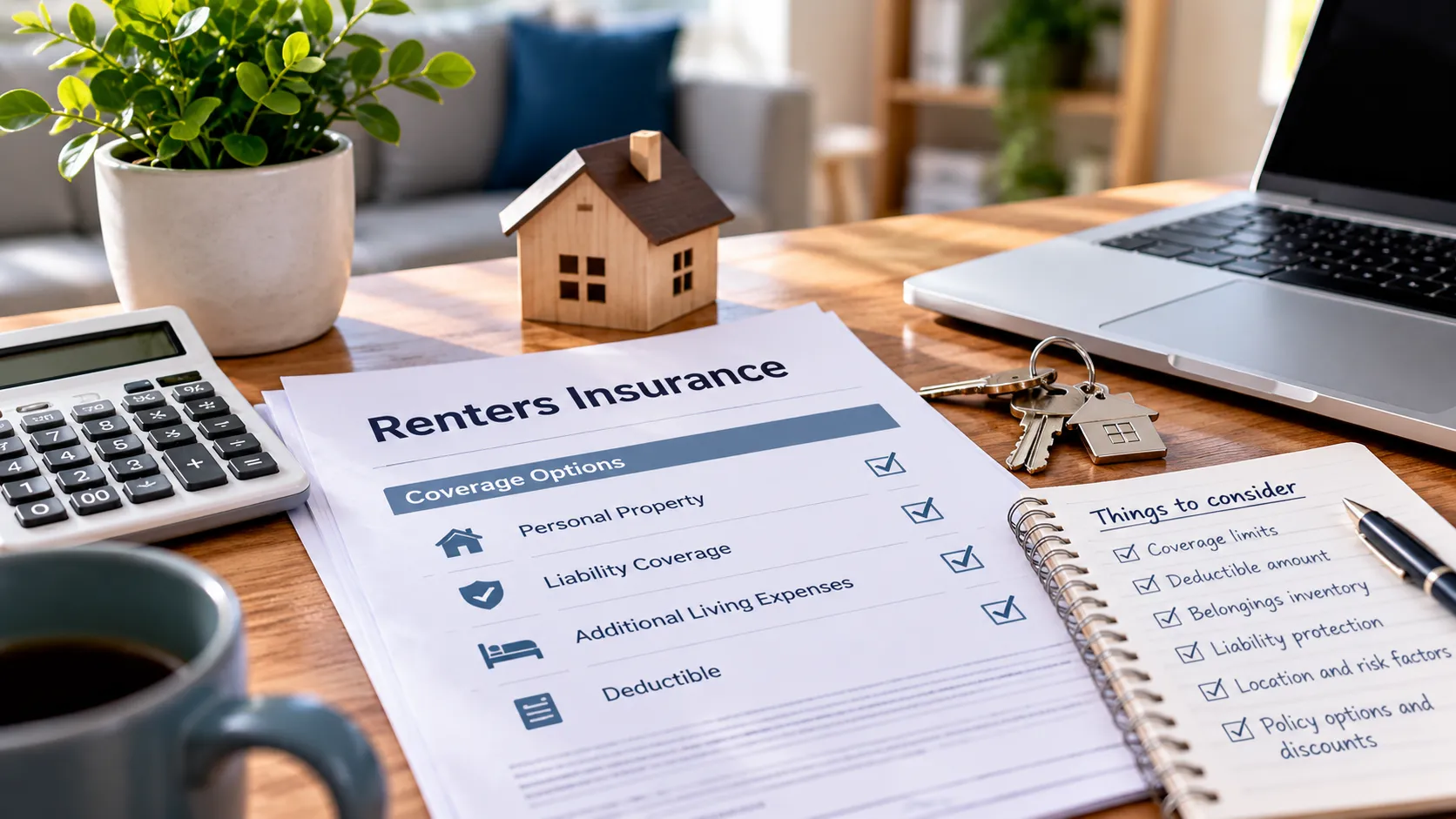
Compare the deductible with an amount you could manage if a covered loss occurred. Also check whether the deductible applies to every relevant coverage or whether the policy has separate rules for a particular kind of loss.
Does replacement-cost coverage cost more?
It can. Replacement-cost protection generally provides broader reimbursement than actual-cash-value settlement because depreciation is not deducted in the same way. It may therefore carry a higher premium. The actual difference depends on the policy offered, the property being insured and the insurer’s terms, so compare the valuation basis alongside the price.
Can bundling affect renters insurance cost?
Some insurers offer a multi-policy discount when a renter combines an eligible renters policy with another policy, such as auto insurance. Bundling is not automatically the lowest-cost option. Compare the total premium, deductibles, limits and exclusions across the combined policies rather than assuming a stated discount determines the best overall value.
What discounts may be available?
Available discounts are insurer-specific. Examples may include multi-policy discounts, protective-device discounts, claims-free discounts where applicable, automatic-payment or paperless options, and other programs. A declarations page can show discounts already applied to a policy. Ask whether an offered discount changes coverage, eligibility or policy conditions before making a comparison.
Why two renters can pay different prices
Consider two renters in the same city. Renter A selects a lower personal-property limit, a higher deductible and fewer endorsements. Renter B insures more belongings, chooses replacement-cost coverage, selects a higher liability limit and adds a valuables endorsement. Their premiums may differ even though they live in the same market.
The example does not establish a price or say one selection is better. It shows why comparing a single monthly figure without the underlying coverage can be misleading.
How to compare renters insurance costs properly
Compare quotes on equivalent terms whenever practical:

- The same personal-property limit.
- The same liability limit.
- The same deductible.
- The same replacement-cost or actual-cash-value basis.
- The same endorsements.
- The same loss-of-use or additional-living-expense protection.
- The same major exclusions where practical.
- Similar policy terms and effective dates.
Price alone can hide an important difference in what is protected or how a claim is settled. Save quote summaries and ask the insurer to clarify any wording that does not match the comparison.
It is also useful to separate a policy’s base premium from optional changes. A quote may look less expensive because it omits an endorsement, uses a different deductible or settles personal property on an actual-cash-value basis. Note those differences before deciding that one insurer is charging more for the same protection. If a quote cannot be aligned precisely, write down the difference rather than treating the policies as equivalent.
How to estimate how much coverage you may need
Build a home inventory before comparing personal-property limits. Include furniture, clothing, electronics, kitchen goods, appliances you own, hobby and sports equipment, valuables and miscellaneous everyday belongings. Add photos, receipts, model numbers and replacement estimates where useful.
For a fuller explanation of what renters policies can include, read what renters insurance covers. The inventory is educational preparation, not a personalized coverage recommendation; policy limits and special sublimits still need to be checked against the actual policy.
Is renters insurance worth the cost?
Whether a policy is worthwhile is an individual decision, not a universal answer. Consider the value of your belongings, your ability to absorb a covered loss, potential liability exposure, possible temporary living expenses, lease requirements and the policy’s exclusions and limits. A low premium is not useful if the coverage leaves an important risk outside the policy, and a broad policy may not be useful if it does not fit the renter’s circumstances.
Questions to ask before buying renters insurance
- What is the premium for the policy term?
- What deductible applies?
- Is personal property settled at actual cash value or replacement cost?
- What personal-property limit applies?
- What liability limit applies?
- What additional-living-expense or loss-of-use coverage applies?
- Are there special limits on valuables?
- What losses are excluded?
- Are endorsements available?
- Are discounts available?
- Does the landlord require proof of renters insurance?
The bottom line
There is no single current price for every renter. Cost depends on location, coverage choices, deductible, insurer and other permitted rating factors. The $171 annual figure is a 2022 national historical average, not an individual 2026 quote. Compare equivalent coverage, not price alone, and review the declarations page before deciding how a policy fits your needs.