
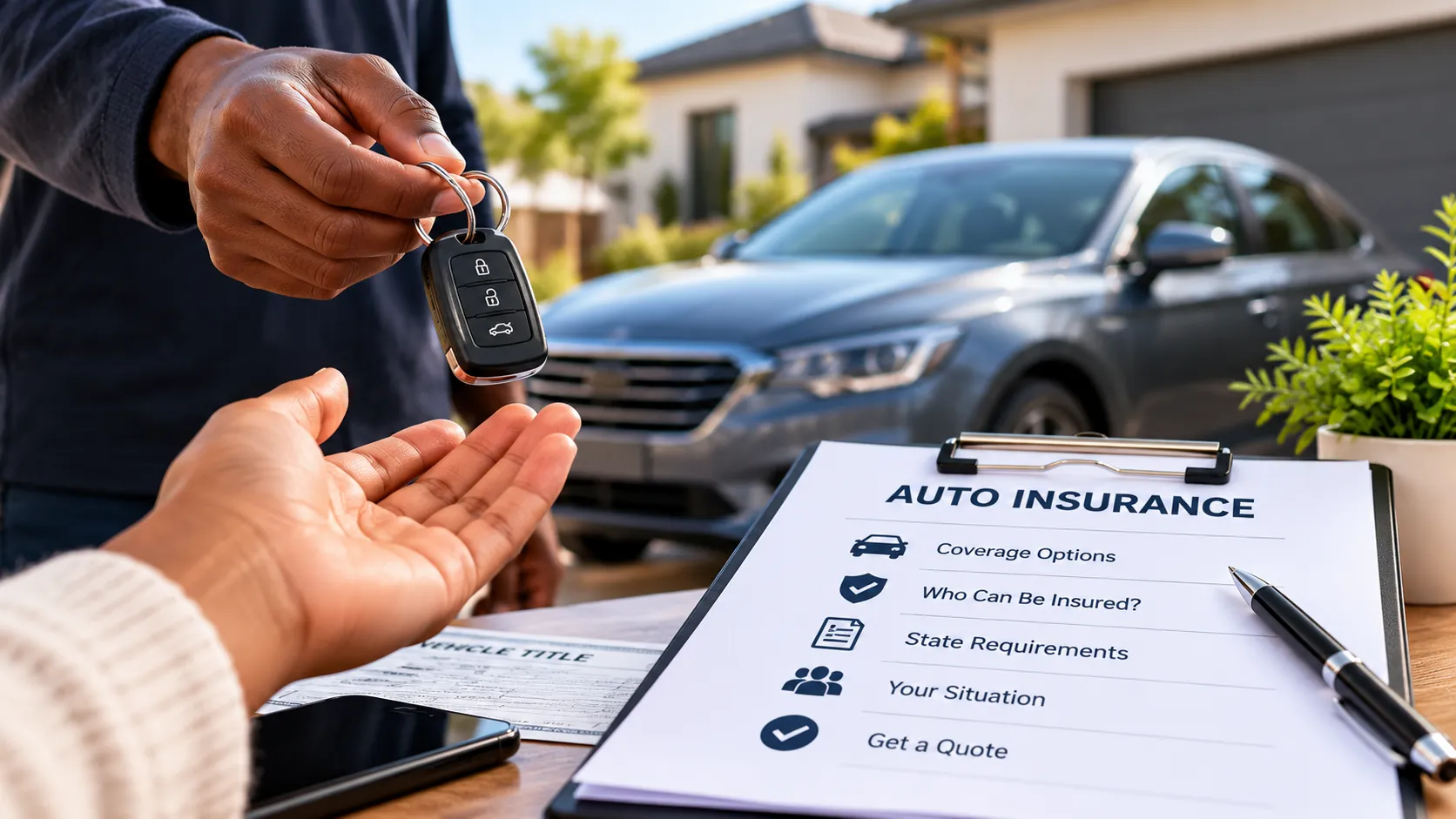
Can you insure a car that isn’t in your name?
Sometimes, but there is no single nationwide yes-or-no answer. An insurer may consider the vehicle title and registration, the owner, the policyholder, the primary and regular drivers, the garaging address, household relationship, financing or lease terms, and state rules. Its underwriting and policy rules then determine whether it will offer a particular structure.
That differs from borrowing a vehicle with permission. The question of whether a driver has coverage for a particular trip depends on the owner’s policy, the driver, the use, and its terms. It does not automatically mean the borrower can purchase ordinary vehicle insurance in their own name.
Why does car ownership matter for insurance?
Title ownership identifies a legal interest in the vehicle, while a policyholder or named insured is the person or people who buy the policy. A listed driver may be covered to drive under a policy without owning the car. A regular household driver is another fact an insurer may need to know for underwriting and coverage purposes.
Most states require at least some auto insurance or financial responsibility, but requirements are state-specific. Liability coverage is one part of the legal and policy picture. The NAIC also explains that lenders may require collision and comprehensive coverage for a financed or leased vehicle; these physical-damage coverages serve different purposes. Those lender or lessor interests do not make every financing arrangement identical.
Accurate information about the owner, vehicle, drivers, use, and address helps an insurer decide how a policy should be written. It is safer to ask before buying than to assume a relationship or permission creates eligibility.
What is an insurable interest in a car?
The NAIC glossary defines insurable interest as a right or relationship through which the insured could suffer financial loss from damage, loss, or destruction of the insured subject. In a vehicle discussion, ownership, a loan or lease, and another financial relationship can raise different questions about that interest.
This general definition is not a universal personal-auto ownership test. States and insurers can apply their own rules, policy forms, underwriting standards, and documentation requirements. Ask the insurer what relationship it needs to see for the requested policy arrangement.
Car ownership and insurance options
The graphic is a simplified overview, not a coverage decision. Family, spouse or partner, student, lender, lease, and non-owner situations can be structured differently by state and insurer. Ownership, household, regular-driver, and vehicle circumstances still matter.
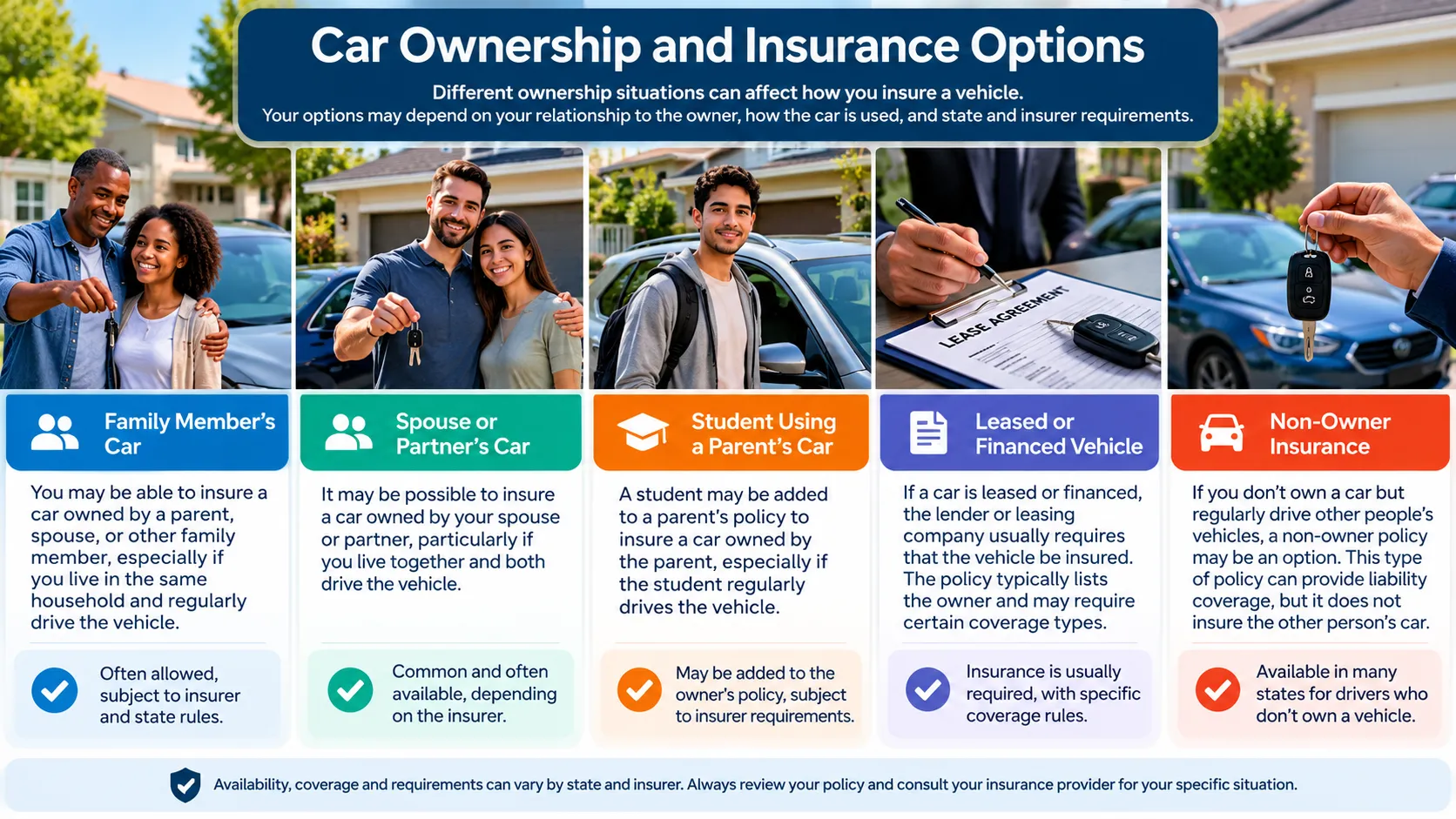
For example, an insurer may permit a household driver to be listed on an owner’s policy while declining a different arrangement for someone who lives elsewhere. A lender or lessor can have an interest in the vehicle, but the policy, title, and contract details remain important.
Common situations when the car isn’t in your name
These common arrangements require accurate disclosure rather than assumptions about eligibility.
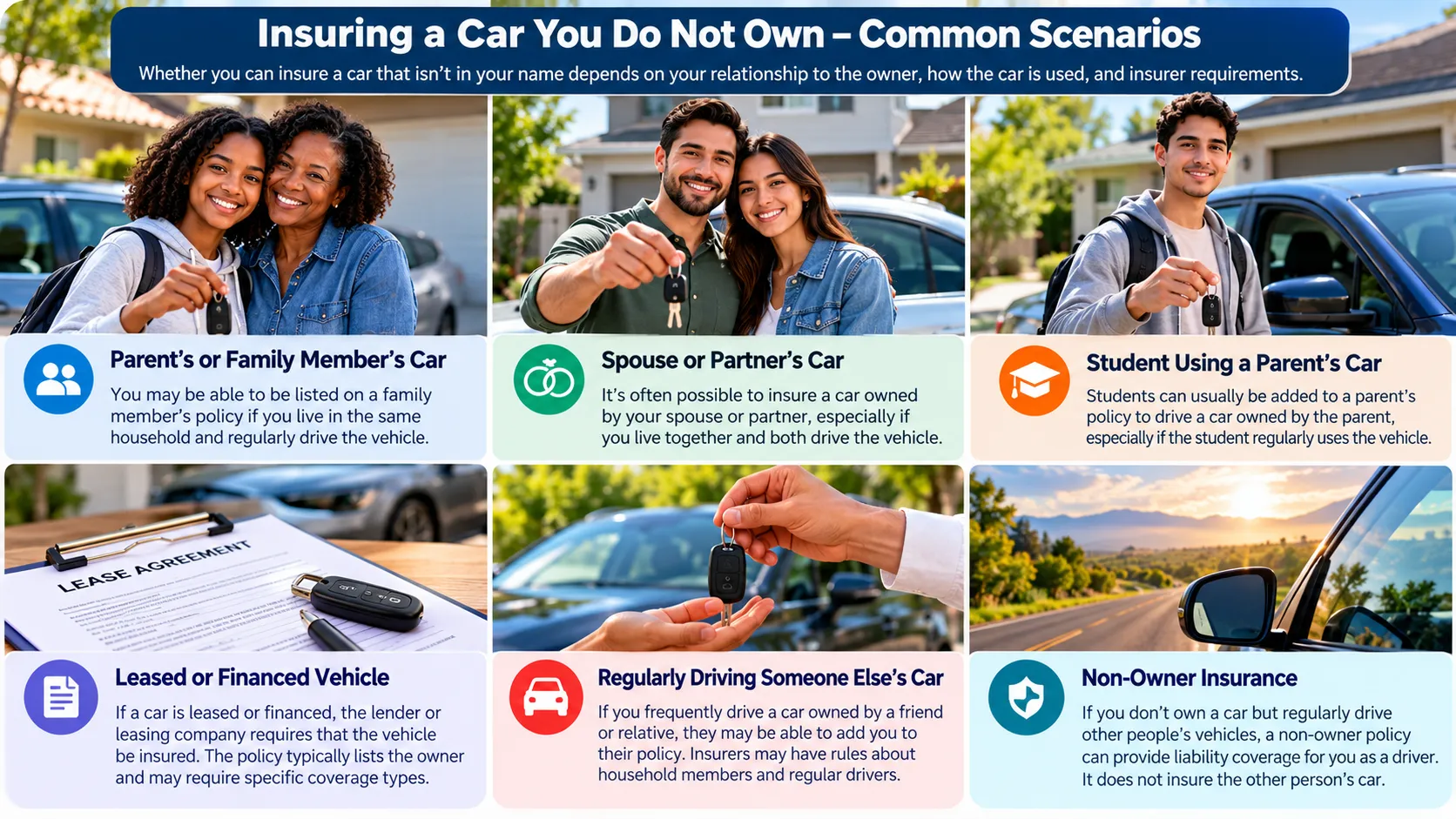
A parent’s or family member’s car
A family relationship does not by itself decide policy eligibility. The owner, residence, garaging location, regular use, and insurer’s household rules can matter. The NAIC advises insurers to be told about household members and people who drive insured vehicles.
A spouse’s or partner’s car
Household and regular-driver information can be relevant when spouses or partners share cars or an address. Do not assume spouses automatically share coverage or that living together automatically permits one policy structure. Give the insurer the actual ownership and driving arrangement.
A student driving a parent’s car
NAIC consumer guidance says a student whose name is on the vehicle title will need their own policy, while a student may be able to remain on a parent’s policy when the parent owns the vehicle. It also advises reporting where the car is stored if that address differs from the policy address. This is consumer guidance, not a substitute for the insurer’s and state’s requirements.
A leased or financed vehicle
A lender or lessor may require collision and comprehensive coverage while it has a financial interest in the vehicle. It may also be identified on policy documents as appropriate. The loan or lease contract and insurer determine how the owner, borrower, named insured, and vehicle must be shown.
A car you regularly borrow
Occasional permission to borrow a car is different from being a regular driver. The owner should tell the insurer about recurring use or a household driver and ask how that person should be listed. Do not rely on a broad phrase such as “insurance follows the car.”
A company or employer vehicle
An employer vehicle can involve commercial coverage, employer rules, and permitted-use restrictions that differ from a household personal-auto policy. Ask the employer and insurer which policy applies; do not try to replace business vehicle coverage with a personal arrangement without confirmation.
Can I insure my parents’ car in my name?
Possibly, but ownership matters. If your parents own and title the vehicle, adding you as a driver to their policy may be more appropriate in some arrangements than making you the sole policyholder. If your name is on the title, NAIC guidance indicates you need your own policy. Residence, garaging, regular use, state rules, and the insurer’s requirements can change the answer.
Can I insure my spouse’s or partner’s car?
An insurer may be able to structure coverage for household members and regular drivers, but it needs complete information about who owns, keeps, and drives the car. A spouse or partner relationship is not a universal rule of coverage. Ask whether you should be a named insured, listed driver, or part of another accepted arrangement.
Can I insure a friend’s car?
Usually, a friend’s permission to drive is not enough reason to assume you can insure the actual car yourself. Occasional borrowing, regular use, ownership, financial interest, and state and insurer rules should be discussed with the insurer. The owner may need to update their policy instead.
What if I regularly drive someone else’s car?
Regular use should be disclosed. The NAIC says insurers are entitled to know who lives in the household and drives their vehicles, and advises reporting a new resident who drives. Incorrect or incomplete information can create underwriting, cancellation, nonrenewal, claim, or coverage issues depending on the facts, policy, and applicable law; it does not predetermine a claim result.
What is non-owner car insurance?
Non-owner insurance is generally intended for a person who does not own a vehicle but sometimes drives vehicles owned by others. It can provide applicable driver-oriented liability coverage and possibly other coverages depending on the policy and state.
It is not the same as buying ordinary insurance on someone else’s vehicle. It generally does not insure the borrowed car itself for collision, comprehensive, or other physical damage. Confirm the actual policy’s covered drivers, vehicles, exclusions, and limits before relying on it.
Can I insure a financed or leased car that isn’t titled solely in my name?
Financing or leasing adds a lender or lessor interest, but it does not eliminate ownership and policy-eligibility questions. The NAIC notes that collision and comprehensive may be required by the lending institution or lessor. Check the title, registration, finance or lease agreement, and insurer’s requirements together; do not assume a co-borrower, household member, or driver can be the policyholder in every case.
Can the car owner and policyholder be different people?
They can be different in some circumstances, but it is not a uniform arrangement available to everyone. The insurer may require a particular named insured, owner, driver listing, address, or proof of relationship or financial interest. Ask before issuing, changing, or renewing a policy.
What could go wrong if ownership or drivers are listed incorrectly?
Incorrect ownership, garaging, or driver information can affect underwriting and can create cancellation, nonrenewal, coverage, or claim issues depending on the circumstances and applicable law. The NAIC specifically urges households to notify the insurer about drivers using their vehicles. Accuracy is more useful than trying to fit an arrangement into a shortcut label.
Questions to ask before insuring someone else’s car
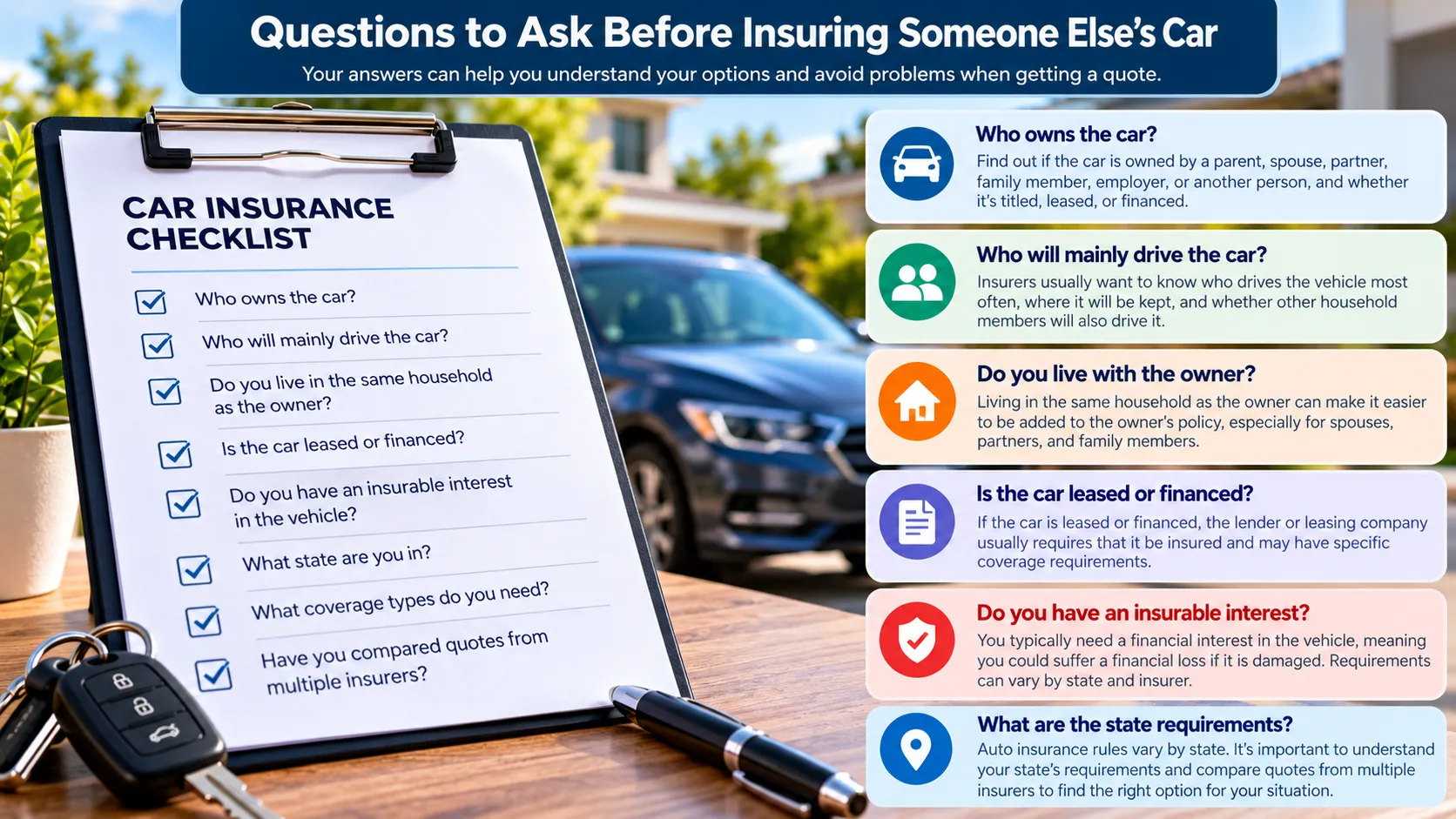
- Who is shown on the title and registration?
- Who is the primary driver, and who else drives regularly?
- Where is the car normally kept?
- Do the driver and owner share a household?
- Is the car financed or leased?
- Does the insurer require the owner to be a named insured?
- Would being added to the owner’s policy be appropriate?
- Is non-owner insurance relevant, or does the question involve the vehicle itself?
- What does state law require, and what coverage applies to the car?
What information should you give an insurer?
Provide the title or registration information, VIN, usual garaging address, owner, regular and household drivers, vehicle use, and financing or lease details where applicable. These facts help the insurer evaluate the risk and issue documents that match the real arrangement. Keep a copy of the application and declarations page, then correct any error promptly.
Frequently asked questions
Can I insure a car I don’t own?
Possibly in some circumstances, but it depends on ownership, drivers, address, state rules, insurable interest, and insurer requirements. Ask before buying coverage.
Can I insure a car registered to someone else?
Registration is an important fact, but it is not the only one. Give the insurer accurate title, registration, driver, garaging, and relationship information.
Can I insure my parents’ car?
You may be able to be listed on a parent’s policy when the parent owns the vehicle, but eligibility is not automatic. If your name is on the title, NAIC guidance says you need your own policy.
Can I insure my spouse’s or partner’s car?
An insurer may have an available household arrangement, but ownership, residence, regular use, state rules, and policy terms determine it.
Can I insure a friend’s car?
Permission to drive does not itself establish eligibility to insure the vehicle. Ask the owner’s insurer how regular use should be disclosed.
Can two people insure the same car?
Avoid buying overlapping policies without insurer guidance. Whether two policies, named insureds, or drivers can apply to one car depends on the insurers, policy terms, ownership, and state rules.
Does my name have to be on the title to get car insurance?
Not in every possible arrangement, but title ownership can be central to eligibility. The insurer can explain whether a named-insured or driver role is available for the facts.
What is non-owner car insurance?
It is generally coverage for a named driver who does not own a vehicle and drives others’ vehicles, not physical-damage insurance for the borrowed car.
Does non-owner insurance cover damage to the car I’m driving?
Generally, it does not insure the borrowed vehicle itself for physical damage. Coverage varies, so read the actual policy.
Can I insure a financed car that isn’t in my name?
Possibly, but lender or lessor, ownership, title, contract, and insurer requirements all matter. Confirm the arrangement before relying on coverage.
The bottom line
There is no single nationwide answer to insuring a car that is not in your name. Ownership, driver status, household arrangements, state law, financing or leasing, and insurer requirements matter. Be accurate about who owns, keeps, and drives the vehicle, and ask the insurer how the policy should be structured before relying on coverage.