
What is comprehensive car insurance?
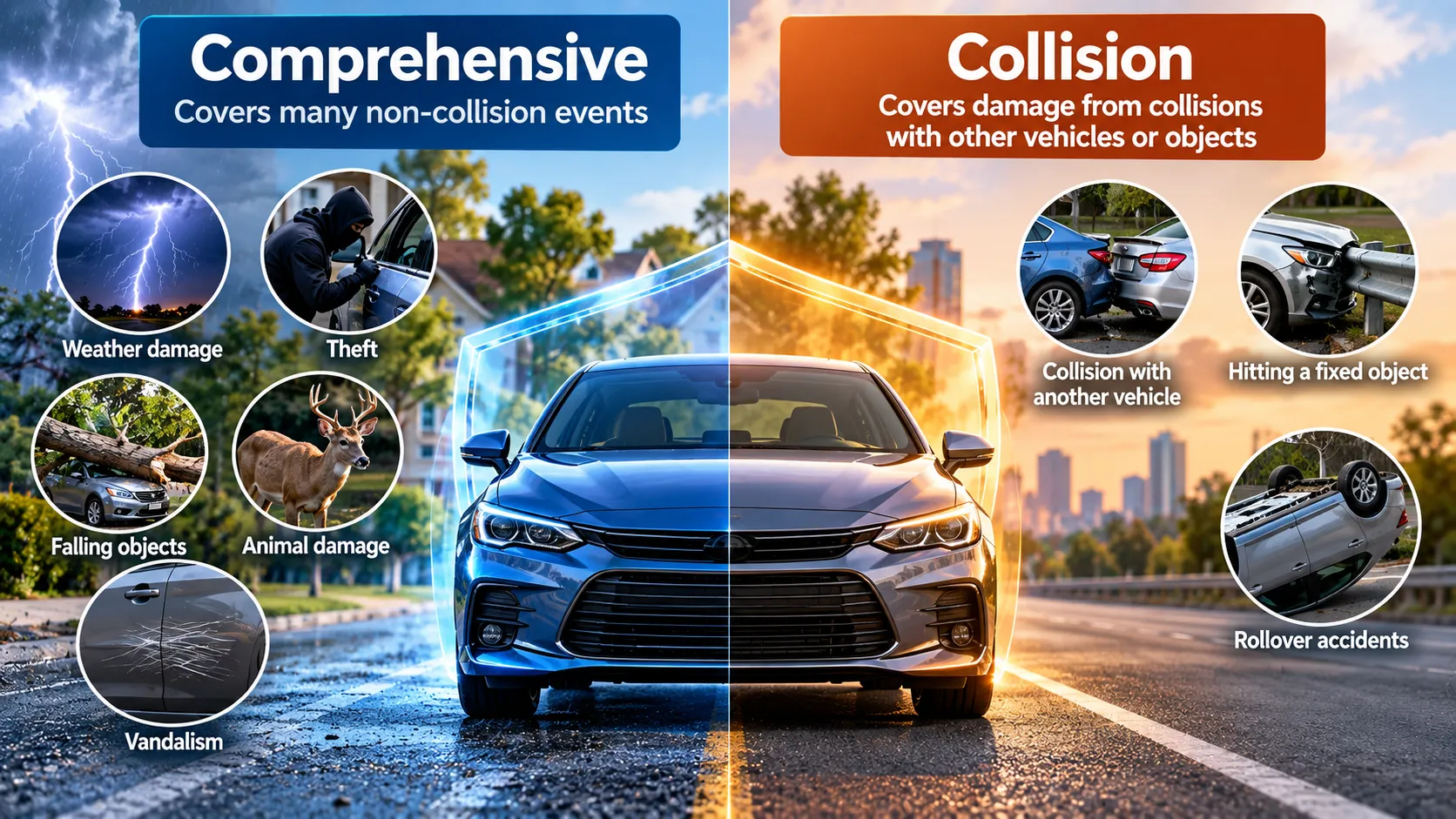
Comprehensive coverage generally addresses certain covered physical damage to the insured vehicle that is not caused by a collision. The NAIC lists examples including fire, severe weather, vandalism, floods, and theft. A policy may also address glass damage, falling objects, or certain animal-related damage, depending on its terms.
The word comprehensive can be misleading. It does not mean that every non-collision event is automatically covered, and it does not describe every item that might be in or near a vehicle. The cause of damage, exclusions, endorsements, deductible, vehicle, and claim facts all matter. The illustration on this page uses common examples to explain the distinction, not to promise the same outcome under every policy.
What is collision insurance?
Collision coverage generally addresses covered physical damage to the insured vehicle caused by an impact with another vehicle or object. A crash with another car, a guardrail, pole, wall, or other fixed object can be a collision example. Certain single-vehicle crashes and rollover losses may also fall into this category, subject to policy terms.
Fault alone does not decide whether a loss is comprehensive or collision. The physical event and policy wording are central to the classification. A collision claim can still be subject to a deductible, valuation terms, exclusions, limits, and the insurer’s review of the loss. It is not a guarantee that every repair estimate or replacement cost will be paid.
Comprehensive vs. collision: key differences
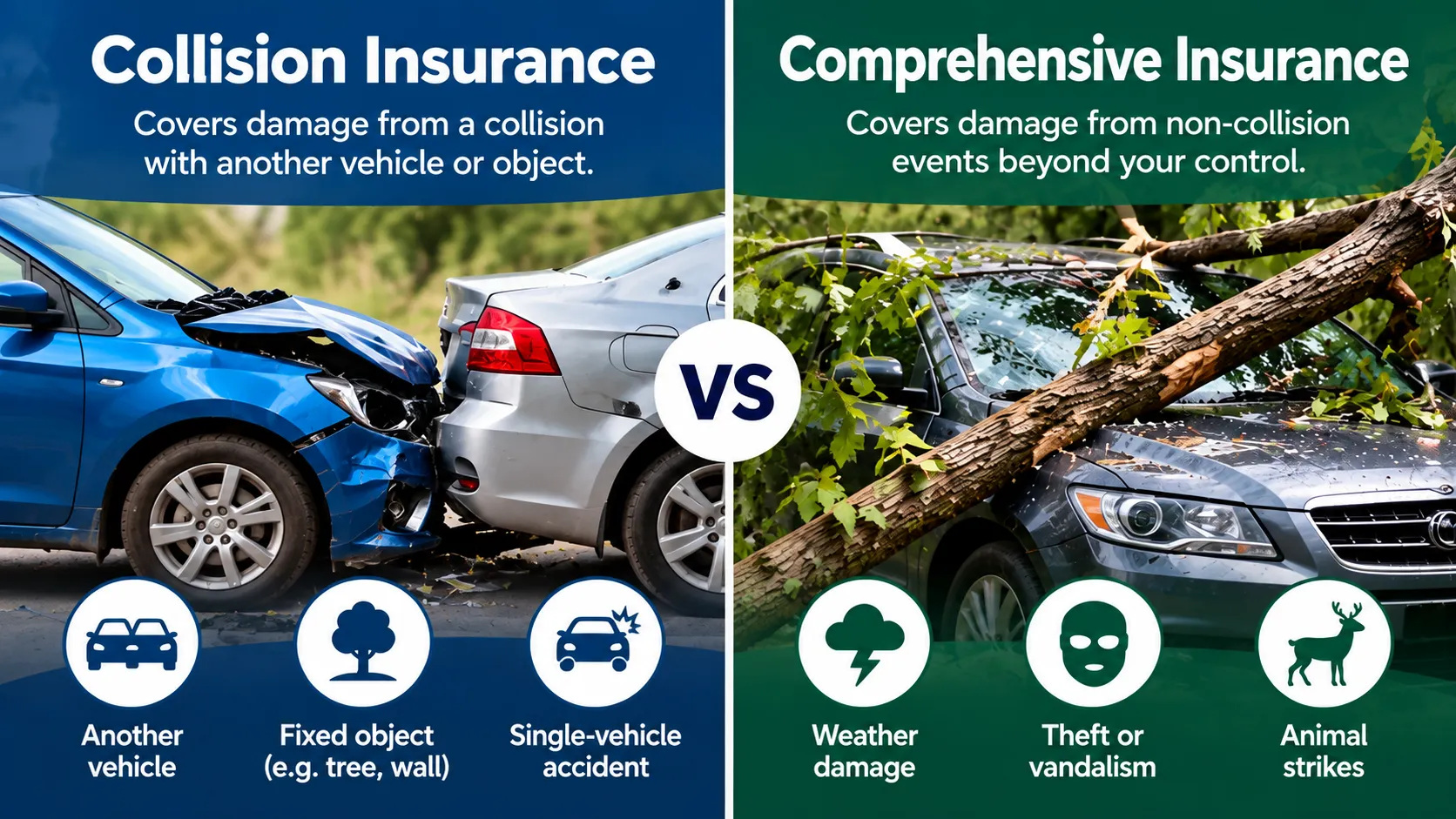
Both coverages primarily concern certain covered damage to the insured vehicle, rather than covered responsibility for damage the driver causes to someone else. The core difference is the type of event that damaged the vehicle.
| Comprehensive | Collision | |
|---|---|---|
| Typical trigger | Covered non-collision physical damage | Covered impact or collision damage |
| Common examples | Theft, vandalism, certain weather, falling objects, fire, or certain animal-related damage | A crash with another vehicle or object, certain single-vehicle crashes, or rollover |
| Vehicle protected | The insured vehicle, subject to the policy | The insured vehicle, subject to the policy |
| Deductible | Commonly applies, if selected | Commonly applies, if selected |
| Lender or lessor relevance | May be contractually required | May be contractually required |
| Relationship to liability | Does not replace liability coverage | Does not replace liability coverage |
The entries in this table are general descriptions, not claim decisions. The same incident can involve more than one insurance question. For example, a crash could create a collision question for the driver’s own vehicle and a liability question for damage to another person’s vehicle.
What happens if you hit an animal?
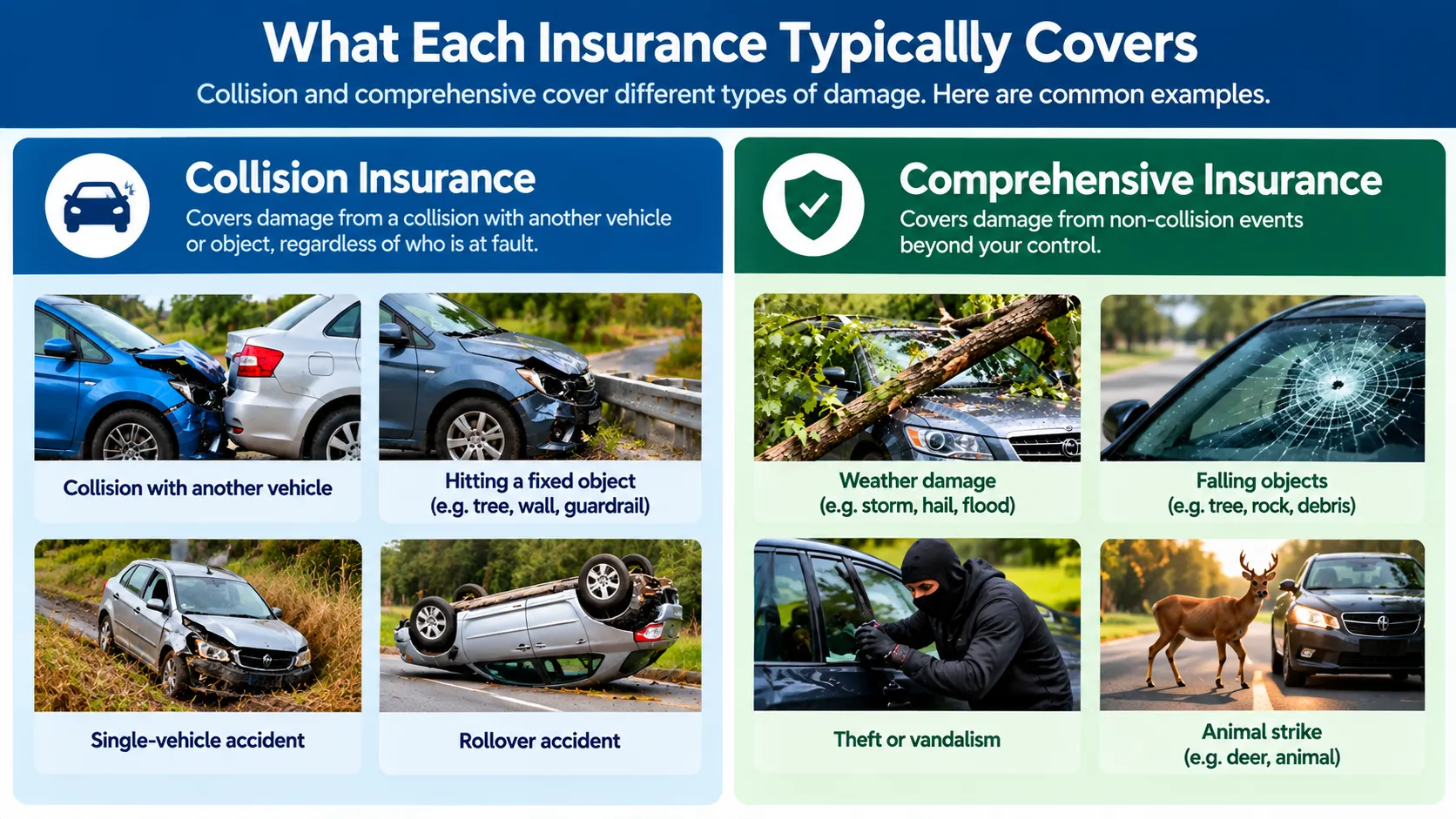
Animal-related vehicle damage is commonly handled under comprehensive coverage, rather than collision, when the policy covers it. A vehicle striking a deer is a familiar example. The relevant issue is not simply that there was an impact; insurers may classify an animal-related loss differently from an impact with a vehicle or fixed object.
That does not make the outcome universal. The policy’s definitions, exclusions, deductible, facts of the event, and the state where the policy was issued can matter. If an incident begins with an animal and then leads to a separate impact, the facts may raise more than one coverage question. Report the event accurately and ask the insurer how it will apply the specific policy.
What about weather damage?
Weather-related damage can commonly be part of comprehensive coverage where the policy covers the cause of loss. Hail, wind, fire, falling branches or other falling objects, flooding, and storm damage are examples that may be relevant to an auto comprehensive claim. The NAIC describes comprehensive as addressing damage from causes other than collision, including fire, severe weather, vandalism, floods, and theft.
This is about damage to an insured automobile. It does not mean an auto policy automatically covers a home, rental property, or all belongings inside the vehicle. The type of property, the policy that covers it, the source of water or weather damage, and exclusions can change the analysis.
What about theft and vandalism?
Theft of, or vandalism to, the insured vehicle is commonly associated with comprehensive coverage where covered. The policy may define the vehicle, covered equipment, loss conditions, and documentation requirements. It may also limit or exclude particular items or circumstances.
Personal belongings stolen from inside a car can be a separate insurance question from damage to, or theft of, the vehicle itself. Do not assume comprehensive auto insurance automatically covers every laptop, bag, tool, or other personal item in the vehicle. A homeowners, renters, business, or other policy may be relevant depending on the property and facts, but the policy language controls.
What does collision not cover?
Collision is not a catch-all for any harm involving a car. Subject to the policy, it generally does not address normal wear, maintenance, or a mechanical failure that was not caused by a covered collision. Theft, vandalism, and many weather-related losses are commonly associated with comprehensive rather than collision.
Collision also does not replace liability coverage for covered injuries or property damage the insured driver causes to others. Nor does it automatically provide payment for rental transportation, medical expenses, every custom item, or every repair-related expense. Review the declarations page and endorsements to see what was actually selected.
What does comprehensive not cover?
Comprehensive is likewise not unlimited protection. Ordinary wear, maintenance, and mechanical breakdown without a covered cause are not generally comprehensive losses. Many impacts with other vehicles or fixed objects are usually considered collision questions instead. Comprehensive also does not replace liability coverage or make every piece of personal property in a vehicle insured.
Coverage labels do not decide a claim by themselves. A deductible, limits, valuation provisions, excluded use, excluded driver, conditions, or the event’s facts can affect whether and how a covered loss is paid. The insurer applies the policy to the reported circumstances.
Do comprehensive and collision have deductibles?
Both comprehensive and collision commonly have deductibles. A deductible is the amount the policyholder may need to bear before an insurer pays a covered loss under the applicable coverage, subject to the policy terms. The declarations page typically identifies the deductible separately for each coverage.
Deductible selections can affect both premium and the out-of-pocket amount after a covered loss. There is no deductible amount that fits every driver or vehicle. When reviewing a policy, compare the deductible alongside the coverage, premium, and the financial risk the policyholder would retain.
Do you need both comprehensive and collision?
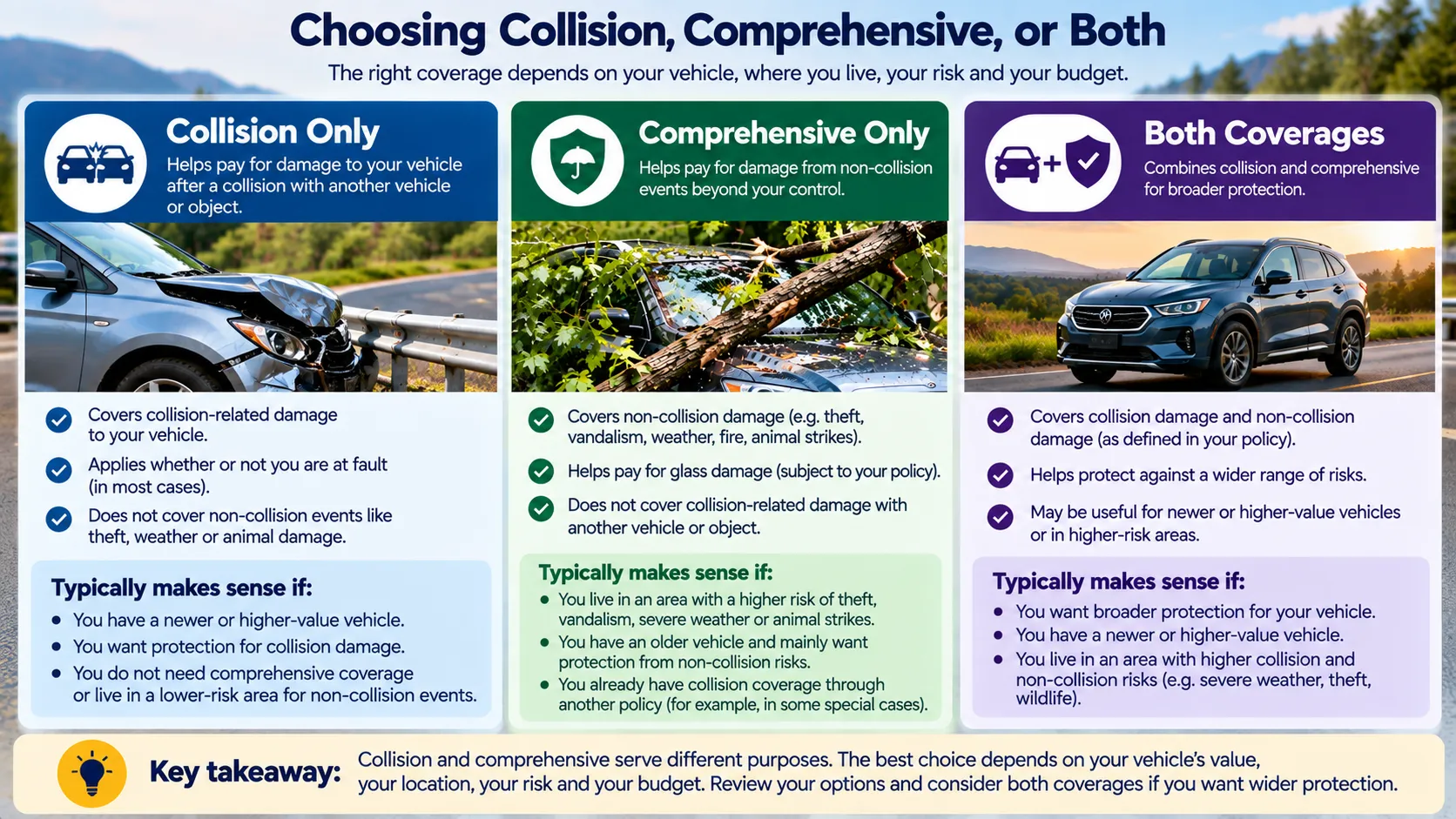
There is no universal answer. The question can involve whether the vehicle is financed, leased, or owned outright; the vehicle’s value; the premium; deductibles; the ability to absorb a repair or total loss; exposure to theft, weather, and crashes; and personal financial circumstances.
State law and contract requirements are separate issues. States generally do not require a standard comprehensive-and-collision package called full coverage. A lender or lessor may, however, require physical-damage coverage while it has a financial interest in the vehicle. A policyholder should review current state requirements and the finance or lease agreement rather than treating either as a universal rule.
Can a lender require comprehensive and collision?
Yes, a lender or lessor may contractually require collision and comprehensive coverage while a loan or lease remains in place. This is distinct from a state’s auto-insurance requirement. The NAIC notes that collision is optional as a matter of law but may be required by a lending institution or lessor.
The agreement, policy declarations, and any lender or lessor notice are the practical documents to review. They can identify the vehicle, required coverage, deductible conditions, and what happens if required coverage lapses. This guide does not interpret a particular contract or advise whether a lender’s request is valid.
How do comprehensive and collision relate to full coverage?
Comprehensive and collision are commonly part of what consumers call full coverage, usually alongside liability coverage. That phrase is informal shorthand, not a standardized guarantee that every risk is covered. For the broader package and its limitations, read What Is Full Coverage Car Insurance?.
The comparison between comprehensive and collision answers a narrower question: which type of covered event damaged the insured vehicle. The policy still determines its actual coverage, limits, deductible, exclusions, and conditions.
How are they different from liability insurance?
Comprehensive and collision primarily address certain covered physical damage to the insured vehicle. Liability insurance primarily addresses covered legal responsibility for injury or property damage an insured driver causes to others. A single accident can involve both categories, but the presence of one does not automatically create the other.
For a more detailed discussion of liability’s bodily-injury and property-damage components, see What Is Liability Car Insurance and What Does It Cover?.
How much do comprehensive and collision cost?
There is no reliable single price for comprehensive and collision. Premium can vary with the vehicle, location, deductible selections, coverage selections, driver and claims characteristics, insurer practices, and factors permitted by state law. A lower premium can reflect a different deductible, fewer coverages, different limits, or a different policy structure.
For a wider explanation of how to compare policy pricing on equivalent terms, read How Much Is Car Insurance? What Affects the Cost. Avoid treating a generic average as a prediction of a particular policy’s price or coverage.
How to check which coverage applies
When damage occurs, start with the facts rather than a label:
- Identify what caused the damage and record what happened.
- Review the declarations page to see whether comprehensive and collision are listed for the vehicle.
- Check the deductible attached to each coverage.
- Read applicable exclusions, conditions, and endorsements.
- Photograph or otherwise document the loss where safe and appropriate.
- Contact the insurer, agent, or claims representative for a policy-specific interpretation and claim instructions.
Reporting a loss or asking a question does not predetermine the outcome. Keep copies of the policy, declarations page, correspondence, and documentation relevant to the reported event.
The bottom line
Collision generally concerns covered impact or rollover damage to the insured vehicle. Comprehensive generally concerns many covered non-collision physical-damage losses, such as theft, vandalism, certain weather, fire, falling objects, or certain animal-related damage. Neither means unlimited protection. The actual policy language, deductibles, exclusions, limits, and facts of the loss control.