

How much does car insurance cost?
Car insurance does not have a universal price. Two people can receive different quotes even when they drive similar vehicles because the policy, insurer, location, driving history, use of the vehicle, and other permitted rating factors may differ.
National or state-level averages can provide broad context, but they cannot predict an individual quote. An average may combine different coverage levels, locations, driver profiles, policy terms, and years of data. It does not tell you what protection a particular policy includes or what you would pay after a claim.
For a useful comparison, start with your declarations page or desired coverage choices and request quotes using the same facts. That makes the quoted prices meaningful rather than simply different numbers. If you need a start-to-finish buying process, see our guide to getting car insurance.
What determines the cost of car insurance?
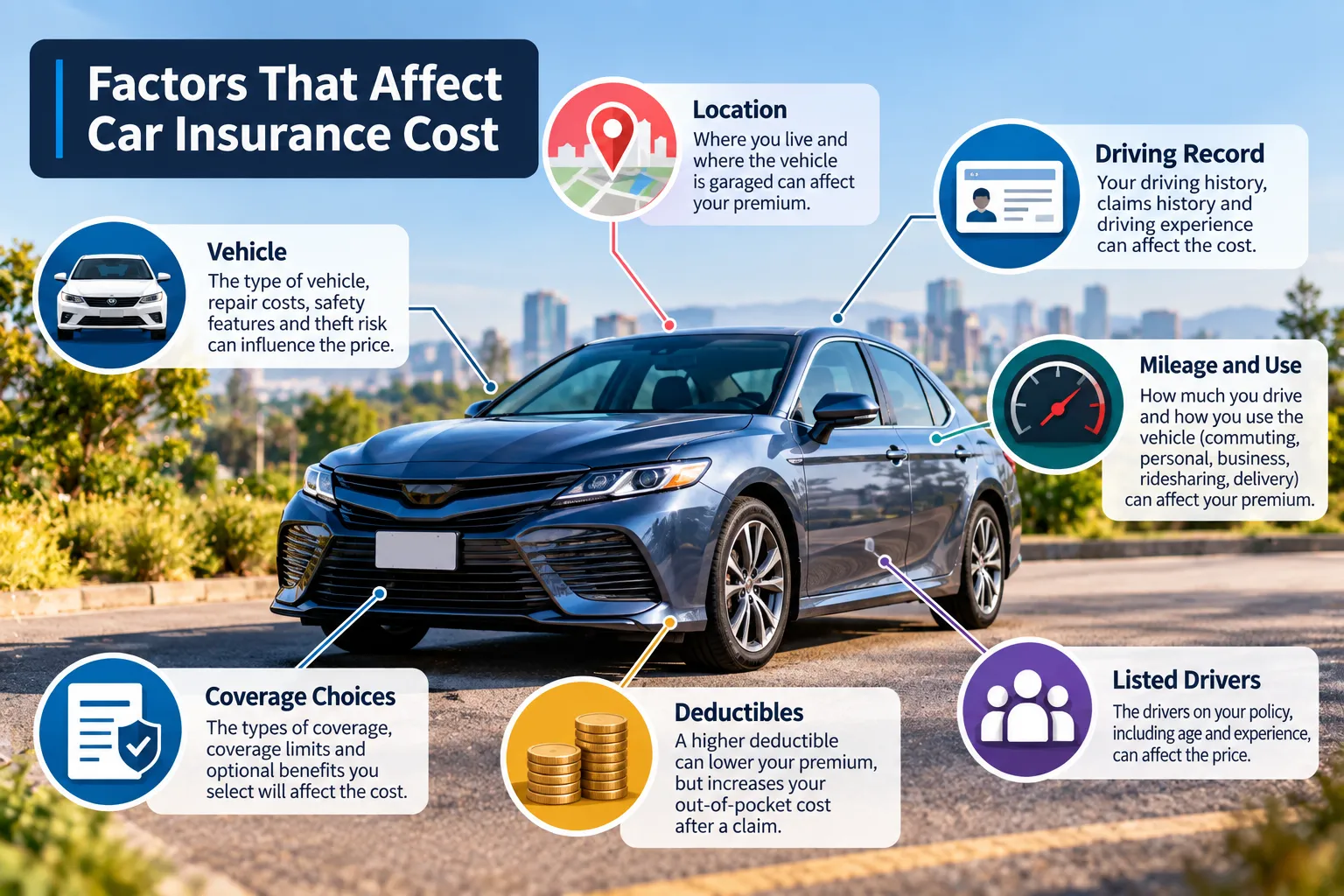
Insurers use underwriting to evaluate risk and rating to set a premium. Their methods are not identical, and state law can limit which factors may be used and how. Common considerations may include:
- Your location and the territory where the vehicle is garaged.
- Driving experience, driving record, and claims history.
- The vehicle’s type, repair or replacement characteristics, and safety or theft-related features.
- Whether the vehicle is used for commuting, personal errands, business, ridesharing, delivery, or another purpose.
- Annual mileage and, where applicable, usage-based or telematics information.
- Coverage types, coverage limits, deductibles, listed drivers, and prior insurance coverage.
- Credit-based insurance information where it is permitted by state law.
An insurer can explain the information it needs for a quote, but it may not disclose every element of its rating approach. Give complete, current information; an unrealistically low quote based on incomplete facts is not a dependable price.
Why can two drivers pay different prices for similar cars?
The same vehicle is only one part of a policy. One driver may use it for a short personal commute while another drives farther, has different coverage limits, lives in a different rating territory, or has a different claims and driving history. The policies may also have different deductibles, payment plans, and optional benefits.
Insurers may assess the same general information differently. That is why comparing more than one quote can be useful, provided each quote describes equivalent coverage. It is not evidence that one insurer’s formula will apply to every driver.
Does more coverage make car insurance more expensive?
Coverage choices generally affect premium, but price alone does not determine whether a policy is appropriate. Liability coverage generally helps pay for injury or property damage you cause to others, subject to the policy limits. Collision coverage generally addresses damage to your own vehicle from an impact, while comprehensive coverage generally addresses certain non-collision losses such as theft, weather, or fire.
Higher limits or additional coverage can increase the premium, yet they can also change the financial risk you retain after a loss. State minimum requirements are a legal baseline, not a universal recommendation for the protection a driver needs. If a vehicle is financed or leased, the lender or lessor may require collision and comprehensive coverage.
How do deductibles affect car insurance cost?
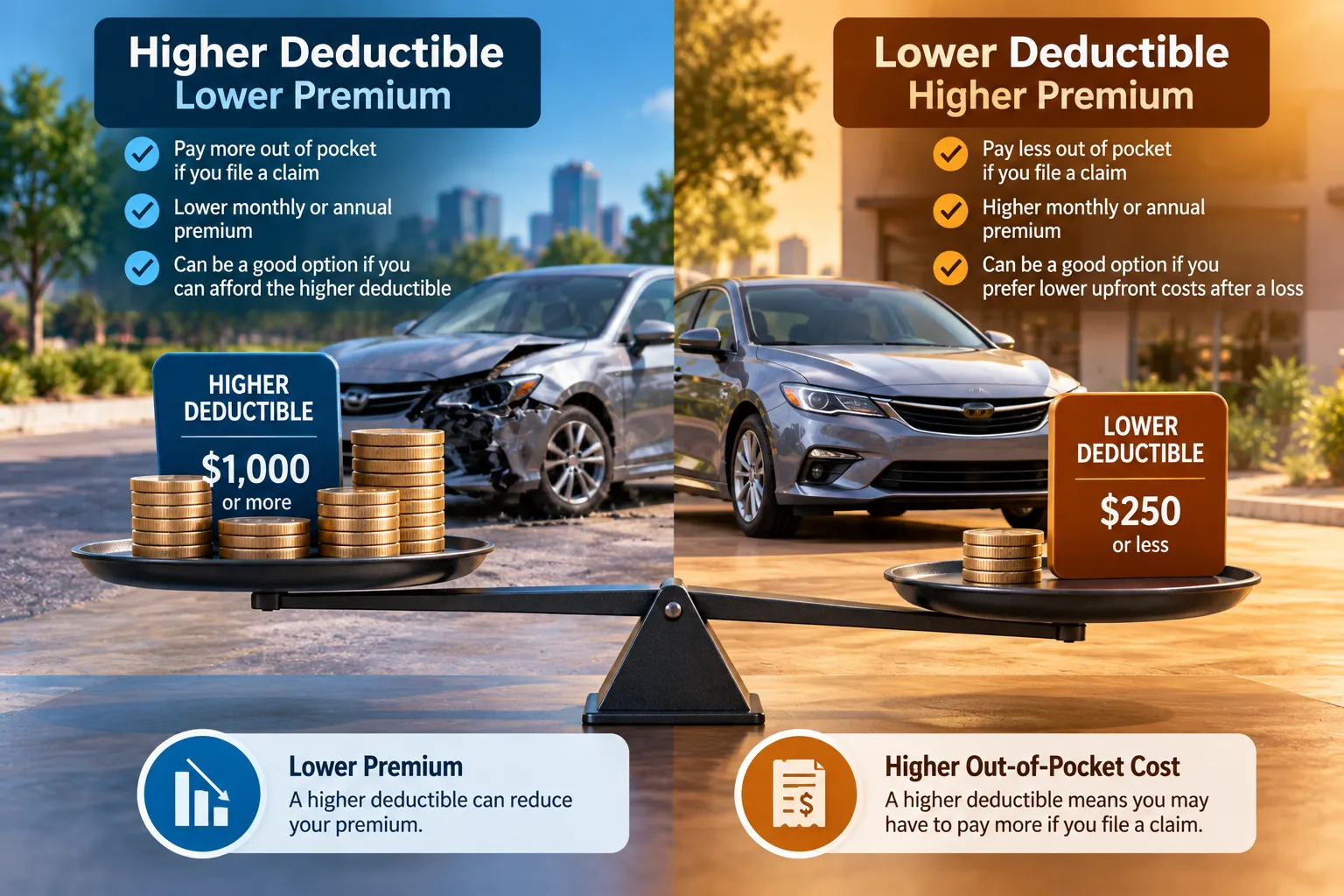
A deductible is the amount you may have to pay before the insurer pays for a covered loss under a coverage that has one. Selecting a higher deductible can reduce the premium, but it increases the out-of-pocket amount you would need to manage after a covered loss.
Compare the premium change with the additional financial exposure. A deductible should be an amount you could realistically pay when you need the vehicle repaired or replaced; there is no single deductible that is right for every household.
Why does location affect car insurance prices?
Auto-insurance requirements are largely set by states, and insurers may also use geographic territories as part of their rating where permitted. The cost and frequency of claims, repair costs, theft exposure, traffic conditions, weather, and local legal or coverage requirements can vary by place.
Moving, changing a garaging address, or regularly keeping a vehicle elsewhere can therefore affect a quote. Tell the insurer where the vehicle is actually kept. Do not assume that a state ranking or another person’s premium predicts your own price.
Does your vehicle affect your insurance cost?
The vehicle can affect the expected cost of a claim. Insurers may consider factors such as repair complexity, replacement parts, vehicle value, safety equipment, theft patterns, and the way the vehicle will be used. A more expensive vehicle is not automatically more expensive to insure in every circumstance, and a lower purchase price does not guarantee a lower premium.
Before buying or leasing, request estimates for the specific vehicle using the coverage you expect to carry. Include any lender or lease requirements in the comparison. An estimate is still a quote, not a substitute for reading the issued policy.
Can mileage affect your premium?
Annual mileage and vehicle use can be relevant to a premium. A vehicle used for a long commute, business travel, delivery work, or ridesharing may be rated differently from one used mainly for personal errands. Personal auto policies can also have limitations for certain business uses, so accuracy matters as much as price.
Some insurers offer usage-based insurance that may use mileage, driving behavior, or both. A program may collect data about items such as driving times, hard braking, acceleration, or distance driven. It may affect pricing, but it does not guarantee savings. Before enrolling, read what data is collected, how it is used or shared, how long it is retained, and how the program can affect the policy.
Does credit affect car insurance cost?
In states where it is allowed, insurers may use credit-based insurance scores in underwriting or rating. An insurance score is not the same as an ordinary lending credit score. Both may rely on information in a credit report, but they are designed for different purposes and may weigh information differently.
States can restrict or prohibit particular uses of credit-based insurance information, and those rules differ. If you believe information in a credit report is inaccurate, review it and use the appropriate dispute process. Do not assume that a change to an ordinary credit score will automatically change an insurance premium; verify the rules in your state and ask the insurer how it handles the issue.
Monthly vs. six-month vs. annual car insurance cost
Consumers may see a monthly installment, a six-month policy premium, or an annual total. Those figures are not always interchangeable. A monthly payment may include a down payment, installment fee, payment-plan charge, or a policy term that is not exactly twelve months. Some insurers write six-month terms, while others may use a different schedule.
When comparing policies, ask for the total premium, policy effective dates, payment schedule, amount due at purchase, and any fees. Then compare equivalent policy terms and coverage, rather than multiplying a monthly installment by twelve and assuming it is the exact annual cost.
How to compare car insurance costs properly
Use the same information for each quote. A concise comparison checklist can prevent a lower-looking quote from masking an important difference:
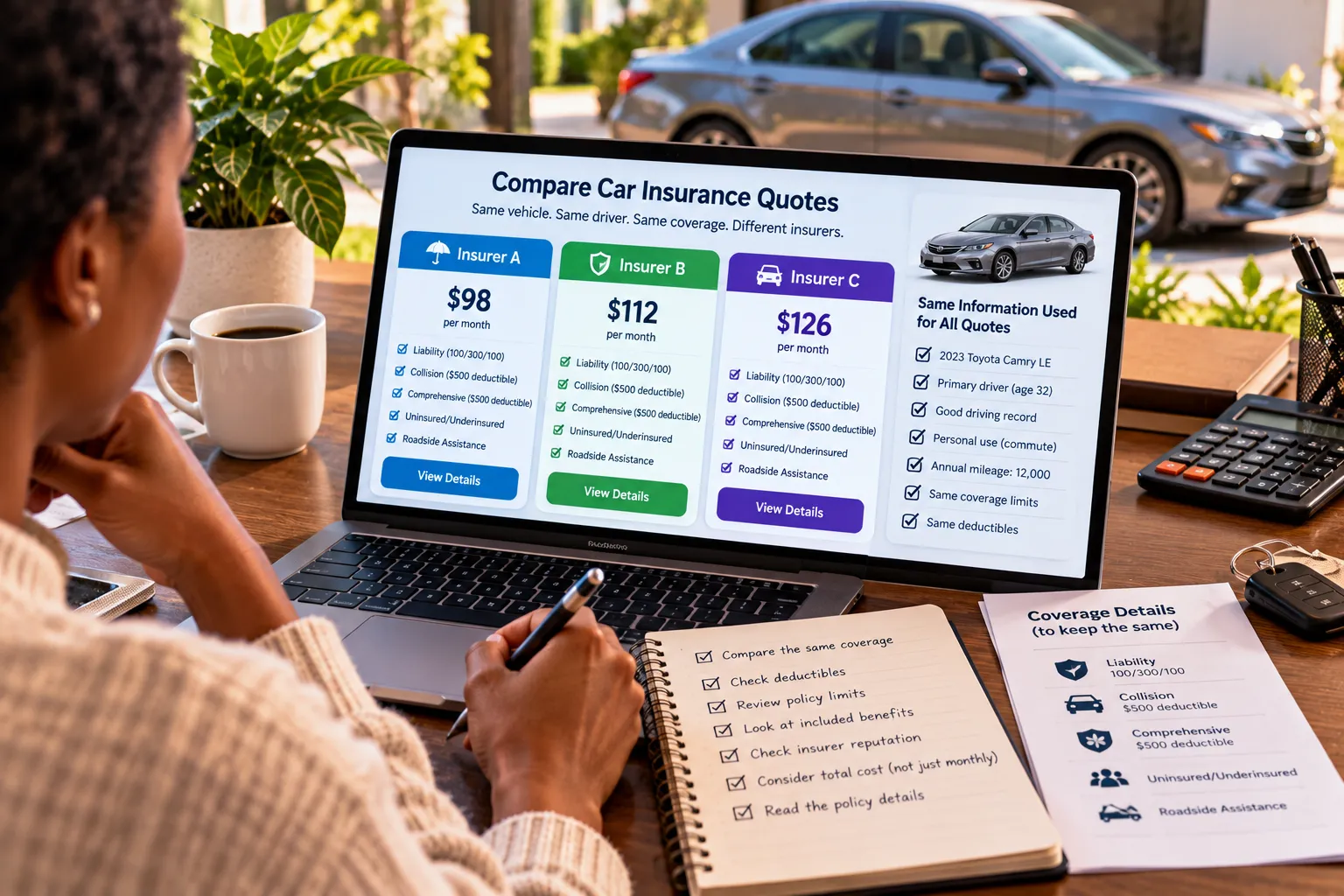
- List the same drivers, vehicles, garaging address, annual mileage, and vehicle use.
- Match liability limits, deductibles, collision and comprehensive choices, and any required medical or uninsured-motorist coverage.
- Check optional coverage such as roadside assistance, rental reimbursement, and endorsements.
- Compare the policy term, total premium, payment schedule, down payment, and fees.
- Review exclusions, conditions, and lender or leaseholder requirements before deciding.
Keep the quotes and your current declarations page together. If a price is materially different, ask what coverage, discount, rating information, or payment assumption accounts for the difference.
What if your car insurance costs too much?
First, identify whether the concern is the total policy cost, an installment amount, a recent renewal change, or coverage that no longer fits your circumstances. Then compare equivalent quotes and review the choices that create the price difference.
For practical ways to investigate cost changes without treating less coverage as an automatic answer, read How to Lower Car Insurance. If another insurer appears to be a better fit, follow the steps in How to Switch Car Insurance so you confirm replacement coverage before ending the old policy.
Car insurance cost checklist
Before requesting or comparing quotes, gather your current declarations page, driver and vehicle information, estimated annual mileage, usual vehicle use, and any finance or lease requirements. Decide which limits, deductibles, and optional coverages you want to compare before looking at price.
Then ask each insurer for the total cost and payment terms, verify the effective date, and read the coverage summary and exclusions. If an answer depends on a state rule or a particular policy term, confirm it with the insurer or your state insurance department.
The bottom line
How much car insurance costs depends on the actual driver, vehicle, location, coverage, deductible, insurer, and state rules. A generic average cannot tell you whether a particular quote provides comparable protection or fits your financial situation.
The most useful number is the price of comparable quotes based on your own facts. Use that comparison to understand the trade-offs in coverage and out-of-pocket risk, not simply to find the lowest monthly payment.