
When does home insurance cover plumbing problems?
Homeowners insurance may respond when a covered, sudden, and accidental plumbing event damages the home or belongings. Examples include a burst pipe, unexpected leak, frozen-pipe loss, water-heater failure, or accidental overflow. None is an automatic promise of coverage.
Policy language, exclusions, plumbing condition, maintenance history, and resulting damage can affect a claim. The National Association of Insurance Commissioners notes that policy conditions can be especially relevant for frozen pipes.
Separate the failed component from its resulting damage. A pipe, valve, fixture, appliance connection, or water heater may need repair or replacement; walls, ceilings, flooring, cabinets, insulation, and belongings may have separate resulting damage.
Plumbing problems that may be covered vs. problems that may not be covered
The illustration uses simplified educational labels, not policy language. A one-time accidental discharge may be evaluated differently from age, wear, corrosion, poor maintenance, gradual leakage, or an installation or construction problem. Actual coverage depends on the cause, the policy wording, exclusions, deductible, limits, maintenance, and circumstances of the loss.
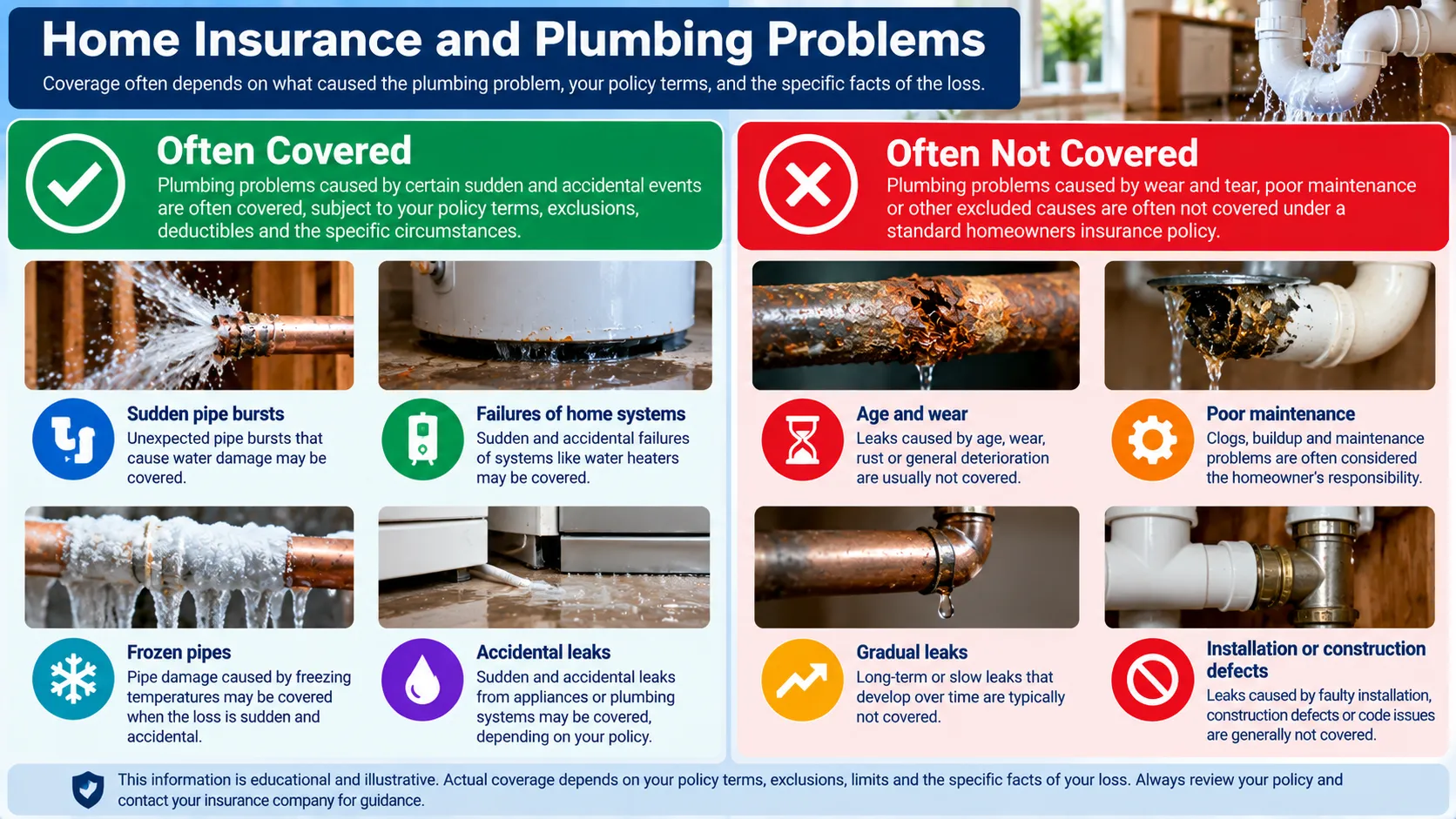
For example, a pipe that suddenly fails can lead to a different review than a pipe that has slowly leaked behind a cabinet. Even if the resulting water damage is potentially covered, the cost to replace the worn or failed component can be handled differently. Do not treat “often covered” or “often not covered” as a decision about a particular claim.
Common home plumbing problems
Plumbing losses are not one category. The source, timing, and condition of the system can matter as much as the visible water damage.
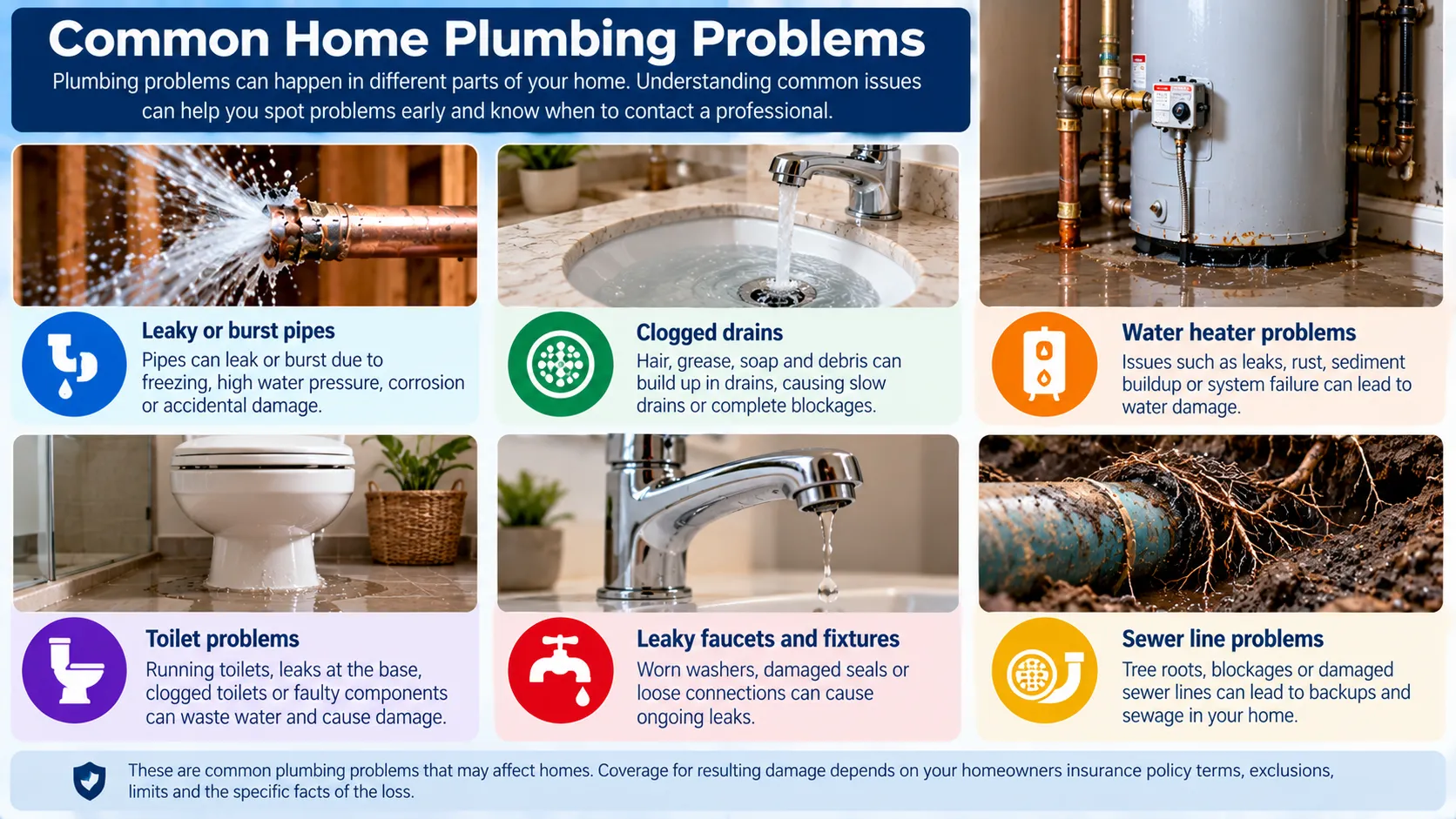
Leaky or burst pipes
A sudden pipe burst may be reviewed differently from a pipe that deteriorated or leaked over time. Resulting damage can be a separate question from replacing the pipe.
Clogged drains
Routine clog removal and drain maintenance should not automatically be framed as an insured loss. An overflow requires separate analysis of source, cause, terms, and any backup coverage.
Water heater problems
A sudden tank failure can be treated differently from a slow leak caused by rust, corrosion, age, or deterioration. Resulting damage may be evaluated separately from replacement. Homeowners insurance is not a home warranty or maintenance plan.
Toilet problems
An overflow, leaking supply line, failed component, ongoing leak, or clog can have different causes and outcomes. Routine toilet repair is not necessarily an insurance claim.
Leaky faucets and fixtures
A dripping faucet or worn fixture is different from significant damage after a sudden failure. An ongoing leak can raise maintenance or gradual-damage questions.
Sewer line problems
Blockage, roots, deterioration, collapse, and backup can affect sewer lines in different ways. Sewer or drain backup coverage and repair of an underground sewer or service line are distinct questions. An insurer may offer a separate water-backup endorsement or service-line coverage, but availability and terms vary.
Does homeowners insurance cover burst pipes?
Resulting damage from a sudden burst pipe may be covered under some policies, subject to the contract, exclusions, deductible, and claim facts. The NAIC cautions against assuming coverage in every circumstance.
If a worn pipe bursts, a policy may treat the failed pipe differently from water damage to drywall, flooring, cabinetry, or belongings. Neither outcome should be assumed.
Does homeowners insurance cover frozen pipes?
Frozen-pipe losses can depend on policy terms and circumstances, including reasonable steps to maintain heat, protect plumbing, or shut off and drain systems when required or appropriate. There is no universal frozen-pipe rule.
If freezing causes damage, document the discovery and apparent source. Do not take on dangerous plumbing or electrical work.
Does home insurance cover leaking pipes?
A sudden leak can be treated differently from gradual seepage, corrosion, deterioration, or a maintenance issue. Finding a concealed leak later does not alone decide a claim.
Document visible damage and take safe, reasonable measures to limit harm. Do not alter evidence or begin permanent repairs before inspection unless safety or damage prevention requires action.
Does home insurance pay for plumbing repairs?
Homeowners insurance is generally not routine plumbing maintenance coverage. A covered event causing resulting damage does not necessarily mean the insurer will pay to repair or replace the pipe, fitting, valve, water heater, or fixture that failed. Policy wording and cause can affect each part of a loss.
Does home insurance cover water damage from plumbing?
When a plumbing event is covered, resulting damage can include drywall, ceilings, flooring, cabinets, insulation, and belongings. Coverage depends on the source, cause, exclusions, limits, and deductible.
For a broader explanation of how homeowners coverage can be structured, see our guide to what home insurance may cover. Mold can add another layer of exclusions or limits, as explained in our guide to home insurance and mold.
Does home insurance cover a leaking water heater?
A sudden water-heater failure may be analyzed differently from gradual leakage, rust, corrosion, age, or deterioration. Replacing the water heater may be addressed differently from resulting damage.
Does home insurance cover clogged drains?
A simple clog or routine drain cleaning should not automatically be treated as an insurance event. If it causes damage, coverage can depend on the source, cause, type of overflow or backup, and policy terms. An interior overflow is not necessarily sewer or drain backup.
Does home insurance cover sewer backup?
Sewer or drain backup may not be included in a base homeowners policy. An endorsement may be available, but its scope, limits, exclusions, and availability can vary. Backup damage is distinct from repairing a sewer or service line.
Does homeowners insurance cover sewer line repairs?
Underground service-line damage can involve different coverage from damage inside the home. A blockage, roots, deterioration, or collapse may be evaluated under the base policy, an endorsement, separate service-line protection, or no applicable coverage. Service-line coverage is not universal or standardized.
What part of homeowners insurance may apply after plumbing damage?
Depending on a covered loss, several policy sections may be relevant. Each can have its own conditions, limits, exclusions, and deductible implications.
Dwelling coverage
Dwelling coverage can be relevant to covered structural damage, such as walls, ceilings, cabinets, flooring, or built-in systems. It does not itself answer whether the component or cause is covered.
Personal property coverage
Personal property coverage can be relevant when covered water damages belongings. Keep an inventory and list of affected items. Terms can vary.
Additional living expenses or loss of use
If a covered loss makes the home temporarily uninhabitable, additional living expenses or loss-of-use coverage may be relevant, subject to policy terms and limits. It does not automatically apply to every plumbing problem or every temporary move.
What should you do after discovering plumbing damage?
Prioritize safety. Do not enter standing water near energized electrical equipment, handle sewage without appropriate protection or professional assistance, or attempt hazardous plumbing, electrical, or structural work. For serious electrical, structural, sewage, or flooding hazards, contact appropriate professionals or emergency services.
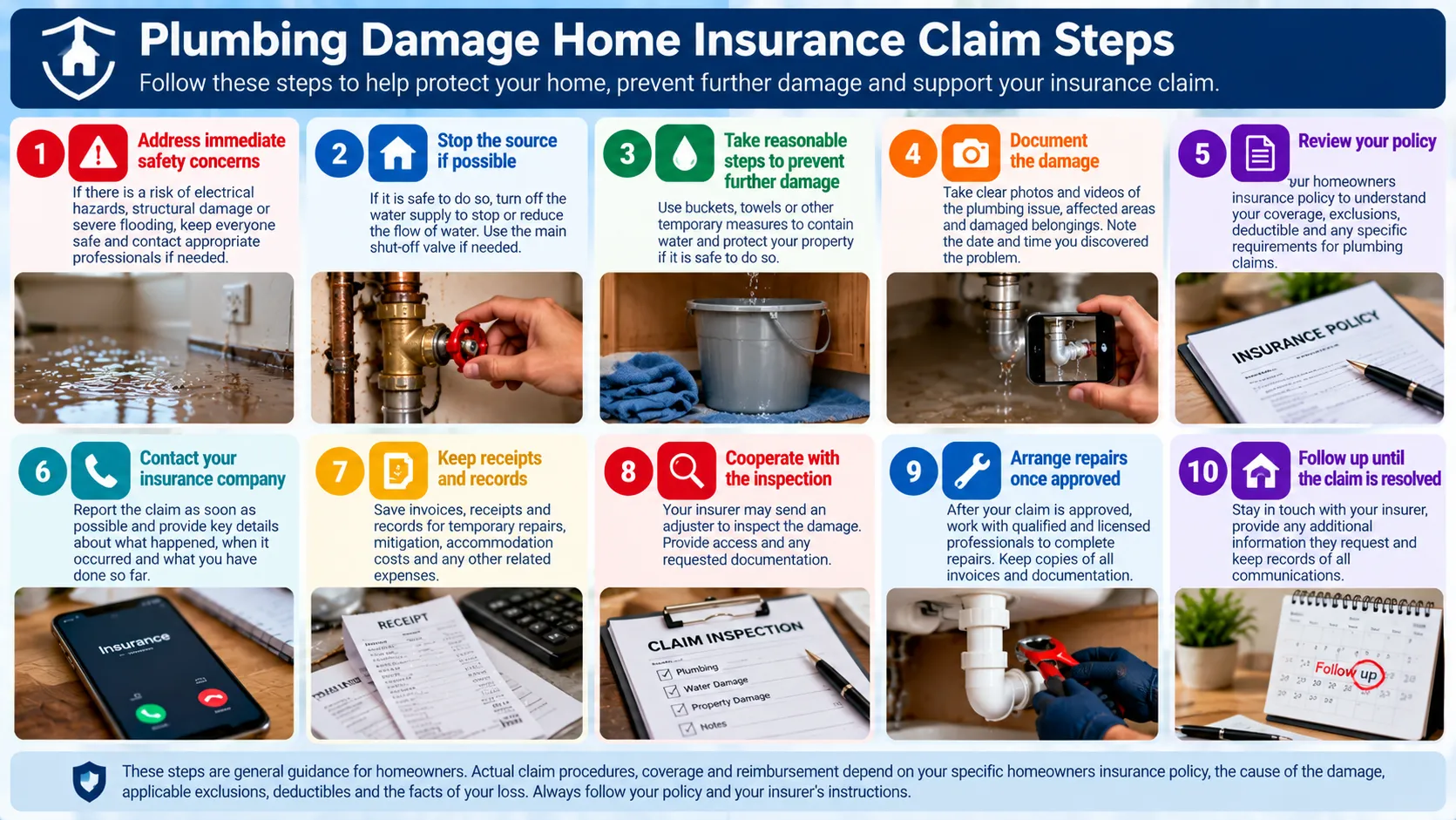
Where it is safe to do so, a practical sequence is:
- Address immediate hazards and stop or reduce the water source if safe.
- Take reasonable temporary steps to prevent additional damage.
- Photograph and video the apparent source and affected areas.
- Review the policy and contact the insurer promptly if a claim may be appropriate.
- Keep receipts, estimates, plumber reports, and claim communications.
- Cooperate with requested inspections and arrange qualified repairs.
Do not wait for insurer approval before taking reasonable, urgent action needed to protect people or prevent further damage. Distinguish that emergency mitigation from permanent repairs, and keep records because reimbursement is not guaranteed.
How to document a plumbing insurance claim
Keep photos and videos, discovery time, apparent source, affected areas, belongings, mitigation timeline, plumber reports, invoices, estimates, receipts, and insurer communications. Do not alter, exaggerate, or stage damage.
What will an adjuster look at?
An insurer may investigate damage cause and extent, plumbing condition, signs of sudden failure or long-term leakage, maintenance, documentation, and policy terms. An inspection is not a coverage finding.
Can a plumbing insurance claim be denied?
A claim can be denied or limited for an excluded cause, wear, gradual leakage, sewer backup without coverage, loss below the deductible, policy status, or another condition. These are possible issues, not automatic outcomes. Review the written explanation and policy language.
How can homeowners reduce plumbing-damage risk?
- Address visible leaks promptly.
- Know where the main water shutoff is and how to use it safely.
- Inspect appliance supply hoses and connections.
- Maintain appropriate indoor heat during cold conditions.
- Consider leak sensors or automatic shutoff devices if appropriate for the home.
- Maintain water heaters according to manufacturer guidance.
- Investigate slow drains, recurring backups, unusual water bills, or moisture.
Prevention can reduce risk, but it does not guarantee coverage.
Questions to ask your insurer about plumbing coverage
- How does my policy handle sudden plumbing leaks?
- How does it treat gradual leakage?
- Is resulting water damage evaluated differently from pipe repair?
- How are frozen-pipe losses handled?
- Is sewer or drain backup included, and is an endorsement available?
- Is service-line coverage included or available?
- What deductible and water-damage limits apply?
- What emergency mitigation should I perform after a loss?
- What records should I keep?
Frequently asked questions
Does homeowners insurance cover plumbing repairs?
Not necessarily. Insurance may evaluate the failed component differently from resulting covered property damage, so the cause and policy wording matter.
Does home insurance cover a burst pipe?
It may cover some resulting damage from a sudden burst pipe, subject to the policy, exclusions, deductible, maintenance history, and circumstances.
Does homeowners insurance cover frozen pipes?
It can depend on policy conditions and what happened before and after the freeze. Review the policy and ask the insurer about the specific loss.
Does home insurance cover leaking pipes?
A sudden leak and gradual leakage can be treated differently. The source, timing, condition of the pipe, and policy terms are important.
Does homeowners insurance cover a leaking water heater?
Potential coverage can differ between a sudden failure, gradual corrosion or deterioration, the water heater itself, and resulting water damage.
Does home insurance cover a clogged drain?
Routine clog removal is not automatically an insured loss. Damage from an overflow or backup requires separate analysis of the source and policy.
Does homeowners insurance cover toilet overflow?
It depends on the cause, the type of overflow, resulting damage, and policy terms. A routine clog, a failed supply line, and sewer backup may be evaluated differently.
Does home insurance cover sewer backup?
Base coverage may not include sewer or drain backup. An endorsement may be available, but the policy controls.
Does homeowners insurance cover sewer line replacement?
Not automatically. Service-line coverage may be separate or optional, and damage to a line is different from sewer-backup damage.
Does home insurance cover water damage from plumbing?
It may cover certain resulting damage from a covered plumbing event, but the cause, exclusions, limits, deductible, and policy wording determine the outcome.
The bottom line
Homeowners insurance may cover resulting property damage from certain sudden and accidental plumbing events, but that does not necessarily mean it pays to repair or replace the component that failed. Cause matters.
Sudden failures can be treated differently from age, wear, corrosion, deterioration, gradual leakage, poor maintenance, clogs, sewer backups, or installation problems. Review the actual policy and contact the insurer about a specific loss.