
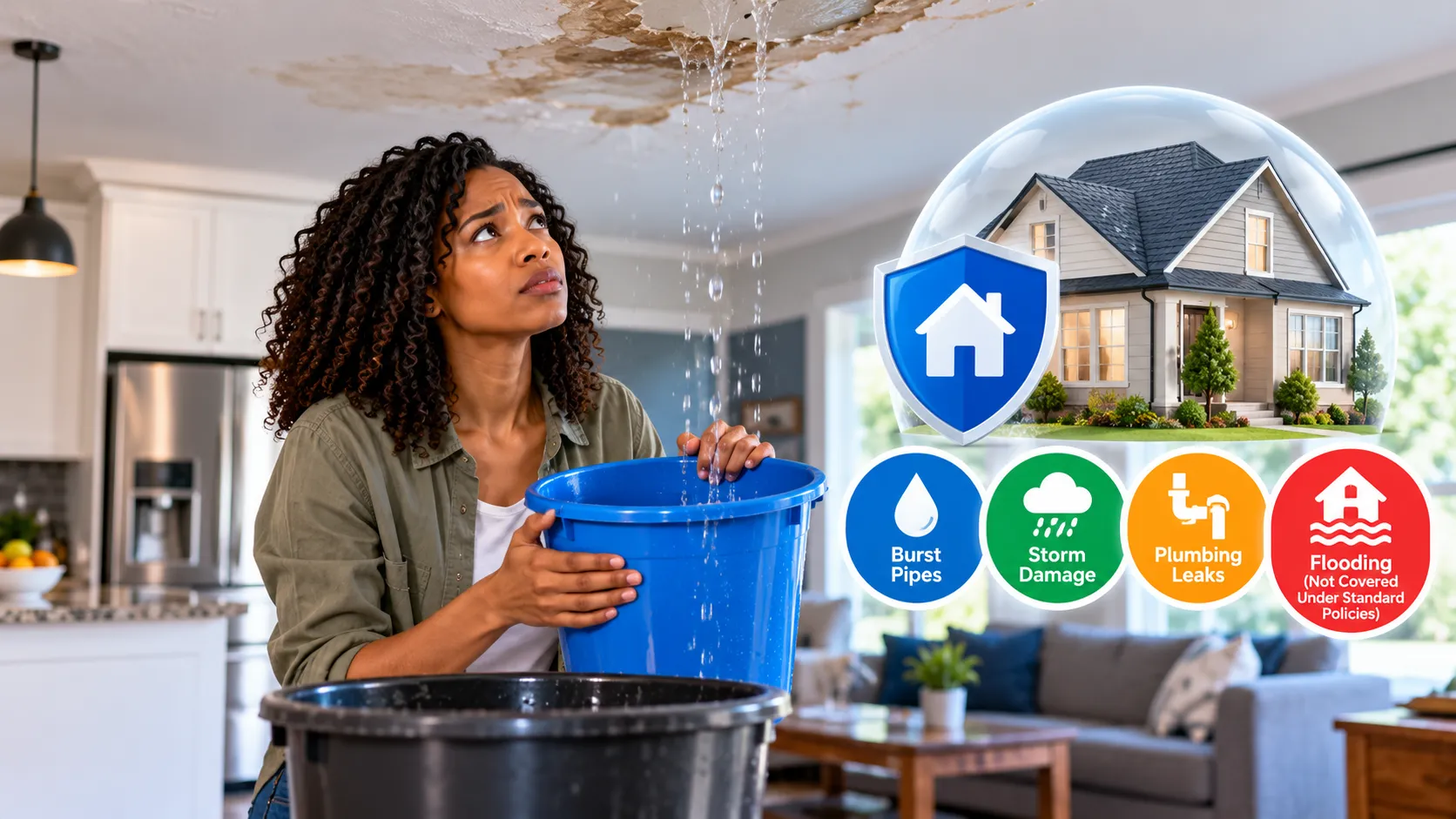
When does home insurance cover water damage?
Homeowners insurance may respond when water damage follows a sudden and accidental covered event, subject to the policy’s terms, exclusions, limits, and deductible. Examples can include a suddenly burst pipe, an unexpected appliance discharge, a sudden plumbing failure, or rain entering after a covered event damages the home. The event and the policy—not simply the presence of water—drive the coverage analysis.
Resulting damage and the item that failed can be treated differently. A policy may potentially address covered damage to walls, flooring, or belongings while treating the cost to repair a worn pipe, appliance, or component differently. That distinction is not universal, so the policy and claim facts remain important.
An insurer may need information about the source of the water, the condition of the affected area, the timing of discovery, prior repairs, and steps taken after the loss. That does not mean a homeowner should diagnose the coverage alone. It means a clear, accurate record can help the insurer evaluate the event under the actual contract.
Water damage that may be covered vs. damage that may not be covered
The graphic below is educational, not a substitute for the policy. In general, a one-time accidental discharge can be evaluated differently from gradual leakage, deterioration, a maintenance problem, surface flooding, or backup. Those categories can be limited, excluded, or handled through separate coverage depending on the insurer and policy.
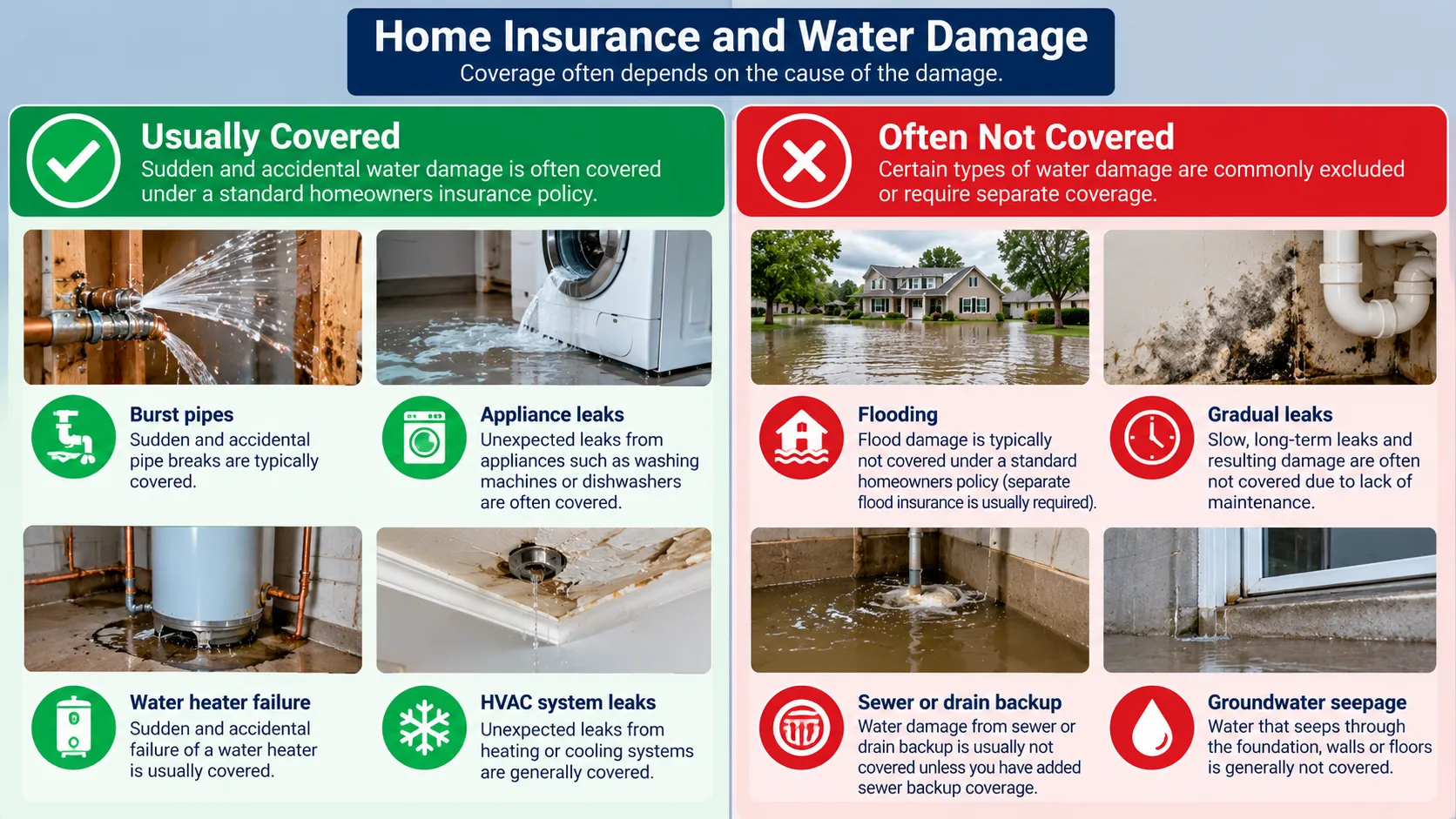
Do not rely on a simple label such as “leak” or “storm damage.” Identify where the water came from, what caused it to enter or escape, how long the condition existed, and which coverage or exclusion the policy identifies.
Common sources of water damage
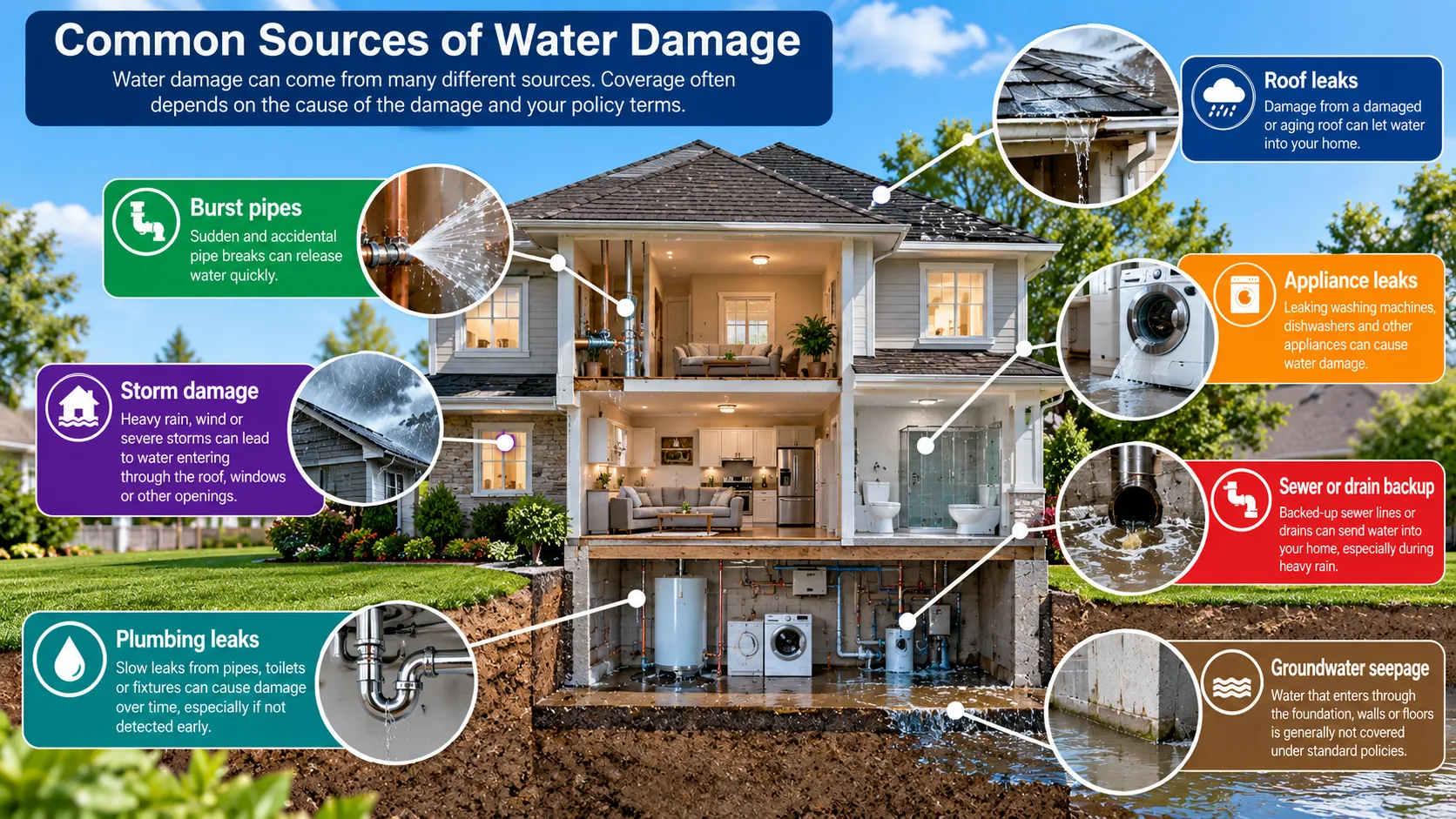
Burst pipes
Resulting damage from a sudden pipe burst may be covered under some homeowners policies, subject to terms and exclusions. Frozen-pipe claims are not all handled identically: policy conditions can matter, including reasonable steps to maintain heat or protect the property where applicable.
Plumbing leaks
A sudden plumbing failure can be evaluated differently from a slow leak that develops over time. Gradual deterioration, repeated leakage, or a maintenance issue may raise different exclusions or limitations, even when the visible damage is discovered later.
Appliance leaks
A washing machine, dishwasher, refrigerator supply line, or water heater can release water unexpectedly. Depending on the policy, resulting damage may be treated differently from replacing the failed appliance itself. The appliance’s age, condition, and the cause of the failure can be relevant.
Roof leaks and storm-related water
The cause of roof damage matters. Water entering after covered storm damage may be evaluated differently from leakage caused by an old, deteriorated, or poorly maintained roof. Likewise, rain driven through a damaged opening is not the same source as water that accumulates outside and enters as a flood. Not every water intrusion during a storm is covered.
Sewer or drain backup
Standard homeowners coverage may not automatically include water or sewage backup. An endorsement or additional coverage may be available, but names, terms, limits, and exclusions vary. Check the policy before assuming that a backed-up drain or sewer is included.
Backup can also involve more than one possible source. A plumbing blockage within the home, a municipal sewer issue, and water that backs up because of flooding can raise different policy provisions. Report what happened without guessing about coverage, and ask the insurer which provision it is applying.
Groundwater and seepage
Water entering through a foundation, basement wall, or floor can be subject to exclusions or limitations. Groundwater, seepage, surface water, and flood can have different meanings under a particular policy, so use the insurer’s policy wording rather than a general description alone.
Does home insurance cover flooding?
Flood insurance and homeowners insurance are separate questions. Standard homeowners insurance generally does not cover flood damage, while separate flood insurance may be available through the National Flood Insurance Program or another source. The NFIP explains that most homeowners insurance does not cover flood damage.
Floodwater from outside the home should not be confused with an internal plumbing discharge. A precise flood definition can be technical and policy-specific; do not assume that every accumulation of water is legally defined as a flood. Identify the source of the water and review the applicable homeowners and flood-policy terms.
Does home insurance cover a leaking pipe, roof leak, or appliance leak?
A pipe that fails suddenly and a pipe that has leaked slowly for months can lead to different outcomes. The same principle applies to roof and appliance leaks: a sudden covered event can be evaluated differently from deterioration, recurring leakage, appliance breakdown, or neglected maintenance. A coverage decision can also distinguish resulting damage from replacement of the failed item.
For mold-related questions, our guide to home insurance and mold explains why the source of moisture, the underlying water loss, and policy limits can matter.
Does home insurance cover sewer backup?
Sewer or drain backup may be excluded from standard coverage or may require an endorsement or additional coverage. The actual wording can differ among insurers, and a backup caused by flood conditions can raise a separate flood-coverage question. Ask the insurer which endorsement, limit, deductible, and exclusions apply to the policy.
What part of home insurance can pay for water damage?
When a loss is covered, more than one part of a homeowners policy may be relevant. Dwelling coverage can concern the home itself, other-structures coverage can apply to qualifying detached structures, personal-property coverage can concern belongings, and loss of use or additional living expenses may help with qualifying additional costs if the home is uninhabitable after a covered loss. Not every coverage applies to every claim. What home insurance covers provides a fuller overview of those sections.
What should you do after discovering water damage?
Address immediate safety first. Do not enter areas with electrical, structural, sewage, contamination, or other hazards. Use appropriate qualified professionals or emergency services when the situation is unsafe.
- Stop the water source if it can be done safely.
- Take reasonable, safe steps to prevent additional damage.
- Photograph or video affected areas and belongings.
- Preserve relevant damaged property when reasonable and safe.
- Contact the insurer promptly and follow claim instructions.
- Review the policy, deductible, and any emergency-mitigation guidance.
- Keep receipts, invoices, and copies of communications.
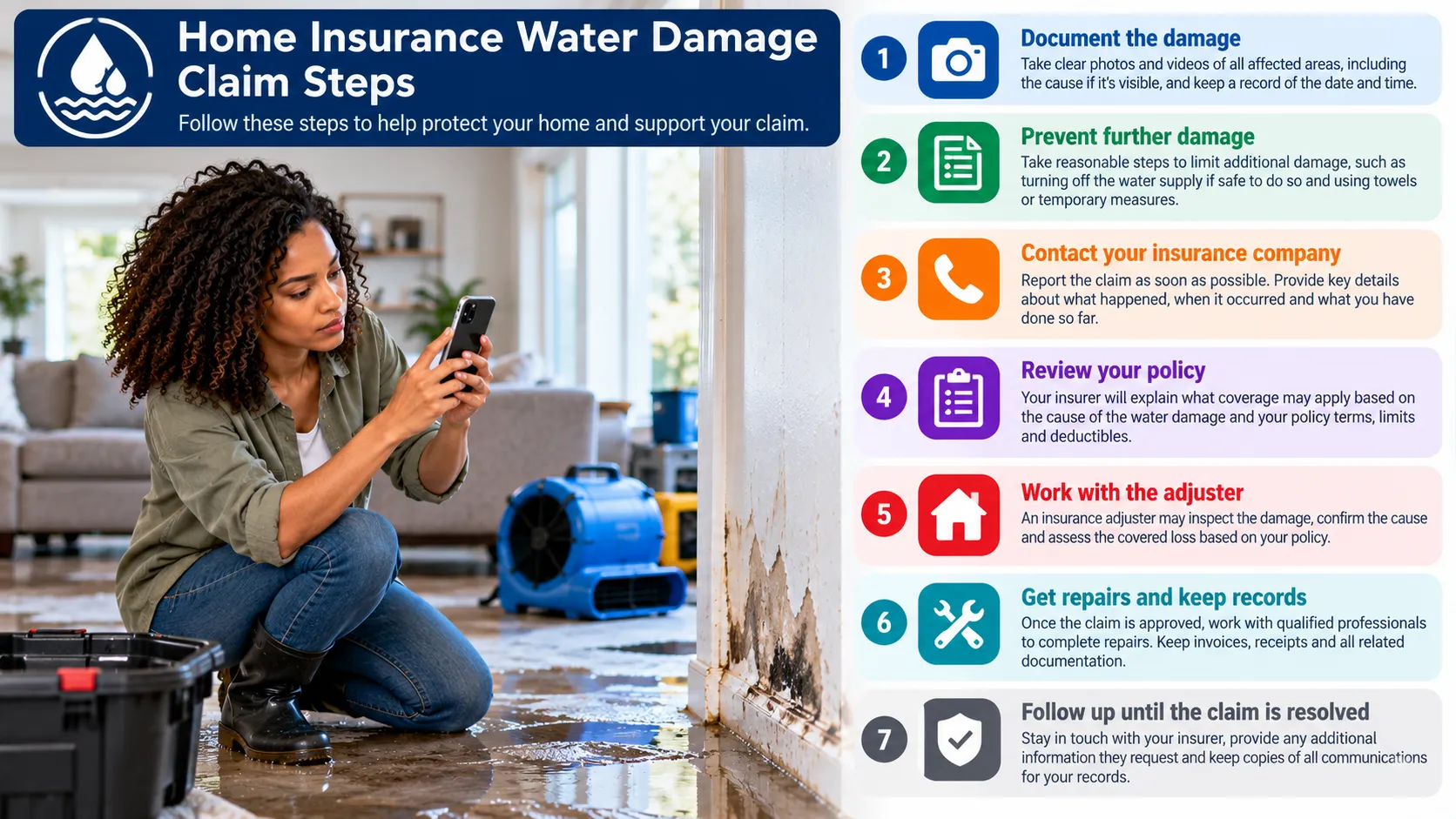
These actions do not guarantee coverage or reimbursement for mitigation costs. They can help create an accurate record while the insurer evaluates the claim.
Reasonable emergency measures can be different from permanent repairs. If time and safety allow, ask the insurer how it wants the affected area documented and whether it has preferred mitigation or inspection procedures. Do not delay an urgent safety response to wait for an insurer, and do not undertake work that creates an electrical, structural, or contamination hazard.
How to document a water-damage claim
Keep photographs and video, a timeline of what happened, the known source of water, a list of damaged belongings, repair or mitigation invoices, receipts, communications, and contractor reports where applicable. Describe the condition accurately; do not alter, exaggerate, stage, or discard relevant evidence before the insurer has a reasonable chance to inspect it unless safety requires removal.
For personal property, record the item, condition, and any available purchase information. For building damage, photographs before demolition or drying work can be useful when it is safe to take them. Keep the records in more than one location if possible, because water damage can affect paper documents and devices stored in the home.
Will home insurance pay to repair the pipe or appliance that caused the damage?
Not necessarily. A policy can treat a failed component and resulting covered damage differently. It may respond to qualifying resulting damage while excluding or limiting replacement of a worn, defective, or deteriorated pipe, appliance, roof component, or connection. The policy wording and facts determine how the parts of a loss are evaluated.
What if the water damage happened slowly?
Long-term seepage, deterioration, repeated leakage, and maintenance issues may be treated differently from a sudden accidental event. Discovering a gradual leak late does not, by itself, decide a claim. The policy language, observations, repair history, source of water, and other facts can all matter.
How does the deductible work on a water-damage claim?
If a covered loss is subject to a deductible, the deductible generally affects the amount payable under the policy. A policy may use different deductibles for different property losses or causes of loss, so do not assume every claim has the same structure. Compare the declarations page and claim guidance with the coverage involved.
The deductible does not determine whether the cause of loss is covered. It is usually a cost-sharing feature applied after the insurer determines that coverage applies, subject to the policy. Ask the insurer which deductible it believes applies instead of assuming the amount shown for one peril governs a water-related claim.
Can you prevent water damage?
Inspect visible plumbing, address leaks promptly, maintain the roof, check appliance hoses and connections, know how to shut off the water, maintain heating during cold weather where relevant, and maintain gutters and drainage. Water sensors or automatic shutoff devices may also be worth evaluating. These steps can reduce risk, but they do not guarantee coverage or a discount.
Questions to ask your insurer about water damage
- Which types of water damage does my policy cover?
- How does the policy treat gradual or repeated leaks?
- Is sewer or drain backup covered, and is an endorsement available?
- How does the policy distinguish flood from other water damage?
- What deductible and special water-damage limits apply?
- How is mold resulting from water damage handled?
- What should I do immediately after a loss, and what records should I retain?
Frequently asked questions
Does home insurance cover a burst pipe?
It may, when a sudden pipe failure causes a covered loss, but policy terms, exclusions, freezing-related conditions, the cause of failure, and the deductible can affect the result.
Does home insurance cover a leaking pipe?
It depends on whether the leak was sudden or developed gradually and on the policy’s treatment of deterioration, repeated leakage, maintenance, the failed pipe, and resulting damage.
Does homeowners insurance cover water damage from rain?
Rain entering after covered damage to the home may be treated differently from rain or surface water that accumulates outside and floods the property. The source and policy terms matter.
Does home insurance cover water damage from a washing machine?
An unexpected appliance discharge may be evaluated differently from appliance breakdown or a long-term leak. The policy can distinguish resulting damage from replacing the failed appliance.
Does homeowners insurance cover a leaking roof?
It can depend on why the roof leaked. Covered storm damage may be treated differently from deterioration, wear, or poor maintenance.
Does home insurance cover sewer backup?
It may be excluded or require an endorsement or additional coverage. Check the policy’s specific wording, limits, deductible, and exclusions.
Does homeowners insurance cover flood damage?
Standard homeowners insurance generally does not cover flood damage. Separate flood insurance may be available, and its terms should be reviewed separately.
Does home insurance cover mold caused by water damage?
Mold treatment can depend on the source of moisture, whether the underlying water loss is covered, policy limitations, exclusions, and any mold-related endorsement or limit.
Does home insurance cover gradual water damage?
Gradual water damage may be treated differently from a sudden accidental loss and can raise maintenance, deterioration, seepage, or repeated-leakage exclusions. Actual policy wording and facts matter.
The bottom line
Whether homeowners insurance covers water damage depends largely on what caused the water to enter or escape and on the policy terms. Sudden accidental water losses can be treated differently from flooding, gradual leaks, maintenance problems, seepage, and sewer backup. Review the policy and contact the insurer rather than assuming that all water damage is covered or excluded.