
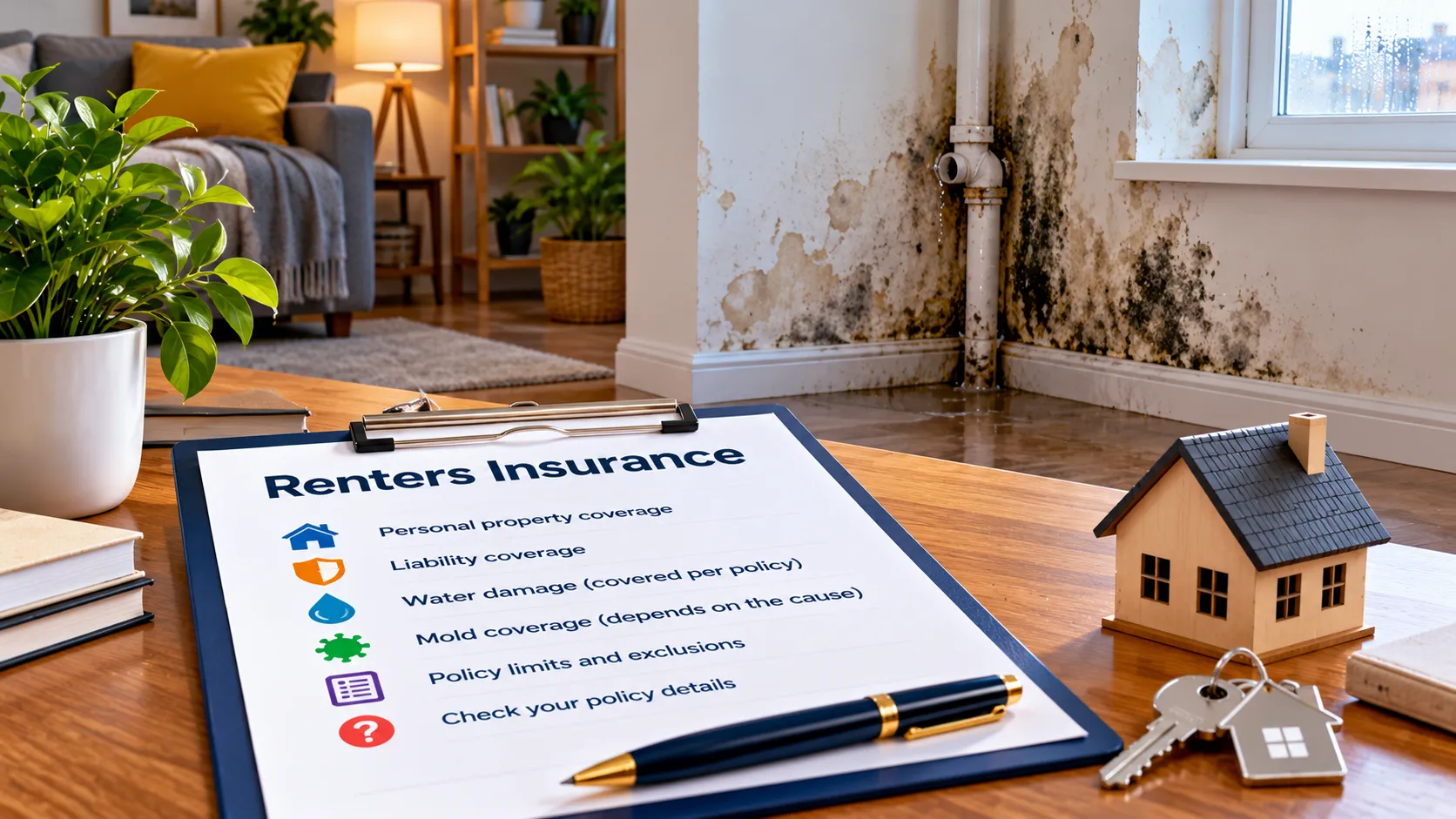
Does renters insurance cover mold?
Renters insurance does not automatically cover mold. Insurance commonly evaluates the cause of a loss, and mold is often a consequence of moisture rather than the original event. A useful review starts with five questions: What caused the moisture? Is that cause covered? Does the policy contain a mold or fungi exclusion or limitation? What property was damaged? What limits and deductible apply?
That framework does not guarantee a claim result. Policy forms, endorsements, state rules, timing and claim facts can differ. The California Department of Insurance’s residential guide, for example, identifies sudden and accidental water damage among generally covered perils while listing seepage or leaks, mold, maintenance and flood among generally uncovered categories in its California-focused guide. The actual renters policy controls.
It can help to keep the questions in order. First identify the original moisture event, rather than starting with the mold discovered later. Next identify the policy provision that may apply to that event. Then identify whether the damaged item belongs to the renter or is part of the building. Finally, review the deductible, limits and any endorsements. This sequence makes it easier to describe a loss accurately without assuming that a visible condition determines coverage by itself.
When might renters insurance cover mold damage?
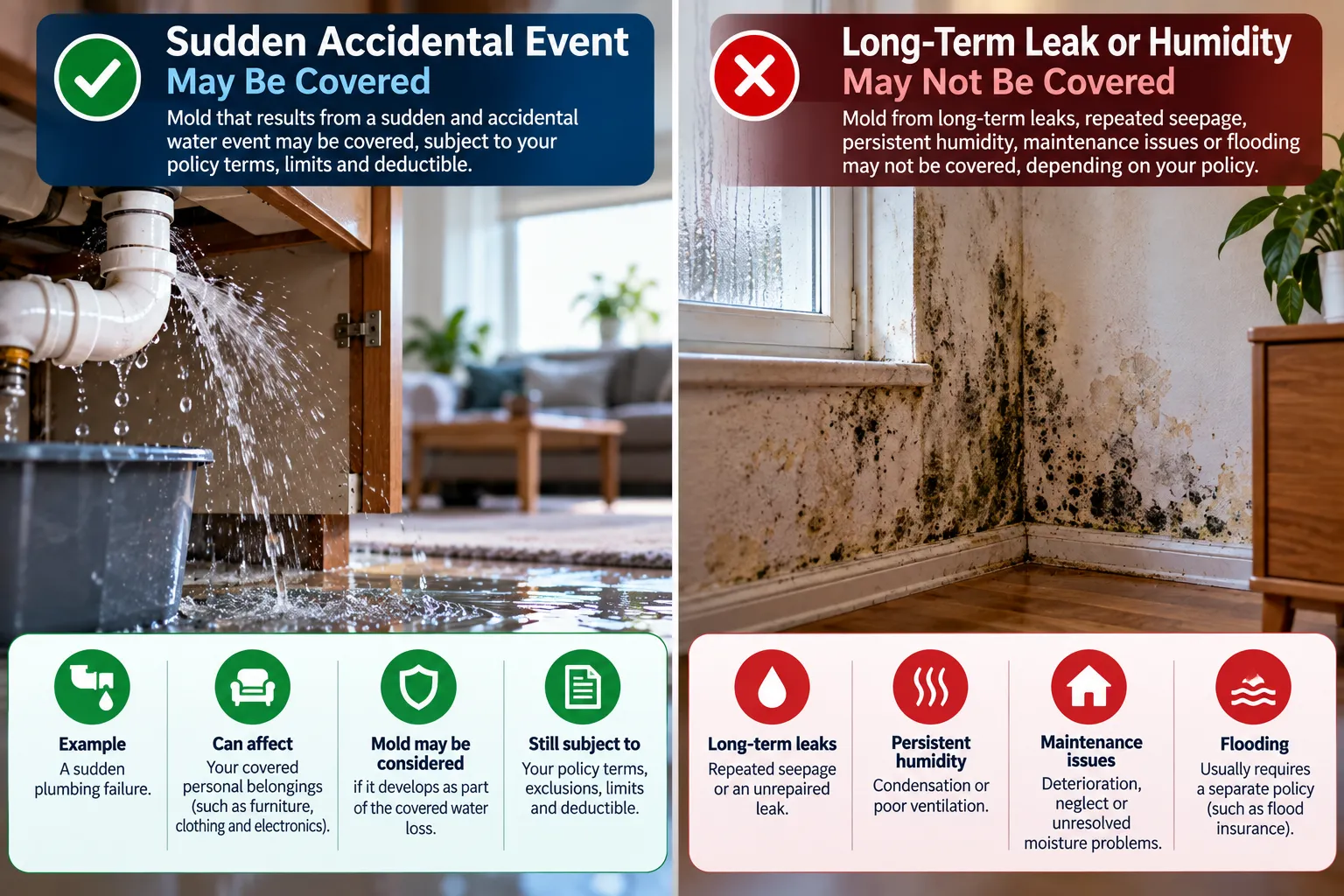
Coverage may be possible when mold results from a sudden and accidental event that is itself covered by the policy, subject to exclusions and limitations. For example, a sudden plumbing failure could damage covered personal belongings, and mold that develops as part of that loss may be considered with the underlying claim. That is an illustration, not an automatic coverage promise.
The insurer still examines the cause, the timing, the policy’s water-damage wording, any mold limitation and the property involved. Prompt reporting and documentation can help preserve the facts for review, but they do not expand the coverage purchased.
For example, an insurer may need to distinguish damage that followed a one-time event from evidence of a condition that developed over a longer period. The same household item can have a different coverage analysis if the underlying source changes. Keep claim descriptions factual: note when the water was first noticed, which belongings were affected and what notices were given to the property manager. Avoid making conclusions about coverage before the insurer reviews the policy and facts.
When might renters insurance not cover mold?
Long-term leaks, repeated seepage, persistent humidity, condensation, deterioration, maintenance issues, neglect and unresolved moisture problems can create difficult coverage questions. They may fall outside covered causes of loss or within exclusions, depending on the policy. Flooding also calls for a separate analysis rather than being grouped with every other kind of water damage.
Avoid relying on a label such as “mold damage.” The source of the moisture, how long it was present and whether the policy excludes the condition can matter as much as the visible mold itself.
Does renters insurance cover mold from a leaking pipe?
A sudden pipe failure can receive different treatment from a slow or repeated leak. Sudden accidental water discharge may be evaluated as a covered event in some policies, while long-term seepage or an unrepaired leak may be treated differently. Neither description by itself decides a claim.
Check the policy wording, exclusions, timing, damaged property and circumstances of the loss. If a pipe is leaking, report it to the landlord or property manager promptly and preserve relevant photos and communications for an insurer’s review.
Does renters insurance cover mold after water damage?
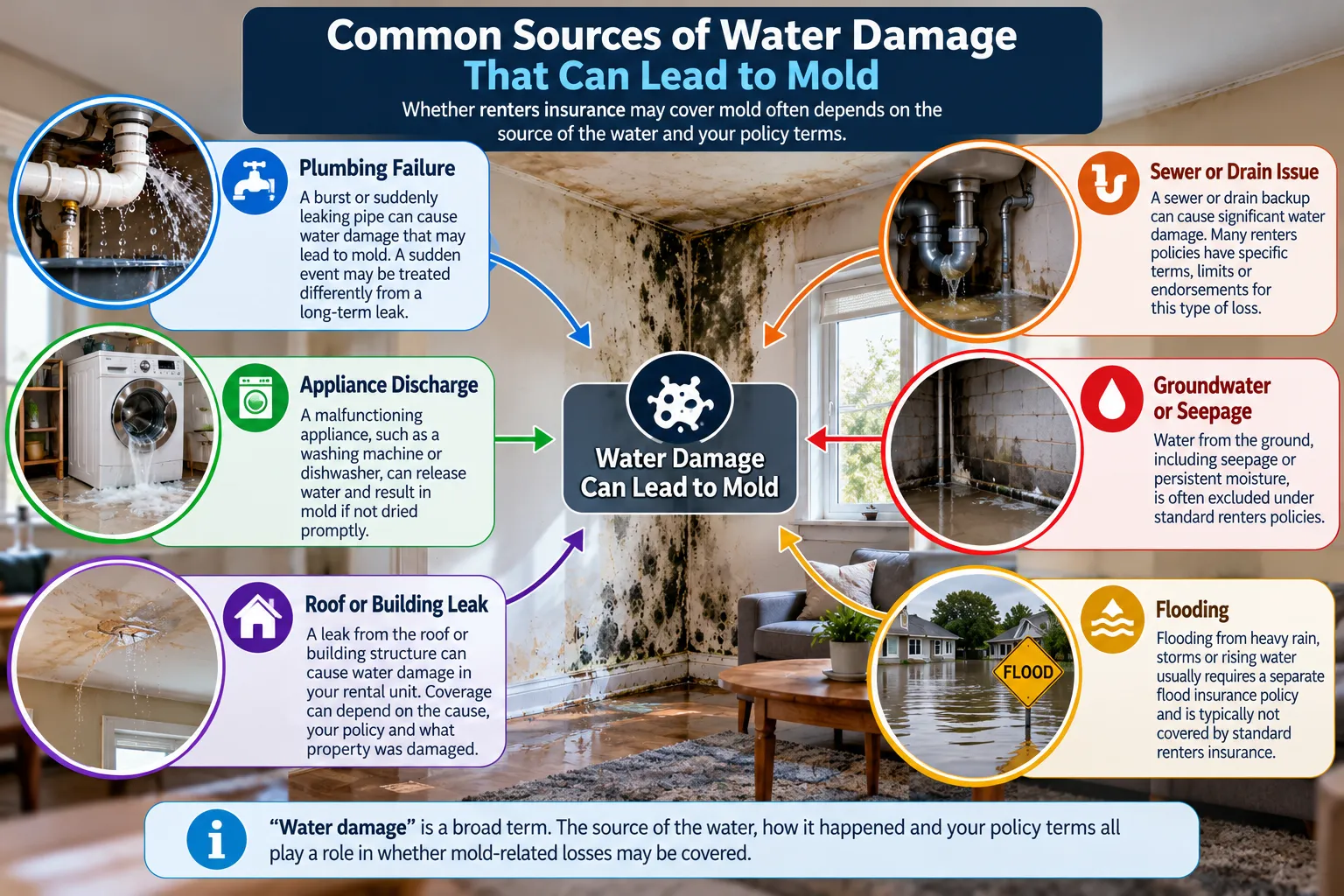
“Water damage” is too broad to answer the question alone. Moisture can come from a plumbing failure, appliance discharge, roof or building leak, sewer or drain issue, groundwater, or flooding. These sources can receive different treatment under insurance policies.
Identifying the source helps separate a possible sudden insured event from an excluded condition, a maintenance issue or a flood loss. It also helps clarify whether the damaged item is renter-owned personal property or part of the building.
Does renters insurance cover mold caused by flooding?
Standard renters insurance generally should not be assumed to cover flood losses. The NAIC explains that homeowners and renters policies generally do not protect against flood losses. Renters can purchase separate flood insurance for personal property, but a flood policy does not automatically answer every mold question after a flood.
After a disaster, FEMA and CDC provide separate mold-cleanup guidance. Policyholders are expected to follow applicable policy requirements and take reasonable steps to limit further damage where safe. Claim treatment depends on the policy, the facts and any conditions that apply, so this is not a substitute for a flood-insurance review.
What about mold caused by humidity or condensation?
Insurance is generally designed around covered losses rather than ordinary maintenance or persistent environmental conditions. Mold tied to ongoing humidity, condensation or an unresolved moisture problem may not qualify as a covered sudden loss. The policy’s exclusions and the specific cause matter.
This does not determine a landlord’s or tenant’s legal responsibility. Ownership, the lease, local law and the facts of the problem are separate questions from what a renters policy may cover.
Does renters insurance cover black mold?
The color or species of mold generally does not by itself determine insurance coverage. The insurance questions remain the cause of moisture, policy wording, exclusions, limits and the damaged property. This article does not assess health effects or provide medical advice; for safety information after a disaster, consult the FEMA and CDC guidance in the sources.
What property can renters insurance protect from mold damage?
Renters insurance primarily concerns the renter’s covered personal property and the liability or loss-of-use protections defined in the policy. Clothing, furniture, electronics, books and other household belongings may be personal property. The landlord or property owner’s insurance generally addresses the building structure, but that does not establish whether it covers mold damage to the building.
For a broader explanation of personal property, liability and loss of use, see understanding renters insurance coverage. The cause, the policy and the ownership of the damaged item remain central to any coverage review.
Does renters insurance pay to remove mold from the apartment?
Remediation of walls, floors or other building components is not the same as a claim for renter-owned personal property. A renters policy may address covered belongings under its terms, while building remediation can involve ownership, the lease, the cause, local or state landlord-tenant law and separate insurance arrangements.
Do not assume who must pay. Contact the landlord or property manager promptly, notify the insurer if a covered loss may be involved, and contact an appropriate local authority where necessary. Those parties can address the facts that this general insurance guide cannot determine.
Can renters insurance cover temporary housing because of mold?
Loss-of-use or additional-living-expense coverage may become relevant when a covered insured loss makes the rental uninhabitable. Mold alone does not automatically trigger that coverage. The underlying loss, the policy terms and the applicable limits matter; see when renters insurance can help with hotel stays for a focused explanation of temporary housing.
What should you do if you discover mold after water damage?
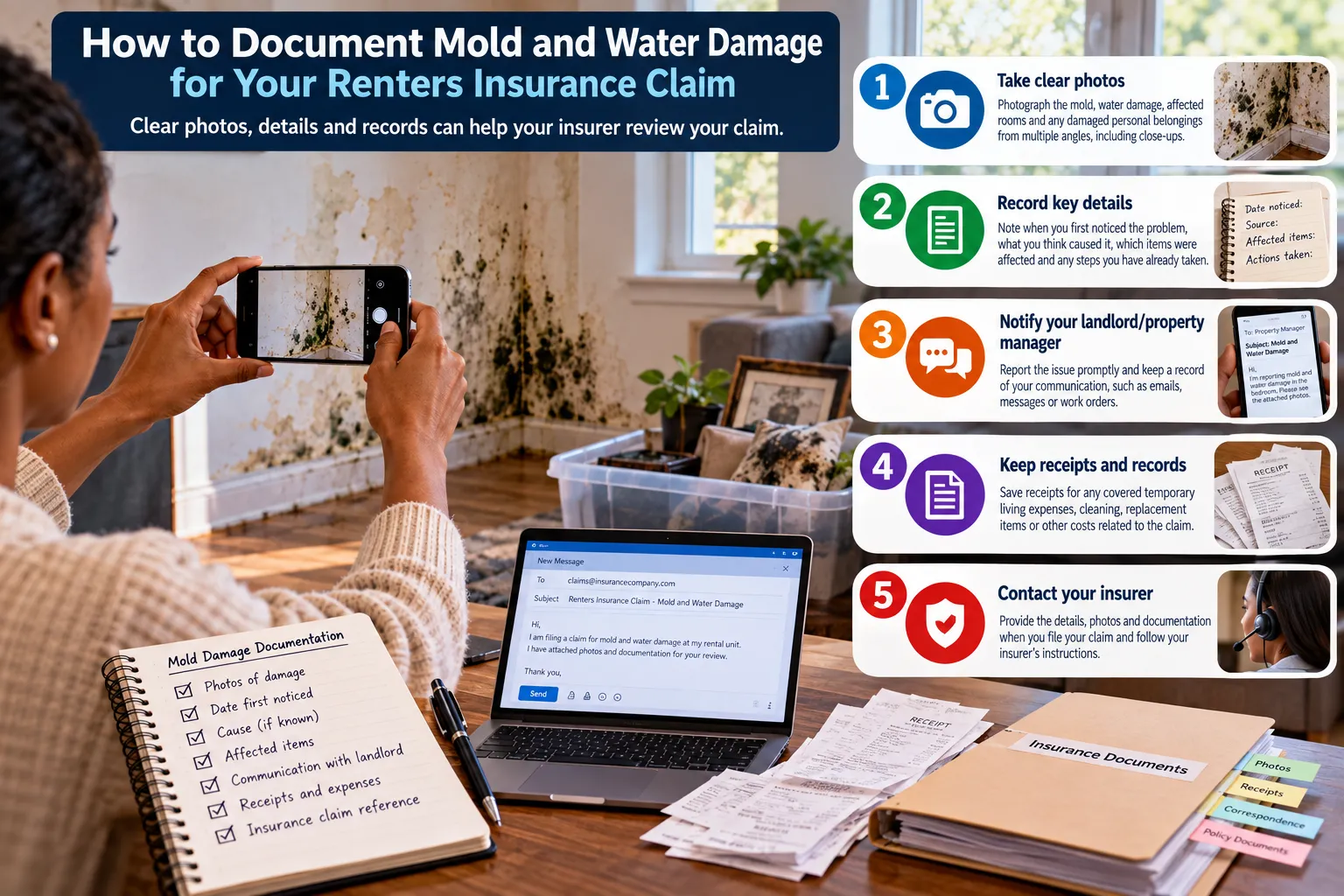
Keep the immediate response focused on safety, notice and documentation:
- Address urgent safety concerns.
- Notify the landlord or property manager promptly.
- Stop or report the water source where safely possible.
- Photograph or video the damage.
- Document damaged personal belongings.
- Keep relevant receipts and communications.
- Review the renters policy.
- Contact the insurer promptly if a covered loss may be involved.
- Follow insurer instructions about protecting property from additional damage where safe.
- Do not discard potentially relevant claim evidence prematurely unless safety requires it.
This is not DIY mold-removal instruction. FEMA and CDC publish dedicated post-disaster cleanup guidance; use qualified local help or authoritative safety guidance as appropriate.
What part of your renters policy should you check?
Start with the declarations page, then read the covered causes of loss or perils, exclusions, water-damage provisions and mold or fungi provisions. Also check personal-property coverage, loss-of-use coverage, deductible, limits or sublimits, and endorsements. The declarations page identifies the selected limits and policy period, while the policy language explains when those amounts can apply.
Look for wording that distinguishes a sudden discharge from seepage, overflow, backup, flood or repeated leakage. Those terms can have specific meanings in a policy and may be modified by endorsements. A mold or fungi provision can also apply a separate dollar limit, a narrower condition or an exclusion. Comparing the declarations page with the full policy avoids mistaking a broad coverage label for an answer to a particular loss.
If the wording is unclear, ask the insurer to explain how the listed provisions relate to the reported event. A policy review is more reliable than a general statement about what renters insurance “usually” covers.
Questions to ask your insurer about mold coverage
- Is the event that caused the moisture covered?
- Does my policy contain a mold or fungi exclusion?
- Is there a separate mold limit?
- Is damaged personal property covered?
- What deductible applies?
- Is cleanup of covered personal property included?
- Does loss-of-use coverage apply?
- What documentation do you need?
- Are there endorsements that change mold coverage?
Mold coverage examples
These illustrations are not claim outcomes:
- Sudden plumbing event followed by mold: Coverage may depend on whether the plumbing loss is covered and whether mold limitations apply.
- Slow leak existing for months: Long-term seepage or maintenance exclusions may affect coverage.
- Mold following external flooding: Standard renters insurance generally should not be assumed to cover the flood loss; separate flood insurance may be relevant.
- Persistent bathroom humidity or condensation: This may be treated differently from a sudden insured event.
The examples show why the cause, policy and damaged property should be considered together rather than treating mold as one uniform insurance category.
The bottom line
Renters insurance does not automatically cover mold. Coverage depends heavily on what caused the moisture and how the policy treats that cause, mold or fungi, water damage and the damaged property. Sudden covered water events can be treated differently from long-term leaks, maintenance problems or flooding. Check the policy and contact the insurer about the specific loss.