
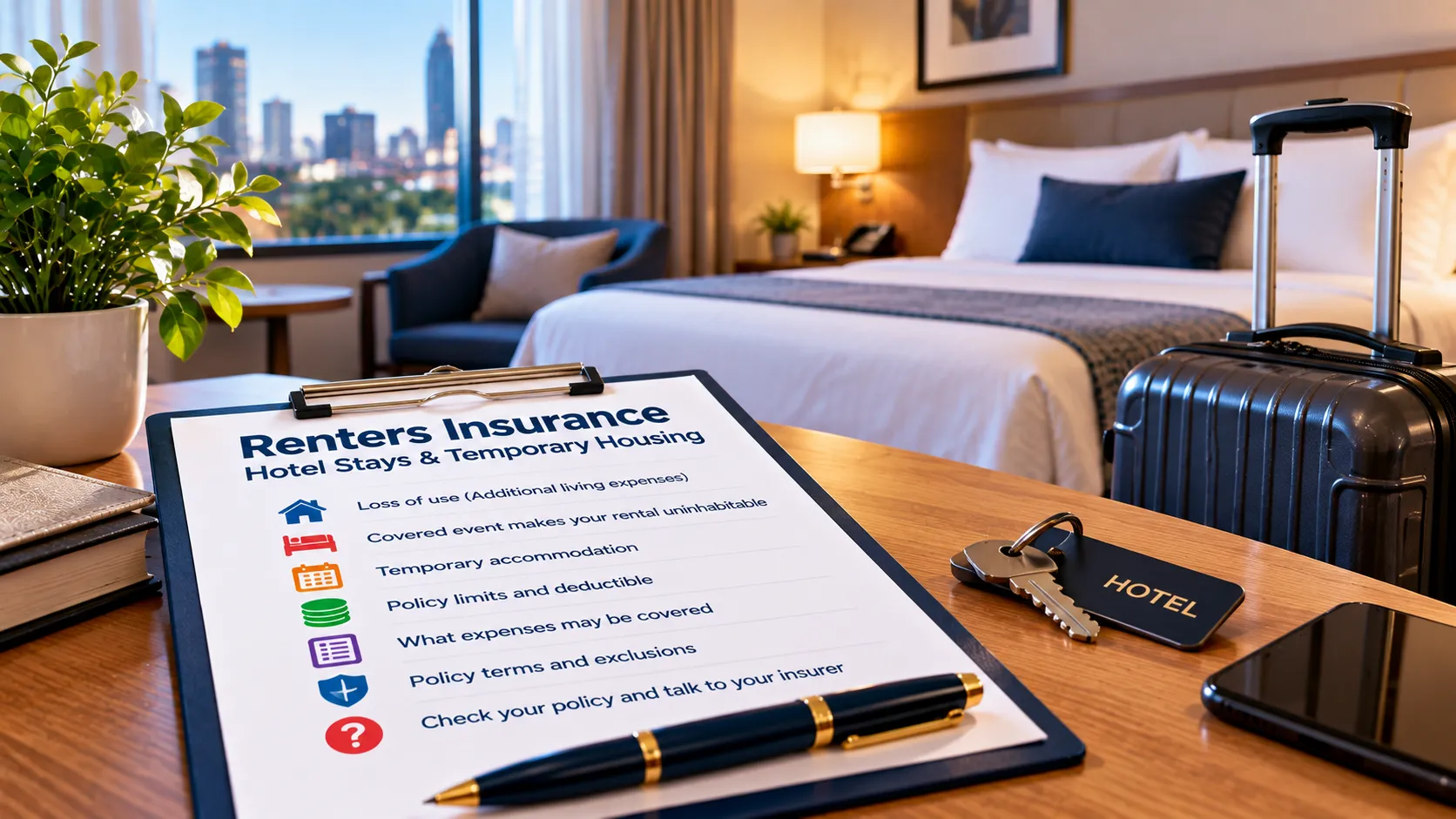
Does renters insurance cover hotel stays?
Renters insurance may help with a hotel or other temporary housing when a covered loss makes the insured rental uninhabitable. Many renters policies include loss-of-use or additional-living-expense coverage, which can address certain extra living costs after that kind of displacement. A hotel, motel, temporary apartment or another reasonable short-term arrangement may be considered, depending on the policy and circumstances.
The triggering event matters. A voluntary hotel stay, a vacation, inconvenience alone or a loss excluded by the policy should not be assumed covered. The insurer evaluates the underlying event, whether the rental can be occupied, the policy’s terms, the amount claimed and the documentation provided.
What is loss-of-use coverage in renters insurance?
Loss-of-use coverage is separate from the personal-property and liability parts of renters insurance. It concerns additional living expenses when the renter cannot occupy the insured residence after a covered loss. Policy terminology can vary: it may be called loss of use, additional living expenses or ALE.
For the broader policy components that sit alongside loss of use, see what renters insurance can cover. A temporary-housing claim still depends on the covered-loss and uninhabitability questions discussed here.
The NAIC identifies additional living expenses as one of the typical renters coverage types. California’s Department of Insurance describes loss of use as helping with additional living expenses when a home is damaged by an insured peril to the extent it cannot be lived in. That California description is useful context, not wording that every U.S. renters policy must use.
What are additional living expenses?
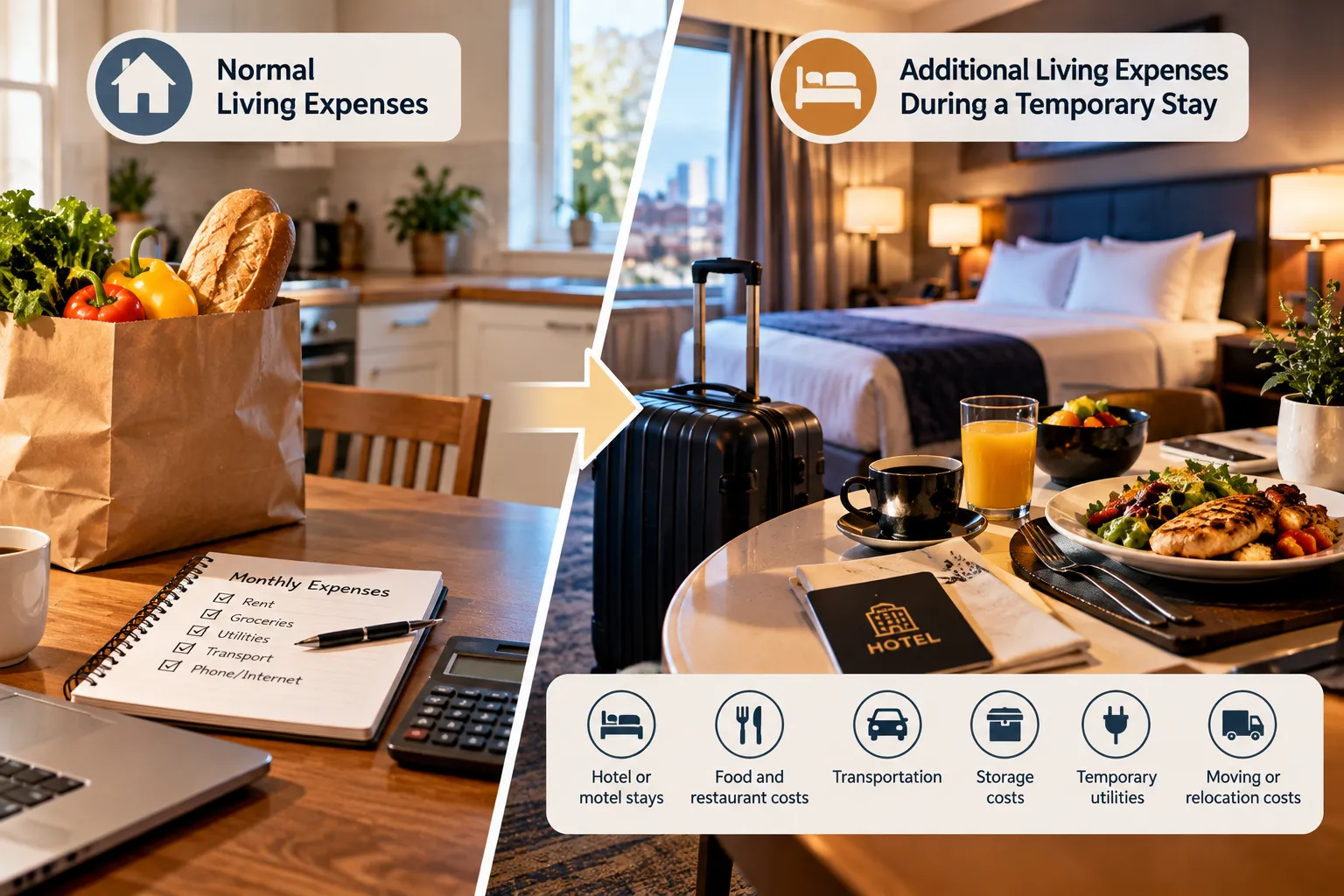
ALE generally concerns extra costs caused by temporary displacement, not every ordinary bill a household would have paid anyway. The NAIC explains that coverage may pay the difference between normal living expenses and increased temporary expenses. For example, if normal grocery spending is $500 per month and temporary food spending becomes $750 because a hotel room has no kitchen, the possible additional expense is $250. This is an illustration, not a promise of reimbursement.
The same distinction applies to housing. A policy may consider the increase between normal living arrangements and a reasonable temporary arrangement, subject to its terms. Keep a record of normal recurring costs as well as new expenses so the comparison can be understood.
What temporary housing can renters insurance help pay for?
Temporary housing may include a hotel, motel, short-term rental, temporary apartment or another reasonable arrangement. Availability, duration, local conditions, the policy and insurer requirements can affect what is approved. The purpose is temporary housing after a covered loss, not an unlimited choice of accommodation.
Contact the insurer or adjuster promptly where practical before incurring substantial costs. Ask whether lodging needs approval, whether direct billing is available and what limits apply. Immediate safety needs come first; no one should remain in an unsafe rental while waiting for a coverage answer.

What other expenses can loss-of-use coverage include?
Depending on the policy, qualifying additional expenses may include extra food or restaurant costs, temporary housing, storage, relocation or moving costs, additional transportation, temporary utility or telephone setup, and furniture rental. California’s Residential Property Claims Guide lists examples such as food, housing, utility installation, transportation, relocation, storage and furniture rental in its residential claims discussion.
Those examples are not a nationwide checklist or a guarantee that every renters policy covers each item. The key question is whether an expense is additional because of a covered displacement and fits the policy’s terms.
When might renters insurance pay for a hotel?
Coverage may be considered when a covered event causes sufficient damage that the rental cannot be lived in. A covered fire that damages an apartment, a covered sudden water event that makes it temporarily unsafe to occupy, or another covered insured event may bring loss-of-use coverage into the claim. The policy, the severity of damage and the particular living expense still need review.
These are scenarios, not claim determinations. An insurer may need to confirm the cause of loss, the occupancy condition and the expenses before deciding what can be paid.
When might renters insurance not pay for a hotel?
Hotel costs may not be covered if the underlying event is excluded, the rental remains habitable, the stay is voluntary rather than required because of a covered loss, the loss-of-use limit has been exhausted, the cost falls outside policy terms, documentation is missing or the expense is not actually additional.
This list does not determine a particular claim. It explains why a hotel receipt alone is not enough to establish coverage. The cause of the displacement and the policy terms come first.
Does renters insurance cover a hotel after water damage?
“Water damage” does not decide coverage by itself. A sudden covered plumbing loss can be treated differently from long-term leakage, seepage, maintenance problems or flooding. If the underlying water event is covered and makes the rental uninhabitable, loss-of-use coverage may become relevant.
For the related cause and mold questions, see how renters insurance can treat mold. That guide explains why the source and duration of moisture matter; it does not make a hotel-payment promise.
Does renters insurance cover a hotel after a fire?
Fire is commonly an insured peril under renters coverage, but the actual policy controls. If a covered fire makes the rental uninhabitable, loss-of-use coverage may help with reasonable temporary living expenses. For the broader fire-damage and belongings analysis, read whether renters insurance can cover fire. The amount, duration, deductible treatment and documentation requirements still depend on the policy and claim facts.
What if you have to leave because of mold?
Mold itself does not automatically establish hotel or ALE coverage. The underlying cause of the mold and whether that cause is covered matter. If a covered insured loss makes the rental uninhabitable, loss-of-use coverage may become relevant. Read whether renters insurance can cover mold for the narrower mold-coverage analysis.
What if you evacuate but your apartment is not damaged?
Physical damage is not always the only possible trigger in every policy. Some policies or state-specific circumstances can address prohibited access or civil-authority situations. Those provisions are not uniform nationwide. During an evacuation, contact the insurer promptly, explain the official circumstances and ask how the policy applies instead of assuming that temporary lodging is covered.
How long will renters insurance pay for temporary housing?
There is no standard duration that applies to every renters policy. A policy may use a dollar limit, a time limit, a reasonable repair or relocation period, or another contractual condition. The NAIC notes that some policies have dollar limits and some also have time limitations. California’s guidance also cautions that renters loss-of-use duration can differ from homeowner protections.
Read the declarations page and loss-of-use provisions, then ask the insurer how the limit applies to the specific claim. Do not generalize a California rule or one insurer’s timeline to every renter.
Is there a dollar limit on hotel coverage?
Loss-of-use or ALE coverage is not unlimited. The declarations page or policy may contain a dollar maximum, percentage-based limit, time restriction or other conditions. The applicable cap may also be affected by payments already made for other qualifying additional expenses. Rather than relying on a typical amount, ask the insurer or adjuster to identify the relevant limit and how it is being tracked.
Do you have to pay for the hotel first?
There is no universal payment process. A claim may involve reimbursement after receipts, insurer-arranged accommodation, advances or another arrangement. Contact the insurer or adjuster promptly to understand the approved process before incurring major expenses where practical.
California’s Residential Property Claims Guide notes that insurers may advance money for certain residential additional expenses. That is California-specific claims guidance, not a nationwide renters-insurance rule. Keep records regardless of the payment method.
What receipts and documents should you keep?
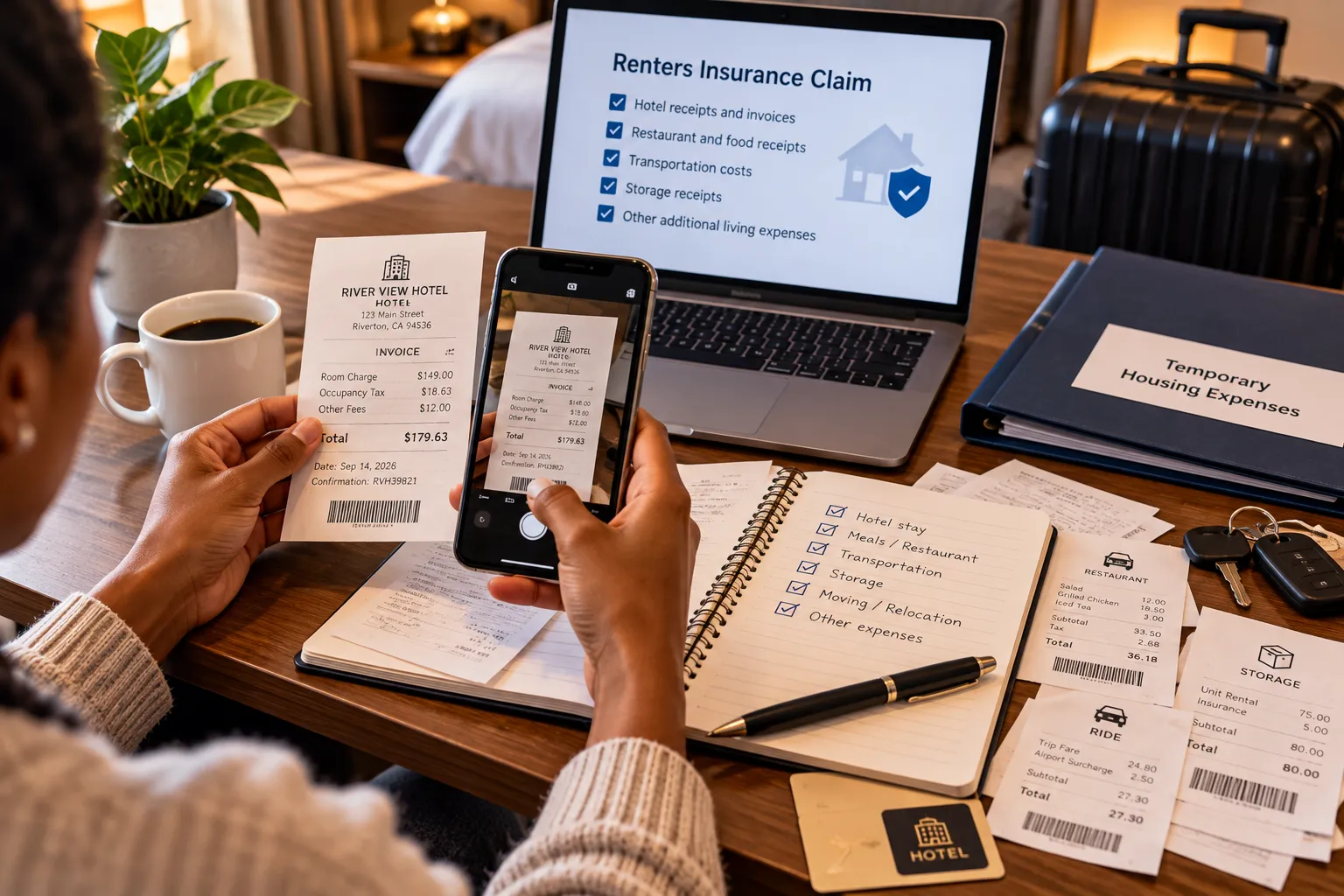
Keep hotel or lodging invoices, restaurant receipts, temporary-rental agreements, storage receipts, transportation expenses, relocation or moving costs, relevant utility expenses, insurer communications, landlord or property-manager communications, and photographs or documentation of the loss where appropriate.
Receipts help show what was spent and whether the cost was additional to normal living expenses. The NAIC specifically advises keeping receipts for additional costs. A short log of dates, contacts and expenses can also make later questions easier to answer.
What should you do before booking a hotel?
- Address immediate safety needs first.
- Notify the landlord or property manager.
- Contact the insurer promptly.
- Ask whether the underlying loss appears potentially covered.
- Ask whether loss-of-use or ALE coverage applies.
- Ask about the lodging approval or payment process.
- Ask about dollar and time limits.
- Ask what receipts or documentation are required.
- Keep records of communications and expenses.
Questions to ask your insurer about temporary housing
- Does my policy include loss-of-use or ALE coverage?
- Is the event that displaced me covered?
- Does the rental need to be formally considered uninhabitable?
- What temporary lodging is considered reasonable?
- Is there a dollar limit or time limit?
- Do I need approval before booking?
- What expenses besides lodging may qualify?
- What receipts or documentation are required?
- How will reimbursement or advances work?
Hotel coverage examples
These illustrations do not guarantee a claim outcome:
- Covered apartment fire makes the unit uninhabitable: ALE may help with temporary lodging and qualifying additional expenses.
- Covered sudden water loss requires temporary relocation: ALE may become relevant depending on the policy and circumstances.
- Minor covered damage occurs but the apartment remains safely habitable: A hotel stay should not be assumed covered.
- A renter voluntarily stays at a hotel during repairs that do not make the unit uninhabitable: Coverage should not be assumed.
- A loss results from an excluded cause: ALE generally should not be assumed merely because the renter chooses temporary lodging.
The bottom line
Renters insurance may help pay for a hotel or other temporary housing when a covered loss makes the insured rental uninhabitable. The relevant protection is generally loss-of-use or additional-living-expense coverage. It may also help with certain additional costs caused by displacement, but coverage is subject to the policy’s terms, limits and the underlying cause of loss. Contact the insurer promptly and keep receipts.