

Does being over 25 make car insurance cheaper for a new driver?
Not automatically. Age and driving experience are separate concepts. An adult who has recently received a first license may have less individual driving history available for an insurer to consider than an experienced driver of the same age.
Age may be one rating factor where permitted, but it is not a universal threshold that makes coverage inexpensive. Insurers can also consider driving experience and record, claims history where applicable, vehicle, location, coverage choices, deductible, annual mileage, vehicle use, and other legally permitted factors. The factors used and the weight given to them can vary by insurer and state.
The useful starting point is not an expectation of a particular age-based price. It is comparing equivalent quotes based on current, accurate information and understanding what coverage each quote provides.
Why driving experience still matters after age 25
Consider two people who are both 30. One has driven for 12 years, while the other received a first license recently. That is a conceptual example, not a premium prediction, but it illustrates why age alone does not describe a driver’s available history.
The National Association of Insurance Commissioners explains that auto insurers use underwriting to assess risk and rating to assign a price. A newly licensed adult may have a different history for an insurer to evaluate than an experienced adult, even where both are the same age.
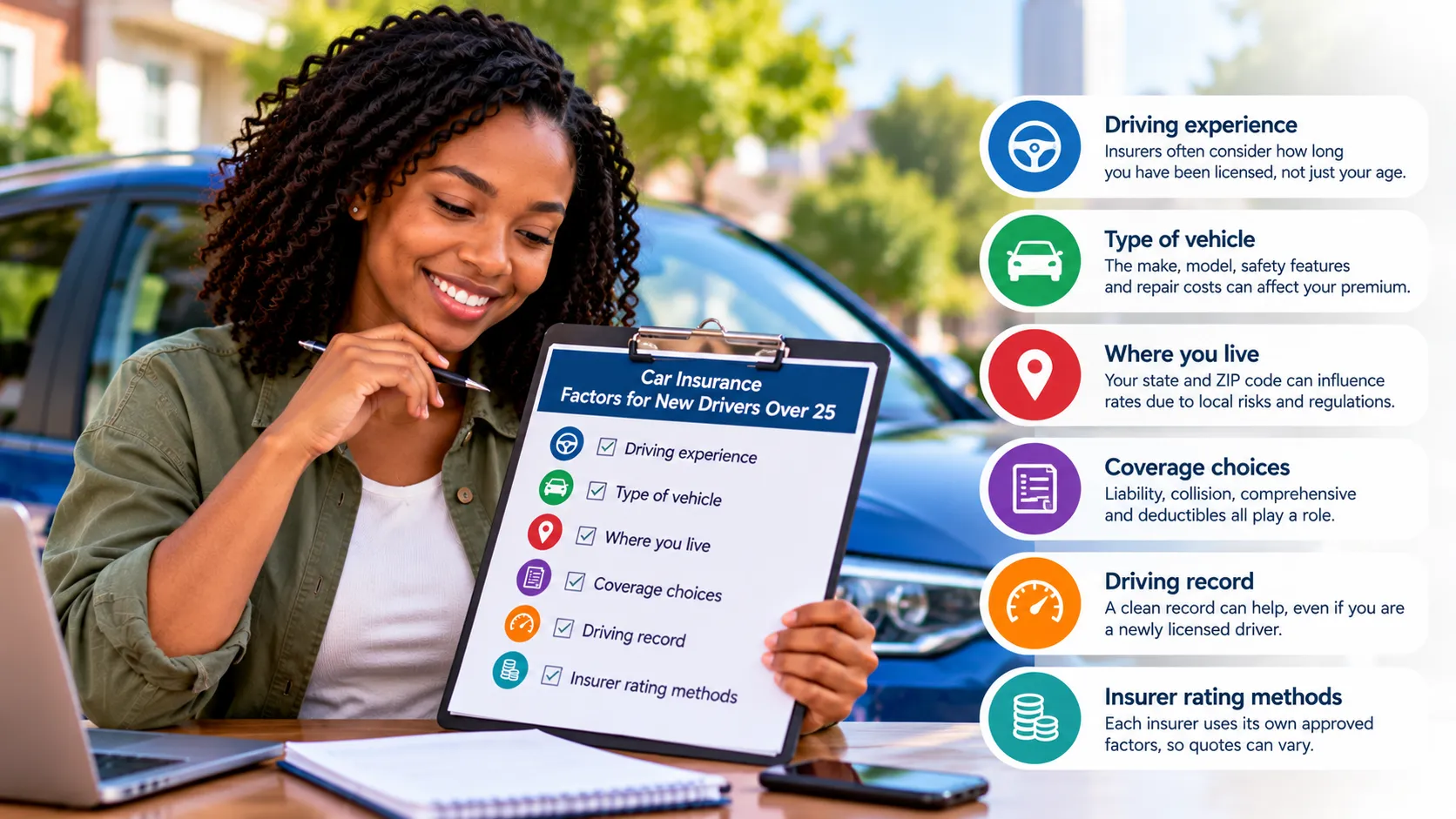
Additional experience can change the information available over time, but there is no fixed period after which a premium must decline. A quote can still reflect the vehicle, coverage, location, and an insurer’s own rating approach.
What affects car insurance for a new driver over 25?
Insurers do not necessarily use the same factors in every state or give each factor the same importance. These common questions can help an adult new driver understand a quote.
Driving experience
The amount of driving history available can be relevant to an insurer’s underwriting or rating process. A recently licensed adult should not assume that age replaces the need for a driving-history assessment.
Driving record
Tickets, at-fault crashes, claims, and other driving-history information can affect a quote where permitted. A clean record does not guarantee a particular price, but safe driving and accurate information matter as history develops.
Vehicle
Vehicle value, repair complexity, safety features, theft exposure, performance characteristics, parts availability, and expected use can affect pricing. Do not assume that a lower purchase price alone makes a car cheaper to insure.
Location
Where a vehicle is primarily garaged can matter. Insurers may use geographic information and local claim experience in ways allowed by state rules, so an address change should be reported accurately.
Coverage choices
Liability limits, collision, comprehensive, uninsured or underinsured motorist coverage where applicable, optional benefits, and policy terms can all change the protection and the quoted premium.
Deductibles
A deductible can affect the premium for coverage to which it applies. A higher deductible can lower a quote in some situations but may increase the amount the policyholder pays after a covered loss.
Vehicle use and mileage
Annual mileage, commuting, personal use, business use, ridesharing, delivery, and other regular use can be material to a quote. Give the insurer the actual use and update it if circumstances change.
Insurer rating methodology
The NAIC notes that insurers adopt their own rating systems. That is one reason equivalent policies can have different prices. State law can also restrict or shape which factors an insurer may use.
How to compare car insurance as a new driver over 25
Quotes are only comparable when they use the same facts and protection. Request each quote with the same drivers, vehicle, garaging address, estimated mileage and use, liability limits, collision and comprehensive selections, deductibles, and optional coverage where possible.
Also compare the policy term, total premium, payment schedule, fees, and assumptions behind any discount. A lower monthly payment may represent installments or a different term rather than a lower price for the same coverage.
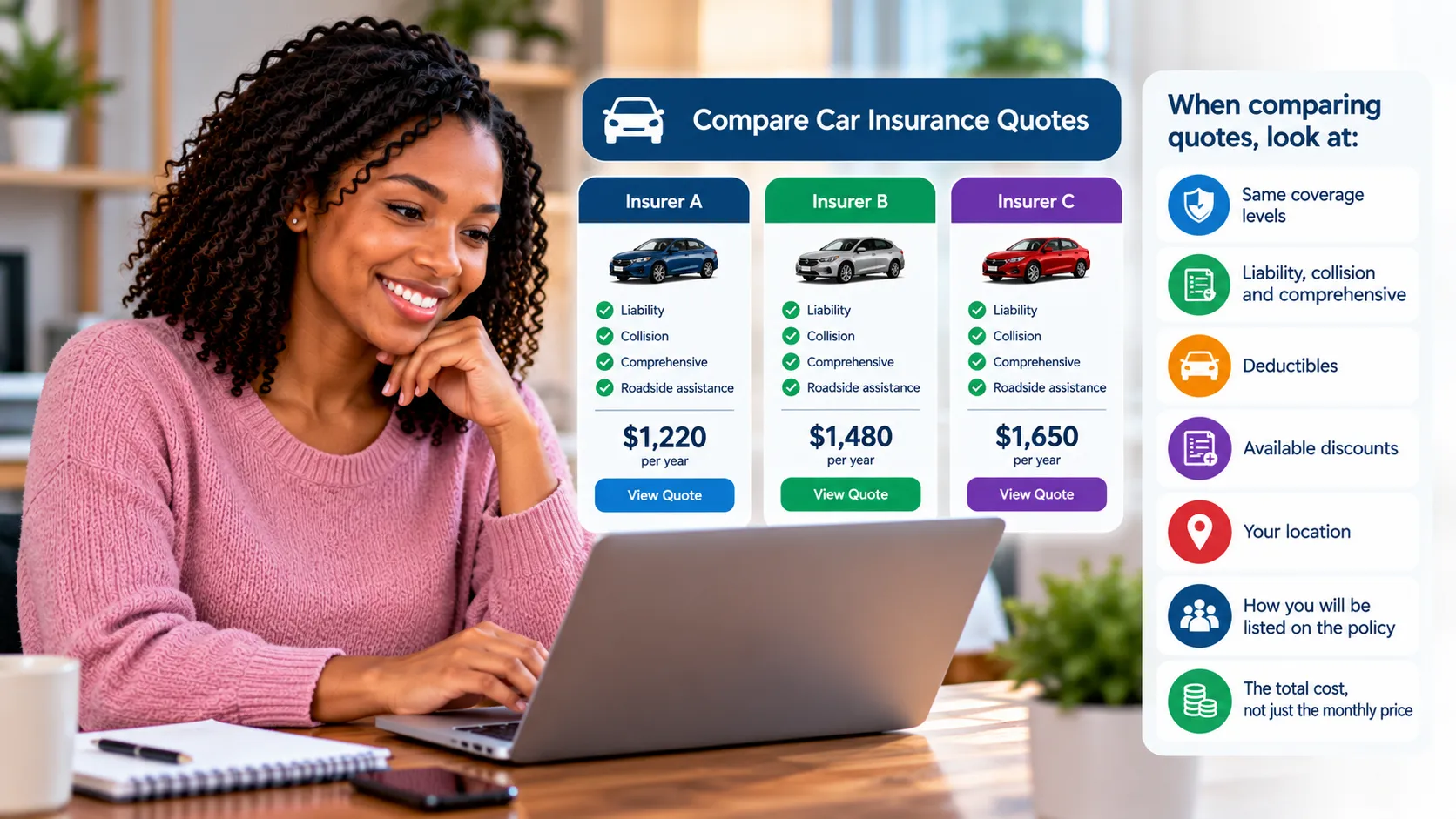
For a step-by-step approach, see How to Compare Car Insurance Quotes. Keep quote summaries and compare the issued declarations page with the selections you made.
What coverage does a new driver over 25 need?
Being a new driver does not create a special universal coverage package. State-required liability coverage establishes a legal baseline where applicable, but the necessary protection for a particular driver can depend on financial exposure, the vehicle, lending or lease requirements, and policy terms.
Liability coverage generally addresses covered injury or property damage the insured driver causes to others, subject to the selected limits. What Is Liability Car Insurance? explains the role of those limits. State minimums should not automatically be treated as sufficient protection for every driver.
Collision and comprehensive address different kinds of physical damage to the insured vehicle. Comprehensive vs. Collision Insurance explains their differences. A lender or lessor may require physical-damage coverage while it has a financial interest in the vehicle. Uninsured or underinsured motorist and medical-related coverage can also be relevant depending on the state and policy.
Is a new driver over 25 automatically cheaper to insure than a younger new driver?
No. Age can matter where permitted, but it is only one part of a pricing picture that may also include experience, driving record, vehicle, location, coverage, mileage, and insurer methodology. An adult new driver will not always receive a lower quote than a younger new driver.
Rather than relying on a general comparison, request quotes using the actual driver, vehicle, and coverage information. That will show how the insurers you are considering price the specific arrangement.
Can a new driver over 25 stay on their parents’ car insurance?
Possibly, but age alone does not answer the question. Residence, household membership, vehicle ownership, regular vehicle use, garaging, insurer eligibility, and state requirements can all affect whether a driver can be added to or remain on a household policy.
Give the insurer accurate information about the driver’s address, vehicles, title ownership, and regular use. Do not assume an adult can remain on a parent’s policy simply because they are related, and do not use an inaccurate address or omit a regular driver to obtain a lower price.
Ways new drivers over 25 may be able to lower car insurance costs
Practical options can include comparing insurers, asking about discounts that actually apply, maintaining a safe driving record, considering insurance cost before choosing a vehicle, reviewing telematics or usage-based insurance where offered, and periodically re-shopping equivalent coverage.
The California Department of Insurance lists examples of discounts and recommends comparison shopping for California consumers; programs and eligibility can differ elsewhere. Usage-based programs can collect mileage and driving-behavior data, so ask what is monitored, how it affects pricing, and how the data is used before enrolling.

These steps do not guarantee savings. For broader cost context, How Much Is Car Insurance? explains why pricing can differ between otherwise similar quotes.
Should you choose a higher deductible?
A higher deductible can lower the premium for collision or comprehensive in some quotes, but it can raise the amount the driver must pay after a covered loss before applicable insurance pays. Deductibles and liability limits are different policy features.
Before changing a deductible, consider whether you could realistically afford it after a covered loss. Compare the premium difference, the deductible for each coverage, and the vehicle’s value and repair exposure. Choosing the highest deductible is not automatically the best choice.
Does driving a cheaper car mean cheaper insurance?
Not necessarily. Vehicle value is only one input. Repair costs, safety features, theft risk, performance, parts availability, and claims experience associated with the vehicle can also influence a quote.
Obtain estimates for the exact vehicles you are considering with the same coverage selections. Compare the insurance estimate with purchase price, financing, fuel or charging, maintenance, and the cost of a potential repair before making a vehicle decision.
Can driver education lower insurance costs after age 25?
Some insurers may offer a discount for qualifying driver education or training, but the availability, eligibility, approved course, documentation, and state rules can differ. Completing a course does not assure a lower premium for every adult driver.
Ask each insurer whether a program is available for your policy, what it requires, whether it applies at issue or renewal, and whether the quote already includes it. Do not pay for a course solely on an assumption about a discount.
Does car insurance eventually get cheaper as a new driver gains experience?
More driving history may change how an insurer evaluates a driver over time, but premium changes can also reflect coverage, vehicle, claims, location, mileage, insurer practices, and state rules. There is no guaranteed reduction after six months, one year, three years, or any other fixed period.
Review your declarations page at renewal, update changes in address, vehicle, mileage, or use, and compare equivalent quotes periodically. The NAIC’s consumer resources and your state insurance department can help identify the questions to ask when reviewing coverage.
Checklist for buying car insurance as a new driver over 25
- Gather accurate driver, vehicle, mileage, garaging, and use information.
- Identify the state-required coverage and consider financial exposure beyond minimum limits.
- Request several quotes using the same coverage, drivers, vehicle, and deductibles.
- Compare total premium, policy term, payment schedule, fees, and discount assumptions.
- Ask about legitimate discounts, training programs, and telematics before relying on them.
- Consider whether you could afford each deductible after a covered loss.
- Confirm lender or lease requirements for collision and comprehensive, if relevant.
- Verify all application information, the effective date, and the issued declarations page.
- Keep proof of insurance and policy documents accessible.
Frequently asked questions
Is car insurance expensive for a new driver over 25?
It can be, but there is no universal price. A quote may reflect limited driving experience along with the vehicle, location, coverage, deductible, mileage, record, and insurer practices.
Does car insurance automatically get cheaper at 25?
No. Turning 25 does not automatically lower a car-insurance premium. Age and experience are separate factors, and the factors an insurer may use can vary by state and company.
Is a first-time driver over 25 considered a new driver?
They may be treated as a newly licensed or inexperienced driver by an insurer, but the insurer’s definitions and rating approach control. Ask how it evaluates license and driving history for the quote.
Can a new driver over 25 stay on their parents’ insurance?
Possibly, depending on residence, household membership, vehicle ownership, garaging, regular use, insurer eligibility, and state requirements. Ask the insurer how it treats the actual arrangement.
What is the cheapest car insurance for a new driver over 25?
There is no insurer that is cheapest for every adult new driver. Compare equivalent quotes and identify differences in coverage, deductibles, fees, and discount assumptions before choosing.
Can driver education lower insurance for an adult new driver?
Some insurers may offer a qualifying program, but it is not universal. Confirm availability, course requirements, documentation, and price effect with the insurer.
Will insurance get cheaper after I gain more driving experience?
It may change, but no timing or reduction is guaranteed. Review current policy information and compare equivalent quotes as driving history and other circumstances develop.
Does the car I choose affect my insurance price?
It can. Vehicle value, repair cost, safety, theft exposure, performance, and other characteristics may affect a quote. Obtain estimates for the specific vehicles you are considering.
The bottom line
Being over 25 and being an experienced driver are not the same thing. A newly licensed adult may still have limited driving history for insurers to evaluate, and there is no universally cheapest insurer or guaranteed age-based reduction. Compare equivalent coverage, investigate legitimate discounts, choose coverage based on actual financial needs, and review options periodically.